01 — Press System
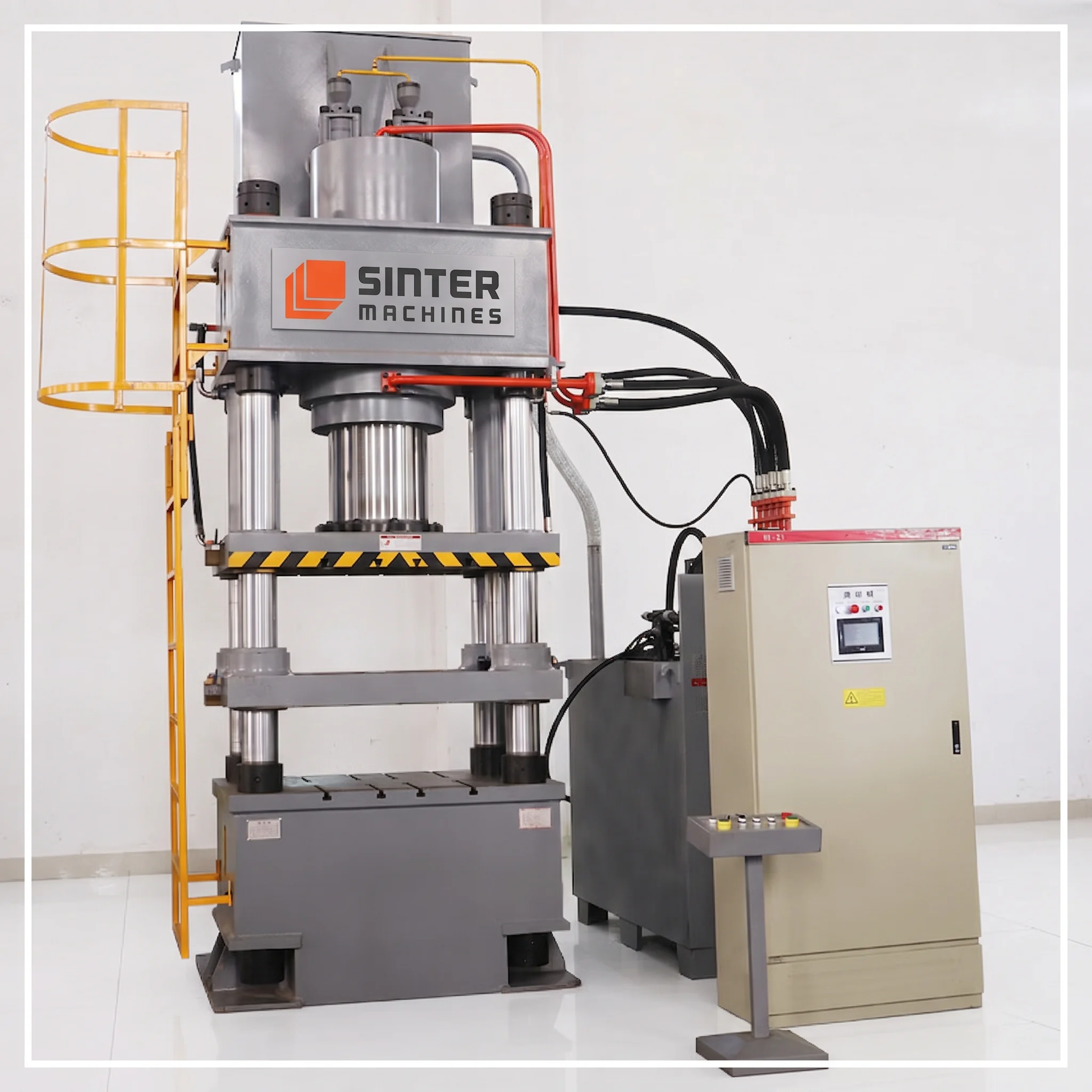
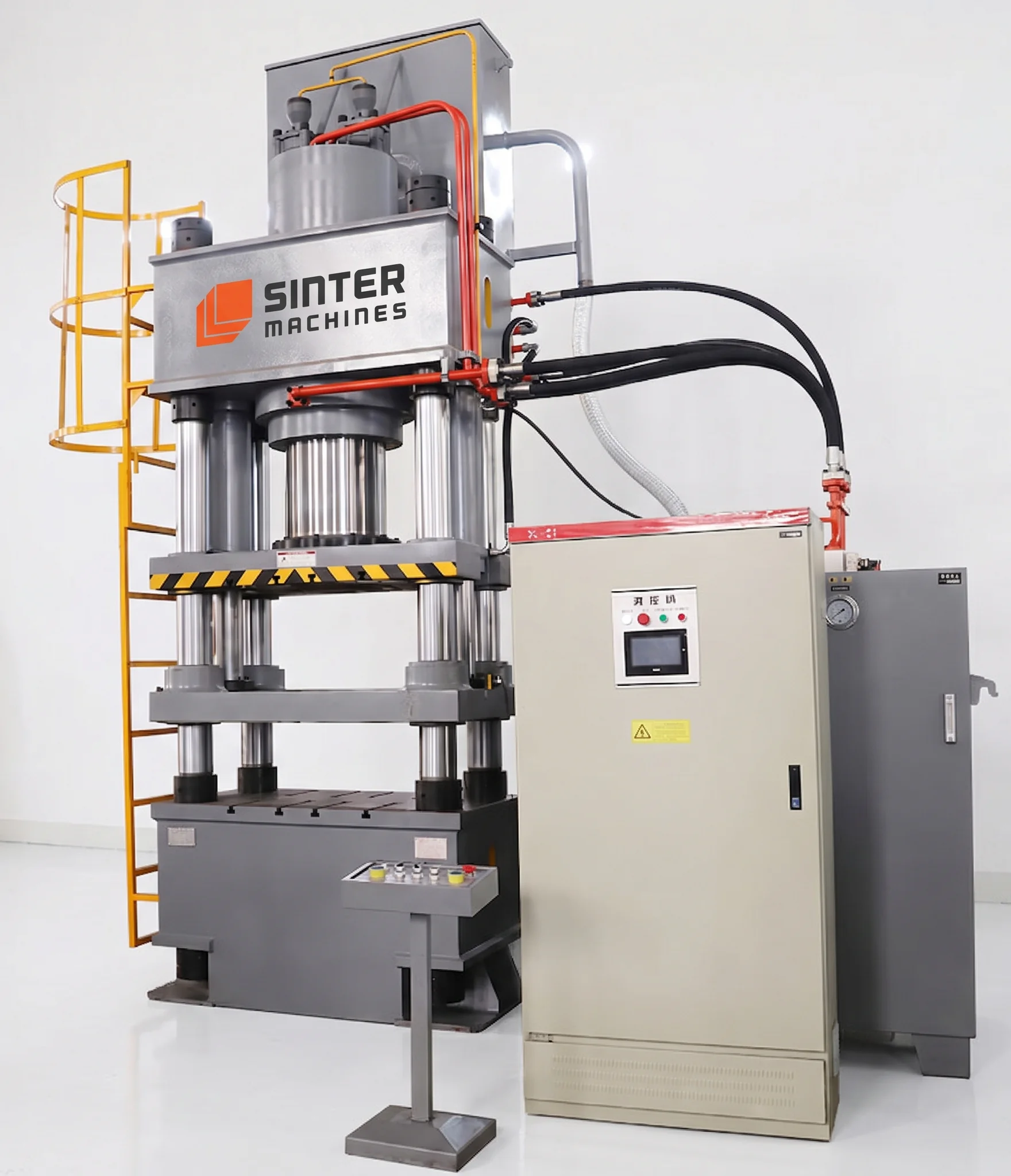
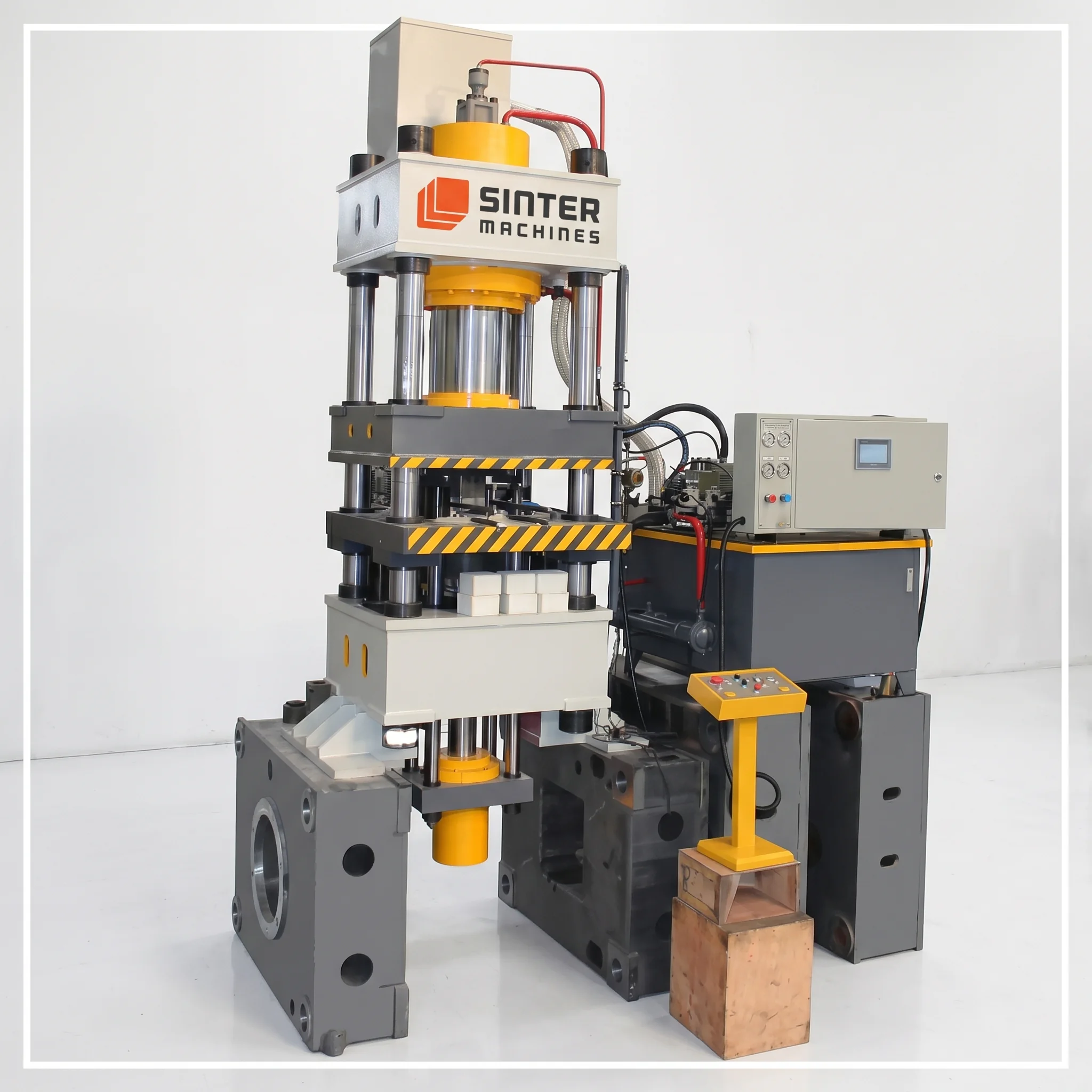
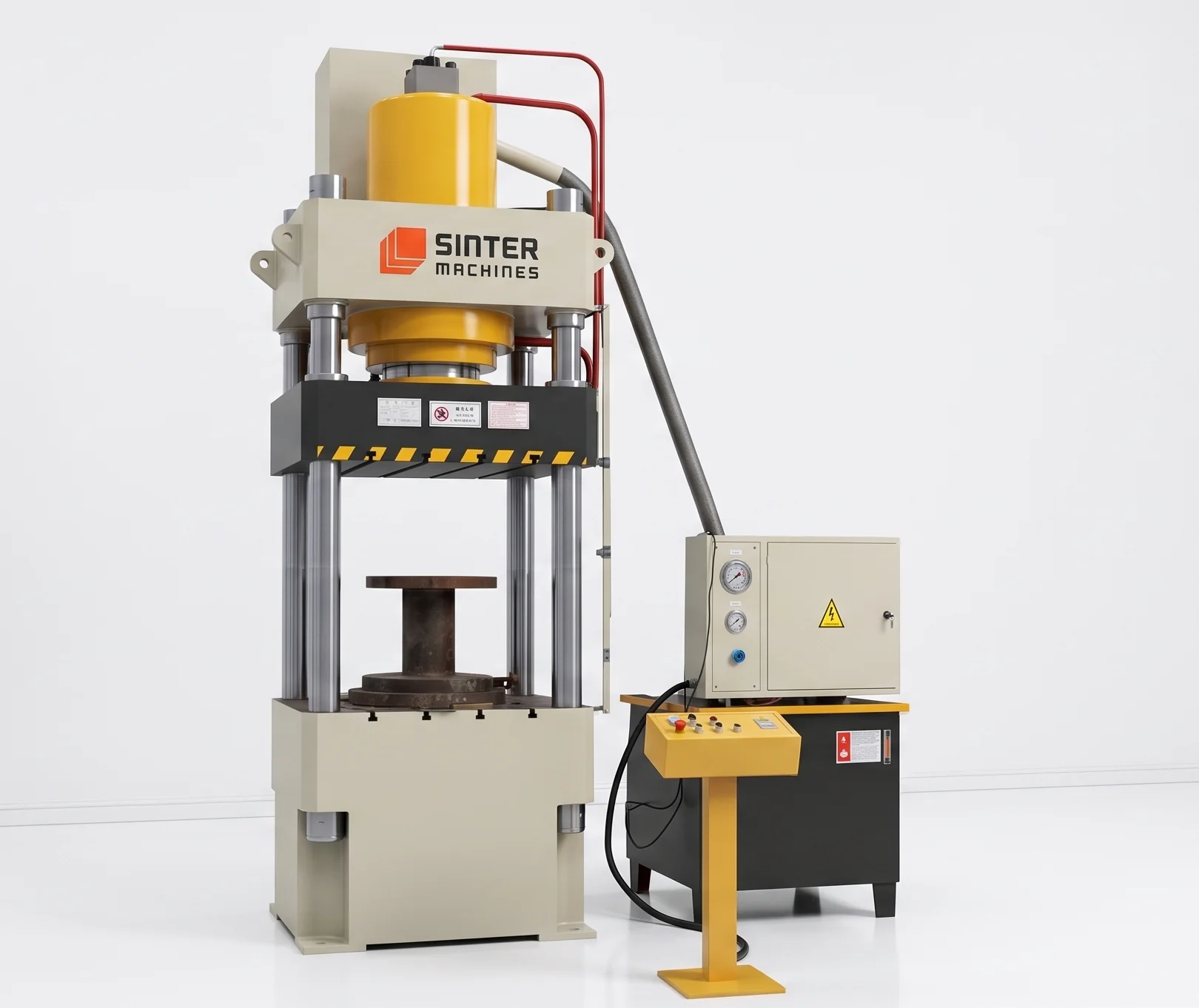
800T Four Pillar Hydraulic Press Machine
The 800-ton four-pillar hydraulic press delivers exceptional tonnage and rigid structural stability, ensuring high-density compaction for heavy-duty powder metallurgy components. Its advanced hydraulic control enables precise speed and pressure calibration across multi-stage pressing cycles.
Use Case
Engineered specifically for pressing high-density structural brackets and complex motor housings requiring tight dimensional tolerances. It allows continuous high-volume production of powder metallurgy parts while minimizing material waste and post-machining operations.
- Core Applications: Provides high-pressure powder compaction for structural automotive mountings, industrial pump housings, and heavy machinery brackets. Enables exact near-net-shape manufacturing for components subject to intense dynamic and mechanical loads.
- Material: Processes high-purity iron-based alloys, stainless steel, self-lubricating bronze, and specialized iron-copper metal powder formulations. Blended with graphite, zinc stearate lubricants, and synthetic additives to optimize flowability, green strength, and compressibility.
- Products Processed: complex-shaped transmission brackets, engine support mounts, electric motor housings, and multi-cavity industrial pump bodies. Delivers high green density across intricate features like thin walls, varied steps, and internal flanges.
- Why 800-Ton Hydraulic Press: Provides the immense uniform tonnage required to compact large cross-sectional powder metallurgy parts to their targeted high green density. The rigid four-pillar frame prevents mold misalignment under extreme loads, guaranteeing strict geometric accuracy.
02 — Technical Specifications
SM 800 HP – HYDRAULIC PRESS MACHINE COMPLETE TECHNICAL DATA
The SM 800 HP – 800 Ton Hydraulic Press Machine is engineered for manufacturing large powder metallurgy (PM) brackets, housings, and flanges that require high compaction force, uniform density, and exceptional dimensional accuracy. Its advanced multi-level compaction system ensures consistent densification across large projected areas, complex geometries, and thick sections, resulting in superior green strength and structural integrity.
Capacity & Structural Design
- Rated Capacity: 800 Tons (≈ 7850 kN)
- Type: Fourpillar hydraulic PM press
- Frame: Heavy-duty welded steel structure
- Safety factor: ≥ 1.35–1.40
- Parallelism accuracy: ≤ 0.03–0.05 mm
Hydraulic System
- Cylinder: Multi-action hydraulic system
- Bore: 500–600 mm
- Stroke: 500–900 mm
- Working pressure: 28–32 MPa
- Control: Servo-proportional control system
Multi-Level Compaction System
- Independent upper punch segments
- Independent lower punch movement
- Floating die (optional)
- Multi-stage pressure profile
Benefits
- Eliminates density gradients
- Improves uniformity in ribs and thick zones
- Ensures better sintering performance
Compaction Cycle
- Powder filling (multi-zone)
- Punch approach (upper & lower synchronized)
- Pre-compaction (air removal)
- Main compaction (high-pressure densification)
- Holding stage
- Decompression
- Green part ejection
Working Envelope
- Platen size: 900 × 900 mm
- Optional: 1000 × 1000 mm
- Daylight: 800–1200 mm
- Column diameter: 180–240 mm
Control System
- PLC: Siemens / Beckhoff / Mitsubishi
- HMI: Multi-recipe interface
Controls:
- Pressure stages
- Stroke & position
- Speed control
- Density consistency
Features:
- Real-time monitoring
- Data logging (automotive/industrial QA)
- Industry 4.0 integration
- Safety PLC
SM 800 HP — Model Specifications
- Nominal Force: 8000 KN
- Maximum Hydraulic Pressure: 25 MPa
- Max Opening Height of the Slider: 1500 mm
- Max Stroke of the Slider: 900 mm
- Effective Bed Size: 1600 × 1600 mm
- Slider Down Speed: 180 mm/s
- Slider Pressing Speed: 9–18 mm/s
- Slider Return Speed: 180 mm/s
- Ejector Cylinder Nominal Force: 600 KN
- Stroke of the Ejection Cylinder: 300 mm
03 — Die / Mold System
Precision Large Powder Metallurgy (PM) Brackets, Housings, and Flanges Die Mold Engineering
Technical Specifications (Tooling)
Tool Type
- Multi-part PM compaction tooling system
- Multi-level punch configuration
Tool Materials
- Tool steels: H13 / D2 / PM-grade tool steel
- Inserts: Carbide inserts for wear resistance
Hardness: 60–65 HRC
Tool Construction
- Upper punches: Multi-profile shaping
- Lower punches: Density control zones
- Die cavity: External geometry
- Core rods: Holes, bores, cavities
Multi-Level Tooling Design
Split punches for:
- Ribs
- Bosses
- Flange zones
Floating die system
Multi-stage compaction
Critical Engineering Factors
- Load distribution across large area
- Thickness gradient control
- Hole alignment and geometry
Alignment Accuracy: ±0.01–0.02 mm
Surface Finish
| Area | Finish |
| Functional surfaces | Precision ground |
| Holes/bores | Smooth |
| Structural surfaces | Machined finish |
Lubrication
- Powder lubrication (internal)
- Tool coatings (TiN, DLC optional)
Tool Life: 150,000 – 350,000 cycles
Large Powder Metallurgy (PM) Brackets, Housings and Flanges Die Mold
04 — Product Application
Where Large Powder Metallurgy (PM) Brackets, Housings, and Flanges Are Used
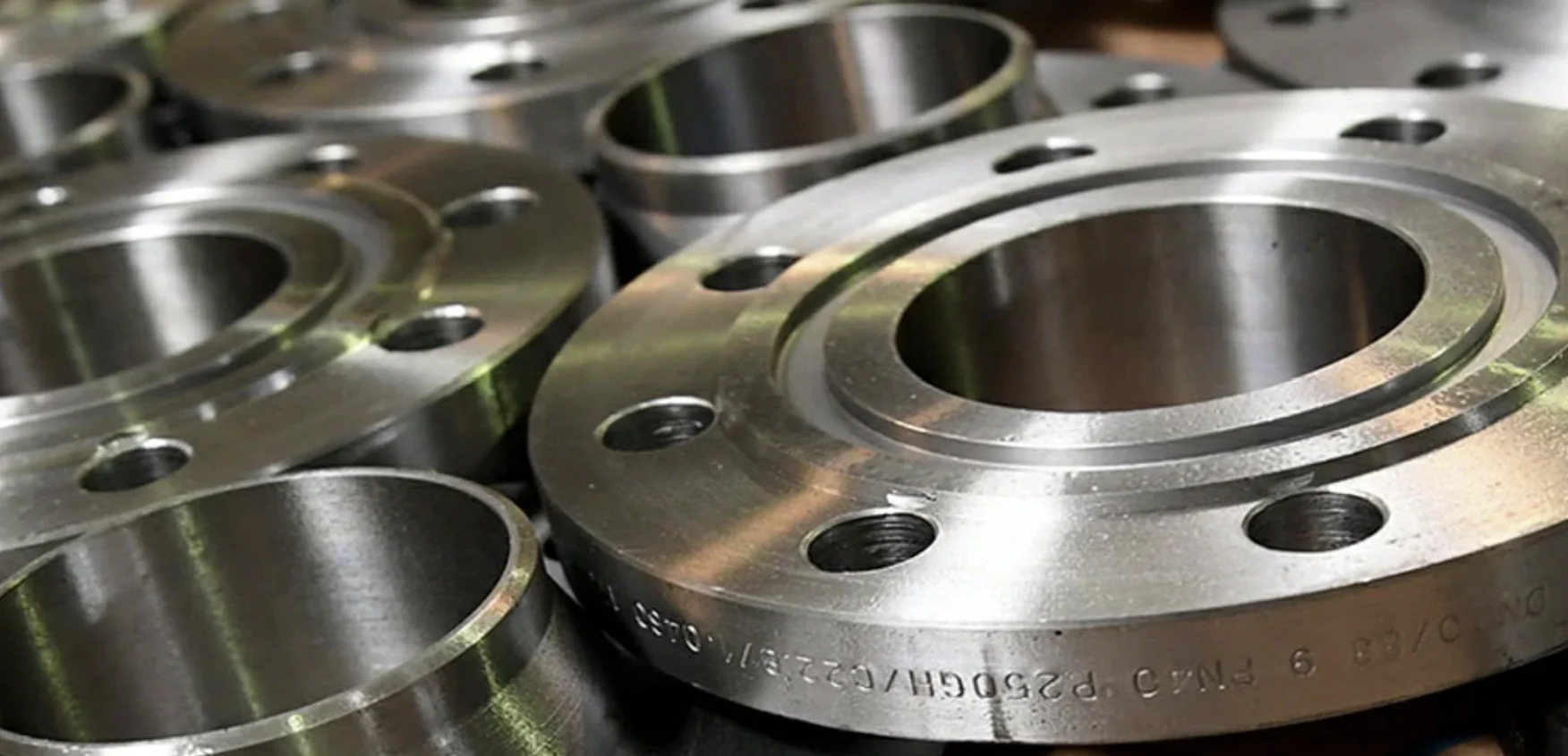
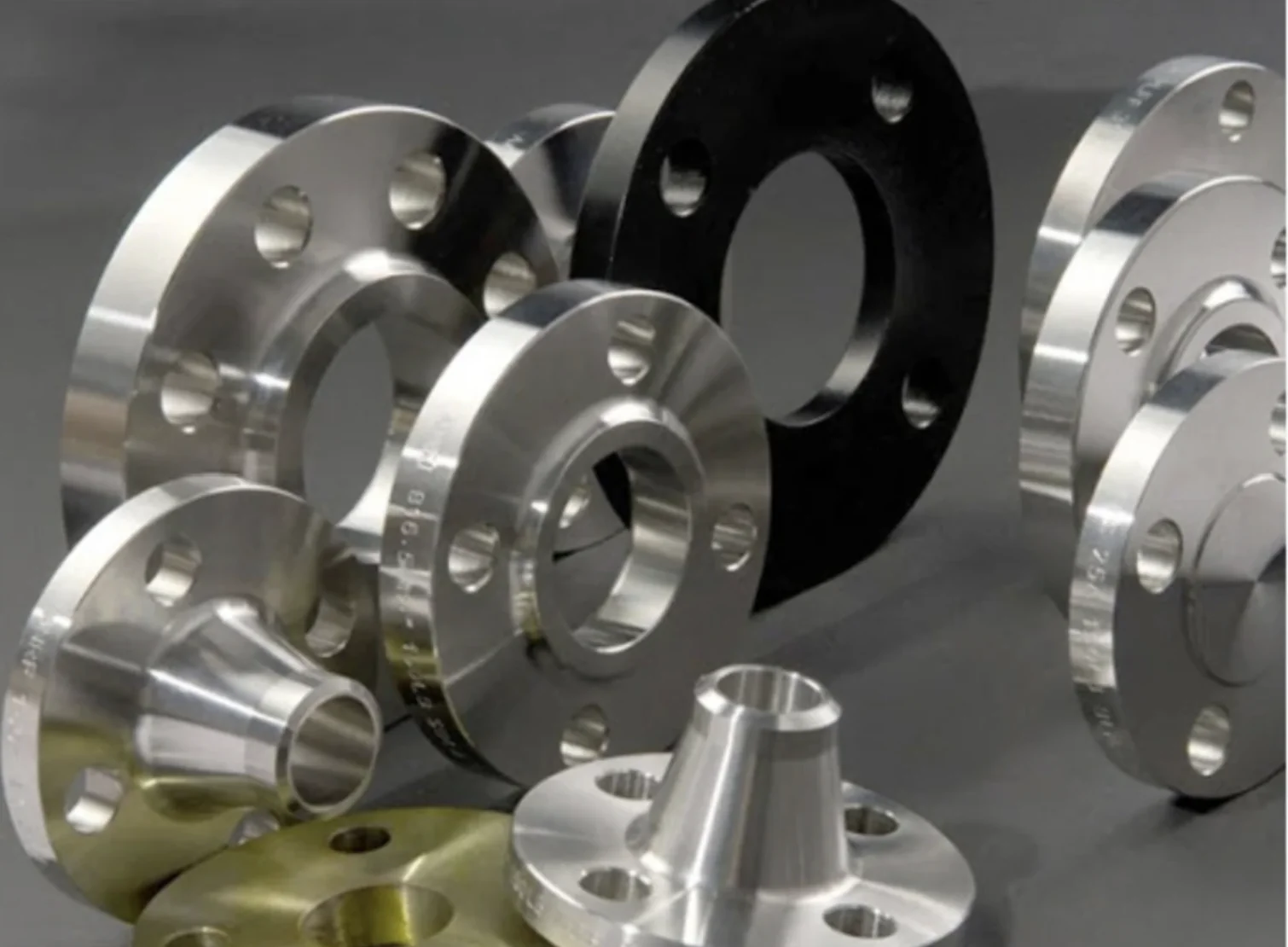
Large powder metallurgy (PM) brackets, housings, and flanges are widely used in applications that require high structural strength, dimensional accuracy, and reliable performance under heavy loads. These components are commonly found in automotive systems, industrial machinery, power generation equipment, construction machinery, mining equipment, and heavy engineering structures.
Industry Applications
Automotive Industry
Large powder metallurgy (PM) brackets, housings, and flanges are extensively used in the automotive industry, where high strength, dimensional accuracy, and durability are essential. These components are commonly found in engine brackets, transmission housings, structural supports, and brake system housings, providing reliable load-bearing performance and structural stability under demanding operating conditions.
Industrial Machinery
Large powder metallurgy (PM) brackets, housings, and flanges are widely used in industrial machinery applications that require high structural strength, precision, and long-term reliability. These components are commonly found in pump housings, gearbox casings, structural machine components, and mounting flanges, where they provide robust support, alignment, and protection under continuous operating conditions.
Heavy Engineering
Large powder metallurgy (PM) brackets, housings, and flanges are widely used in heavy engineering applications that demand exceptional strength, durability, and load-bearing performance. These components are commonly found in construction equipment parts and load-bearing mechanical structures, where they must withstand heavy loads, vibration, and harsh operating environments.
Electrical & Appliances
Large powder metallurgy (PM) brackets, housings, and flanges are widely used in electrical and appliance applications where strength, dimensional accuracy, and cost-effective production are essential. These components are commonly found in motor housings and actuator cases, providing structural support, component protection, and reliable performance during continuous operation.
| Industry | Scenario |
|---|---|
| Automotive | Structural engine components |
| Industrial | Pump & gearbox housings |
| Construction | Heavy-duty equipment parts |
| Electrical | Motor casings |
| Manufacturing | High-volume PM production |
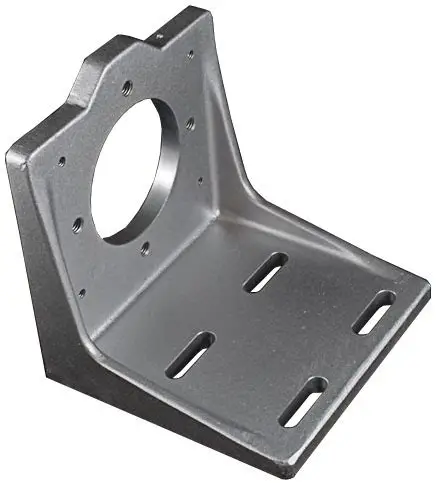
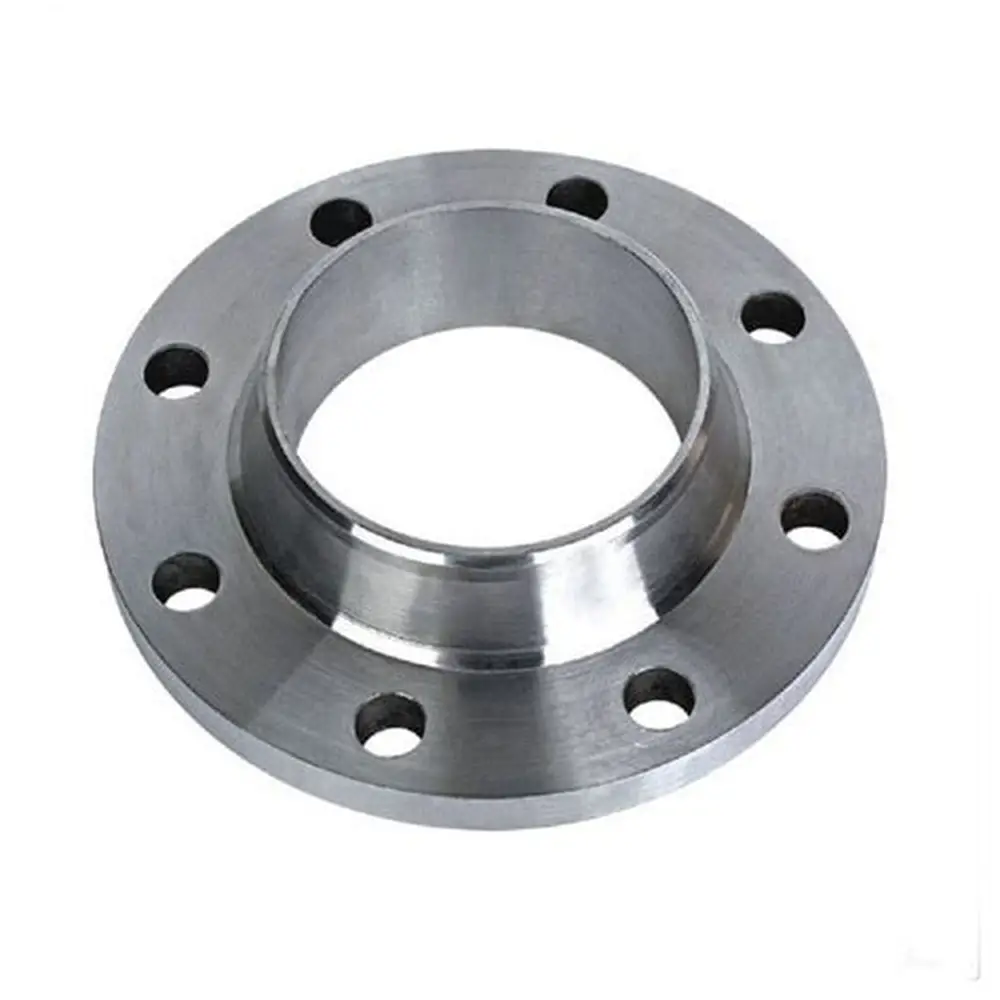
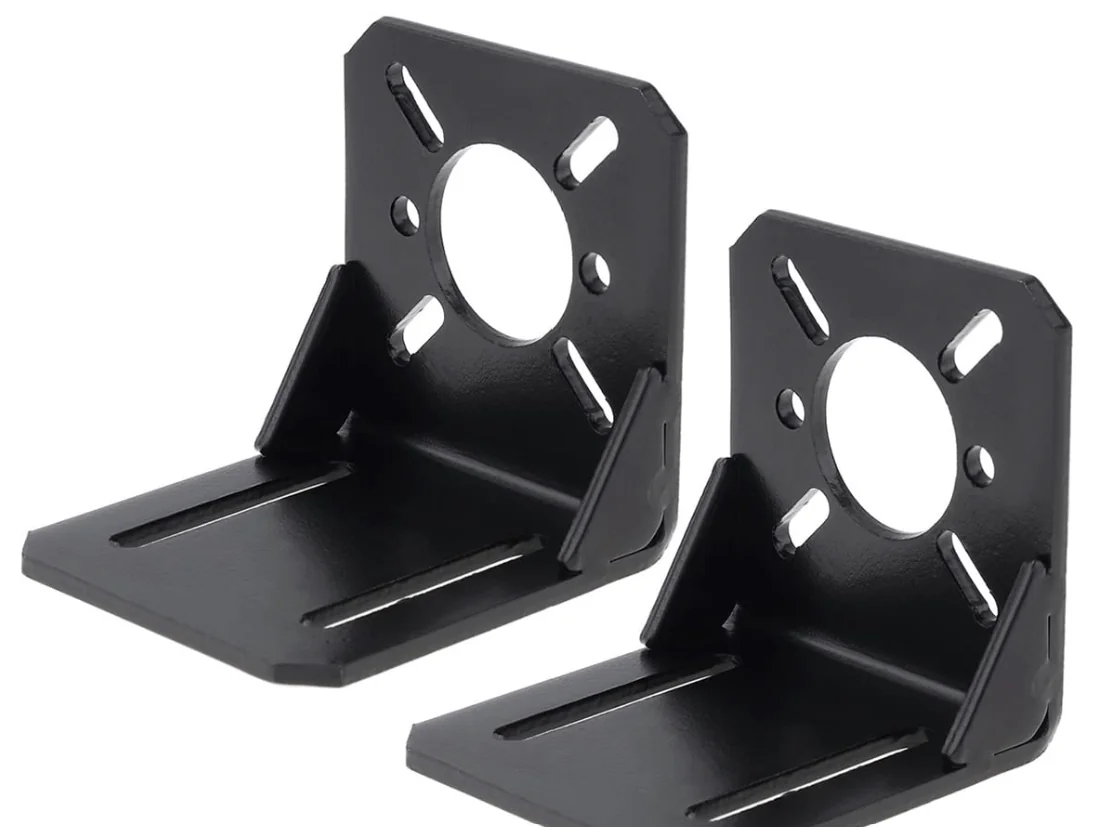
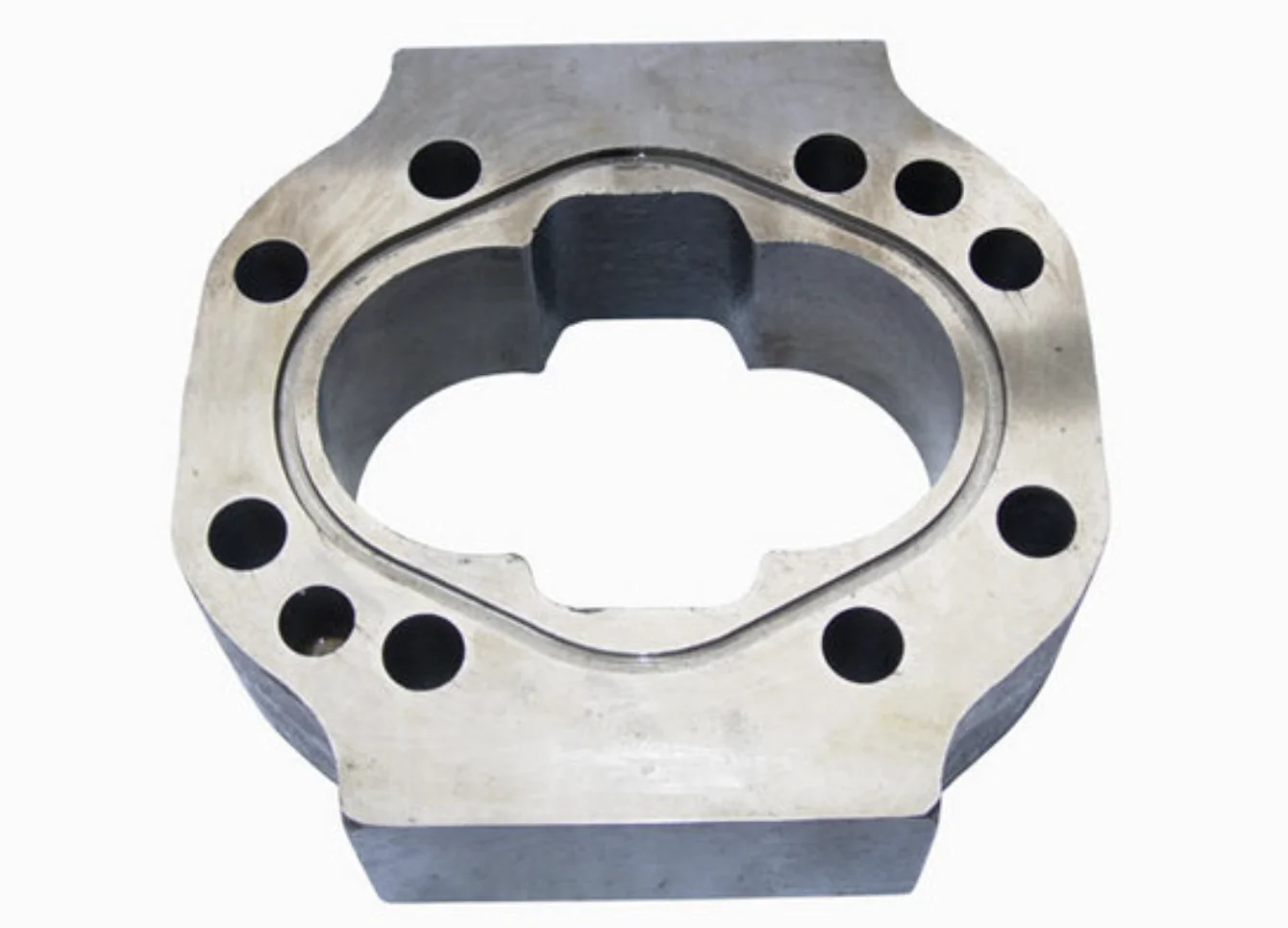
Finished Product Gallery
05 — Key Advantages
Why Choose the 800-Ton Sinter Hydraulic Press
The 800-Ton Sinter Hydraulic Press is specifically designed for manufacturing large PM brackets, housings, and flanges that require high compaction force, excellent dimensional accuracy, and superior structural strength. Its advanced multi-level compaction capability ensures uniform density distribution across large projected areas, thick sections, and complex features such as ribs, bosses, and cavities.
Near-net shape production
Near-net shape production is a key advantage of the 800-Ton Sinter Hydraulic Press, enabling large powder metallurgy (PM) brackets, housings, and flanges to be manufactured very close to their final dimensions. This significantly reduces secondary machining, material wastage, and production costs while improving manufacturing efficiency.
Multi-level compaction capability
Multi-Level Compaction Capability allows the 800-Ton Sinter Hydraulic Press to efficiently manufacture large powder metallurgy (PM) brackets, housings, and flanges with complex geometries, varying wall thicknesses, ribs, bosses, and cavities. Advanced hydraulic control enables independent and precise pressure application across different levels of the component, ensuring uniform density distribution and dimensional accuracy.
Reduced machining
Reduced Machining is a significant advantage of the 800-Ton Sinter Hydraulic Press, as it produces large powder metallurgy (PM) brackets, housings, and flanges with near-net-shape accuracy. This minimizes secondary operations such as drilling, milling, and finishing, reducing material waste, production time, and overall manufacturing costs.
Complex geometry capability
Complex Geometry Capability enables the 800-Ton Sinter Hydraulic Press to manufacture large powder metallurgy (PM) brackets, housings, and flanges with intricate features such as ribs, bosses, cavities, holes, and varying wall thicknesses. Its advanced multi-level compaction system ensures precise pressure distribution across complex shapes, resulting in uniform density, excellent dimensional accuracy, and superior structural integrity.
Wear-resistant components
Wear-resistant components produced using the 800-Ton Sinter Hydraulic Press offer excellent durability and performance in demanding operating environments. The high-density compaction process enhances material strength, hardness, and structural integrity, enabling components to withstand continuous friction, abrasion, and mechanical stress.
Cost-effective over casting/machining
Cost-effective over casting and conventional machining, the 800-Ton Sinter Hydraulic Press enables the production of large powder metallurgy (PM) brackets, housings, and flanges with near-net-shape accuracy and minimal material waste. By reducing secondary machining operations, lowering raw material consumption, and shortening production cycles, it significantly decreases overall manufacturing costs.