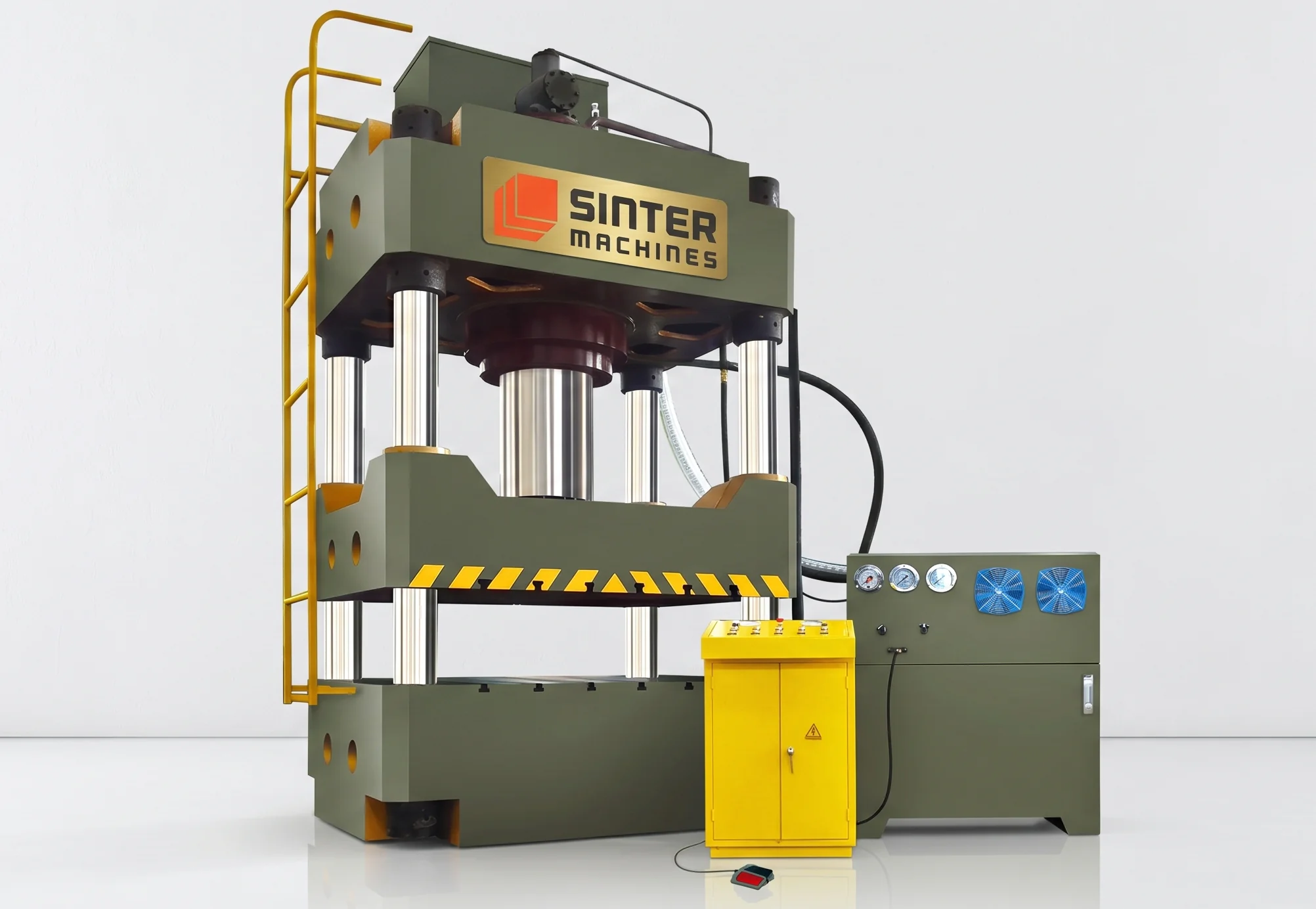
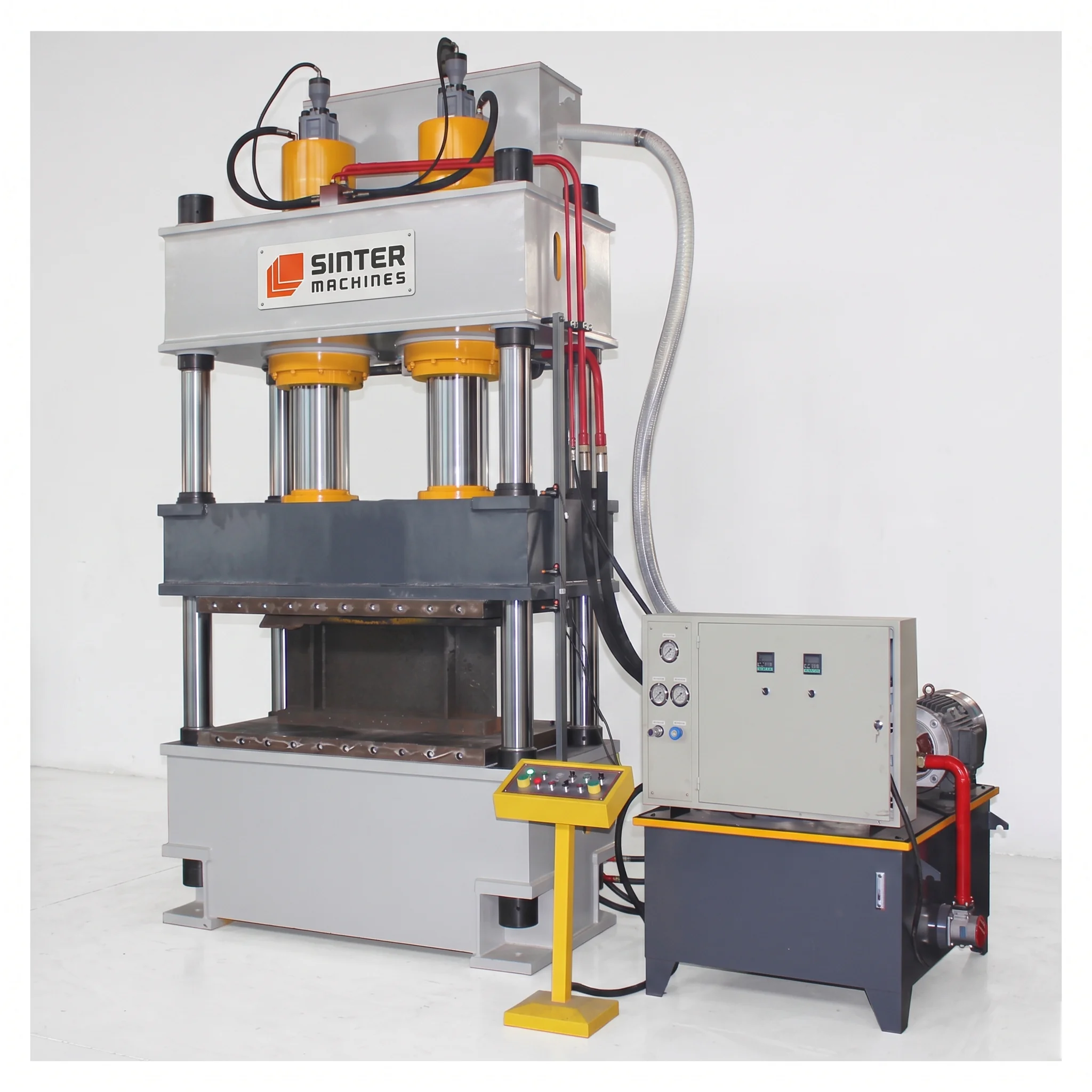
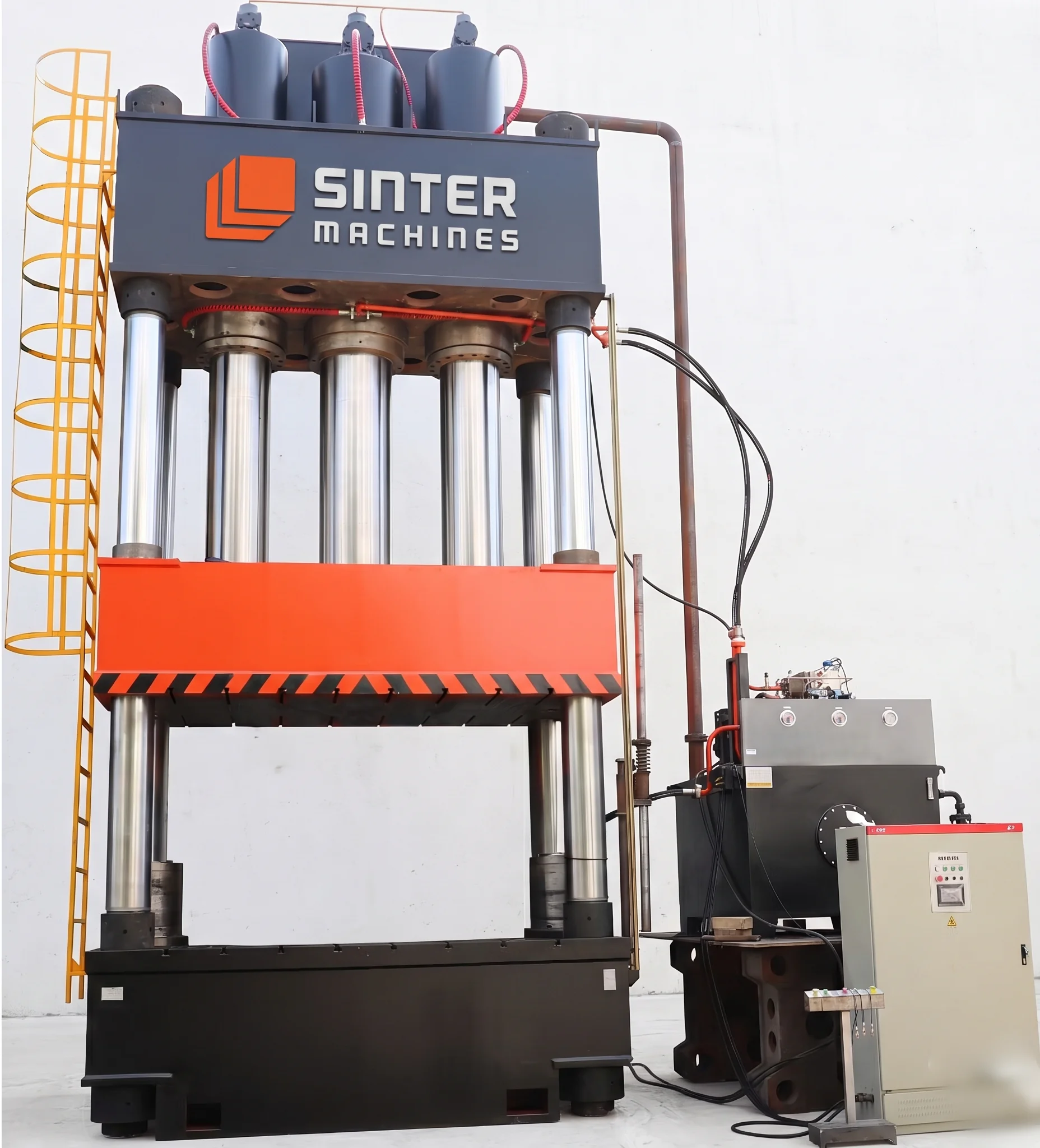
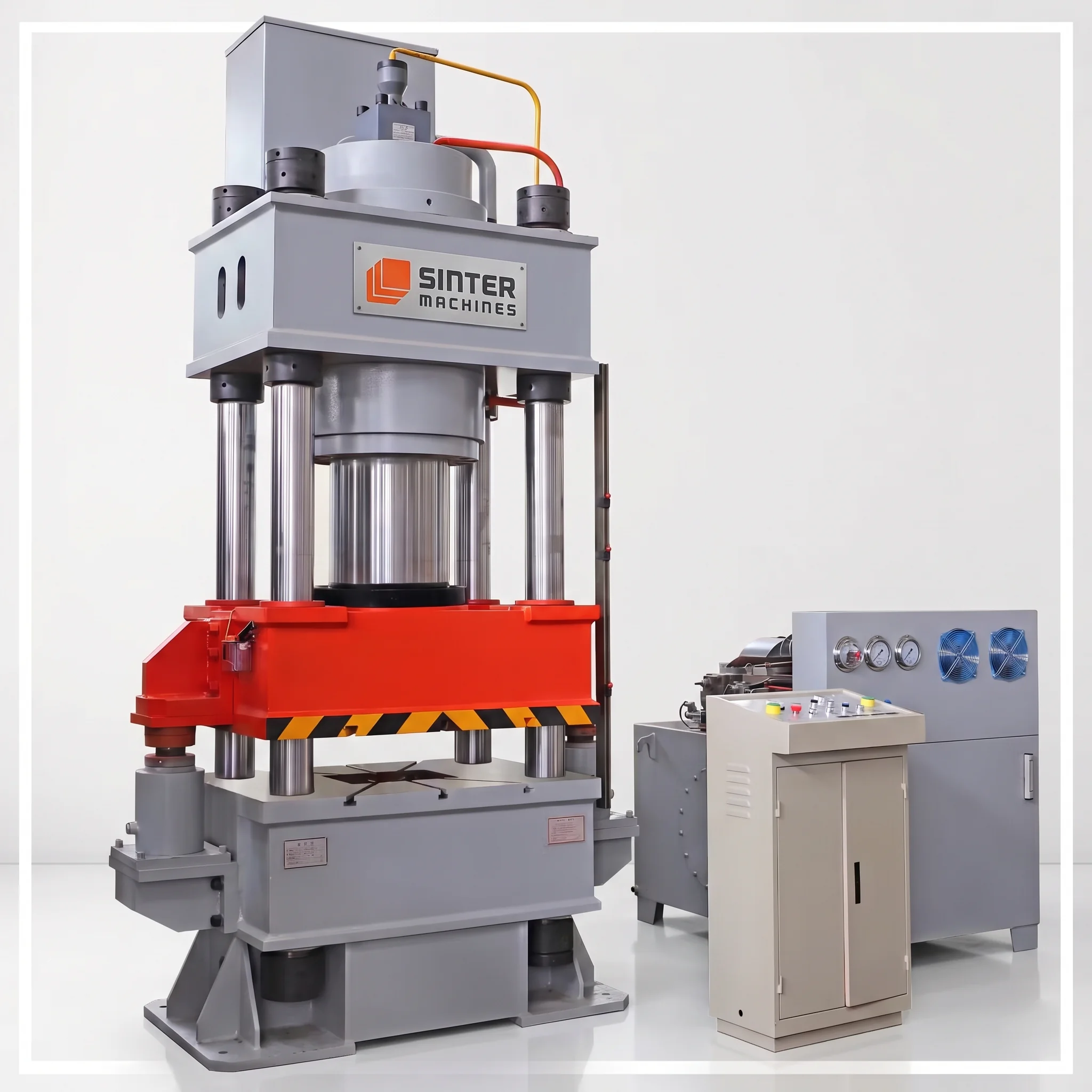
1250T Automotive Body Panels Press press view 1
Automotive Body Panels · Hydraulic Press Machine

1250T Four Column Hydraulic Press for Deep Drawing Automotive Body Panels

1250T Rated Capacity
180 mm/s Slider Down Speed
6–15 mm/s Slider Pressing Speed
200 mm/s Slider Return Speed

01 — Press System

1250T Four Column Hydraulic Press Machine

The Sinter Hydraulics 1250-ton four-pillar hydraulic press is a core forming solution for deep drawing automotive body panels, doors, and fenders. It delivers high forming force, Class-A exterior surface quality, and stable, repeatable output for demanding BIW production.

Use Case

Engineered for Class-A and safety-critical automotive parts, this system excels at large-area deep drawing with high rigidity and platen parallelism. It utilizes controlled blank-holder force to prevent wrinkles and tearing, ensuring highly consistent panel geometries for robotic assembly.

Core Applications

  • Automotive Stamping: High-tonnage deep drawing, blanking, and forming of large-area sheet metal components.
  • Body-in-White (BIW) Manufacturing: High-volume mass production of structural and cosmetic automotive body assemblies.

Material

  • High-Strength Steels (HSS/AHSS): Processes advanced high-strength and dual-phase steels engineered for safety-critical vehicle structures.
  • Lightweight Aluminum Alloys: Forms lightweight, high-ductility aluminum sheets (such as 5000 and 6000 series) for modern weight-reduction designs.

Typical Products Formed

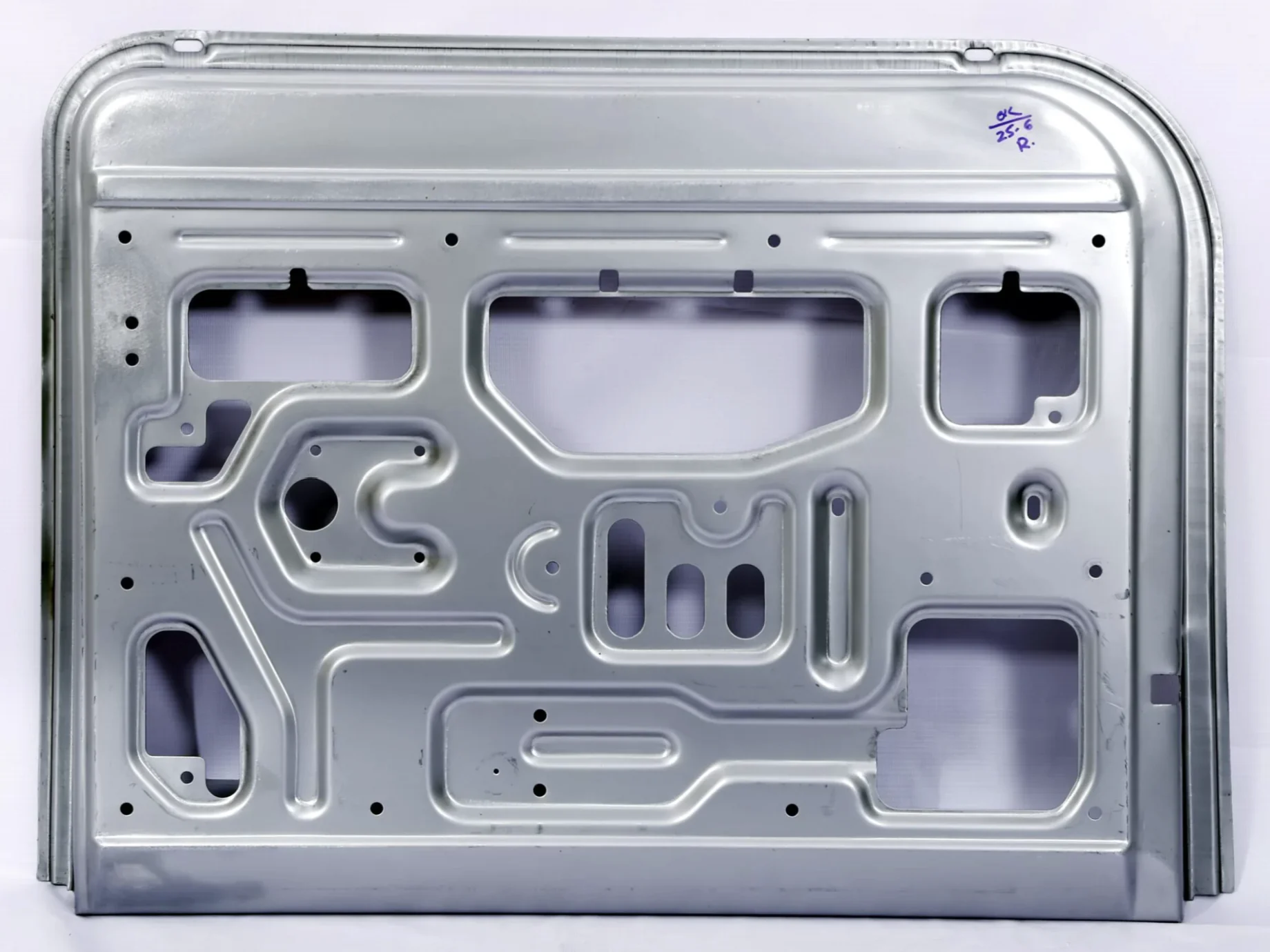
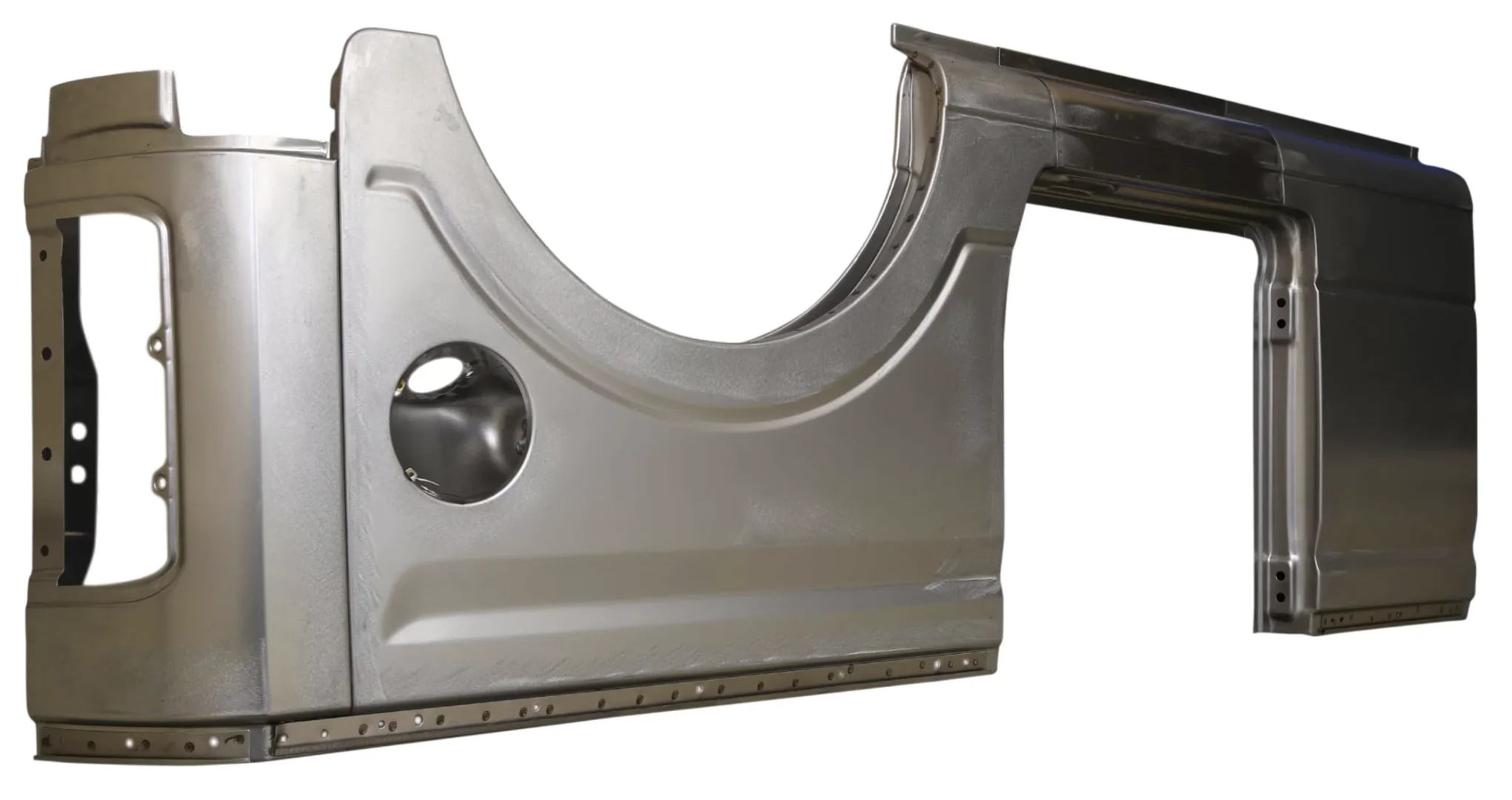
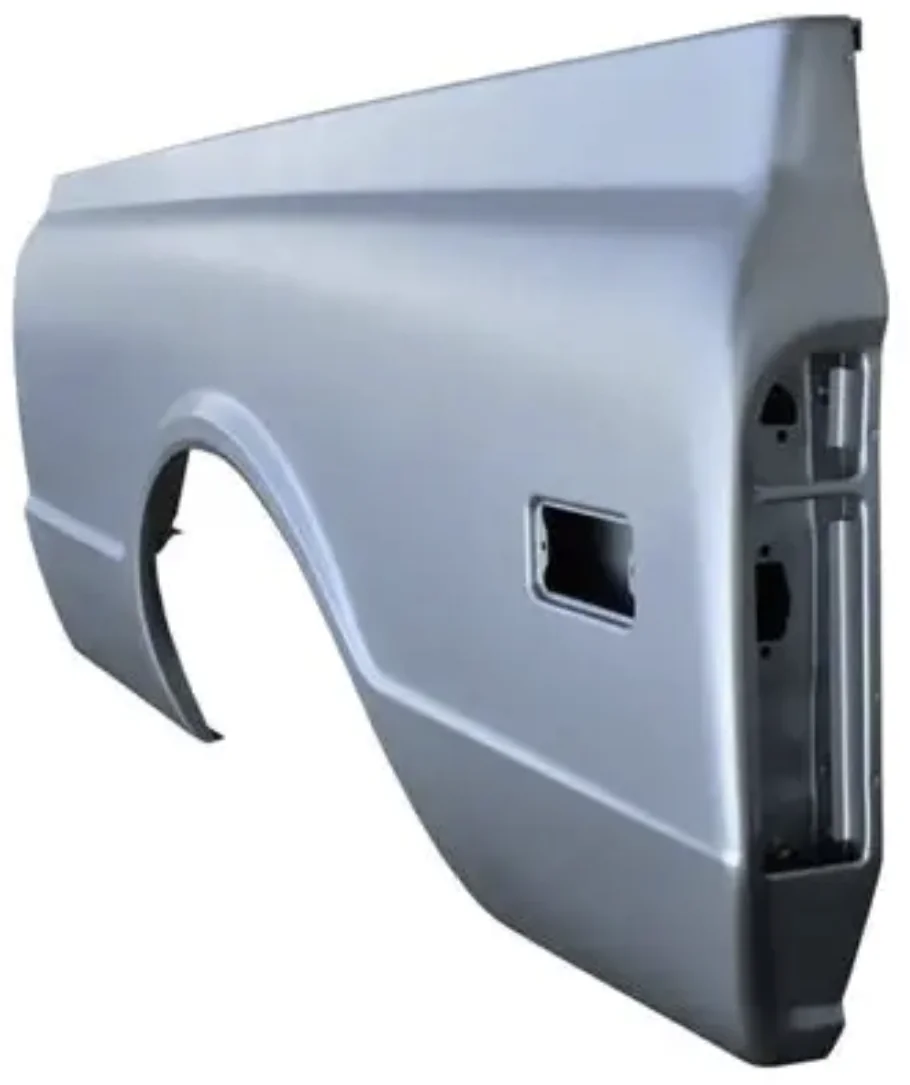
  • Class-A Exterior Panels: Double-curved door outers, front fenders, hood outers, roof panels, and liftgates.
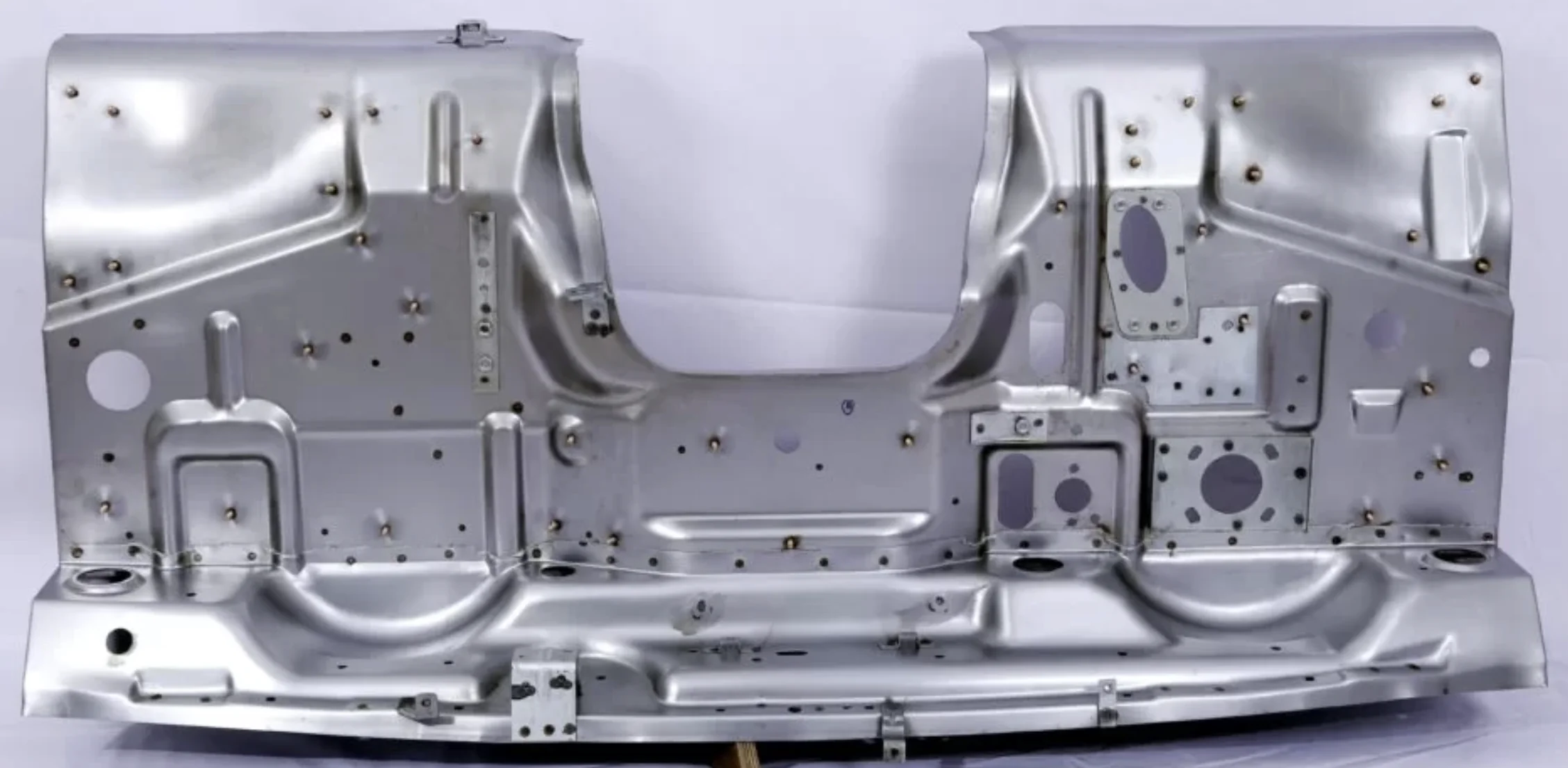
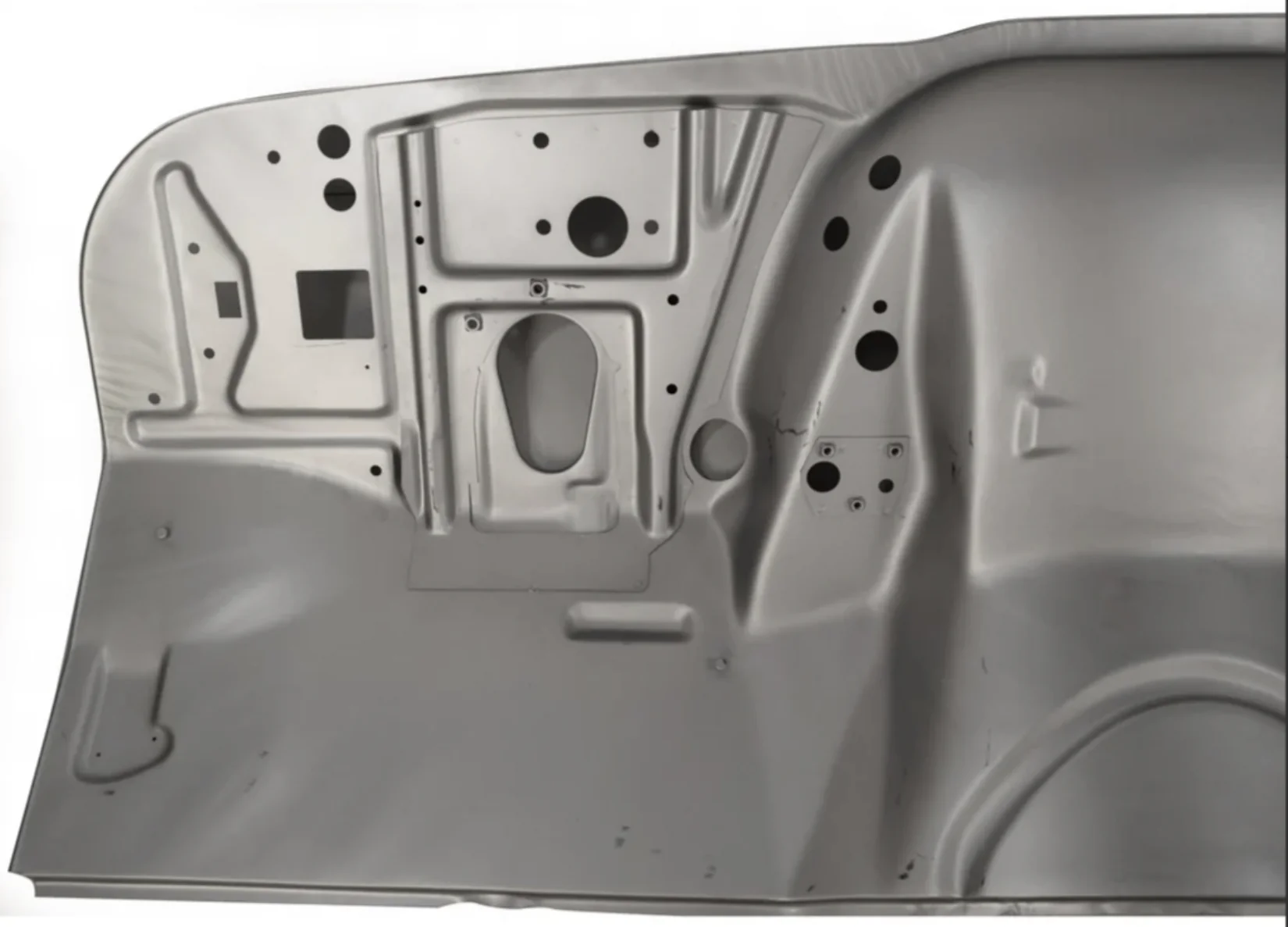
  • Structural Inner Components: Complex door inners, pillar reinforcements, floor pans, and large chassis crossmembers.

Key Functions

  • Dynamic Blank Holding: Employs multi-point, CNC-controlled blank holder systems to manage metal flow dynamically across complex, large-area dies.
  • Intricate Deep Drawing: Executes deep, multi-stage drawing profiles with strict control over draw-bead engagement to manage metal thinning.

Why 1250-Ton Hydraulic Press?

  • Class-A Surface Excellence: Ultra-rigid four-pillar construction and strict platen parallelism prevent deflection, ensuring cosmetic-grade surface finishes.
  • Heavy Stamping Tonnage: Provides the massive forming force required to shape large-scale panels and high-strength alloys with extreme dimensional consistency.

02 — Technical Specifications

SM 1250 HP – HYDRAULIC PRESS MACHINE COMPLETE TECHNICAL DATA

This heavy-duty 1250-ton hydraulic press is engineered for high-precision, large-format automotive deep drawing applications. It features an ultra-rigid four-pillar structure, multi-point hydraulic cushions, and sophisticated proportional controls to consistently produce defect-free, Class-A exterior body panels.

Complete Technical Data

Capacity

  • Nominal Force: 1250 Tons ($12,500\text{ kN}$) of primary downward pressing force to easily form high-strength steels and aluminum alloys.
  • Hydraulic Cushion Force: 500–600 Tons of multi-point adjustable blank-holder force, critical for controlling metal flow on wide, complex panel geometries.

Structural Design

  • Pre-Stressed Tie-Rod Pillar Design: Utilizes high-tensile four-pillar columns pre-tensioned to eliminate structural stretch and maintain absolute platen parallelism.
  • Eight-Fold Slider Guidance: Incorporates extended, highly rigid slide guides to securely resist severe off-center loading during asymmetrical drawing cycles.

Frame Type

  • Four-Column Monoblock/Tie-Rod Style: Combines the open 360-degree accessibility of a column press with the immense structural rigidity of heavy-plate welded steel constructions.
  • Zero-Deflection Frame Geometry: Engineered using finite element analysis (FEA) to guarantee minimal frame deflection under maximum tonnage load.

Hydraulic System

  • Closed-Loop Servo-Pump Drive: Integrates high-volume, variable displacement axial piston pumps driven by high-response servo motors.
  • Multi-Channel Cushion Control: Features independent pressure control across different zones of the hydraulic cushion to dynamically adjust localized blank-holder forces.

Main Ram Stroke

  • Maximum Travel: Long stroke capability (typically 1000mm–1400mm) to allow deep, complex draws and easy automated part transfer.
  • Absolute Precision Feedback: High-speed linear encoders provide continuous sub-millimeter stroke positioning accurate to $\pm0.03\text{mm}$.

Working Hydraulic Pressure

  • Max System Pressure: Rated at 25–31.5 MPa ($250\text{--}315\text{ bar}$) for high-density power delivery with minimal footprint size.
  • Real-Time Pressure Profiling: Proportional pressure relief valves dynamically scale hydraulic tonnage based on the draw depth.

Daylight Gap

  • Maximum Open Height: Generous vertical opening (typically 1500mm–2000mm) allowing for deep punch tools, lower cushion pins, and large automotive dies.
  • Shut Height Range: Broadly adjustable to accommodate a wide variety of thin-profile stamping or deep-draw tooling assemblies.

Approach Speed

  • Rapid Downward Motion: High-speed approach up to 200–250 mm/s to sharply minimize dry-cycle times and increase overall factory throughput.
  • Proportional Deceleration Phase: Seamless deceleration curves gently transition the slide from high-speed travel to drawing velocity just before die contact.

Pressing / Drawing Speed

  • Variable Draw Velocity: Smoothly adjustable forming speed (typically 3–15 mm/s) designed to prevent material tearing in Class-A aluminum and steel.
  • Synchronized Cushion Speed: The cushion recedes in absolute synchronization with the drawing punch to maintain consistent material thickness.

Return Speed

  • Rapid Retract Velocity: High-speed upward stroke reaching 150–200 mm/s to quickly clear the die area for automated transfer systems.
  • Advanced Decompression Logic: Multi-stage decompression valves release high cylinder pressures smoothly, eliminating hydraulic shock and piping wear.

Bed / Platen Size

  • Extra-Large Bolster Area: Massive working table dimensions (e.g., $2500\text{mm} \times 1600\text{mm}$ up to $3000\text{mm} \times 2000\text{mm}$) sized for large hoods, doors, and side-panel dies.
  • Standard T-Slots & Cushion Pin Pattern: Features standardized DIN/JIS T-slots and a dense matrix of cushion pin holes for modular tooling setup.

Columns

  • Heavy Forged Alloy Pillars: Hard-chrome plated, induction-hardened alloy steel columns resistant to continuous friction and high mechanical stress.
  • Automated Tension Monitoring: Column nut loads are monitored to ensure structural alignment and equal distribution of stress during heavy draws.

Working Envelope

  • Wide Spatial Clearance: Maximized clearance between pillars enables rapid front-to-back or side-to-side loading of large sheet metal blanks.
  • Integrated Die Change Rails: Bed equipped with hydraulic die lifters and roll-out bolster rails for rapid, automated mold changeovers.

Control System

  • High-Performance PLC System: Centralized control via premium industrial PLCs (e.g., Siemens S7-1500 or Beckhoff) executing real-time bus communication.
  • Automotive-Grade HMI Panel: Advanced multi-touch workstation featuring graphic pressure curves, die parameter storage, and detailed fault diagnostics.

Main Motor Power

  • High-Efficiency Power Pack: Multi-motor high-horsepower configuration (typically 90kW–150kW) engineered for rigorous, continuous three-shift operations.
  • Servo Energy Saver: Intelligent power management drops power consumption during loading, unloading, and idling, saving up to 50% on utility costs.

Valves & Hydraulics

  • Two-Way Cartridge Manifold Blocks: Integrated cartridge manifolds optimize oil flow paths, drastically reduce response times, and prevent external leakage.
  • Premium Hydraulic Brands: Exclusively uses world-class valves and seals (such as Rexroth, Parker, or Eaton) to meet strict global automotive standards.

Automation

  • Interpress Transfer & Robot Ready: Pre-configured I/O ports and Profinet interfaces for seamless integration with high-speed linear feeders and robotic lines.
  • Quick Die Change (QDC) Interface: Automated control outputs for clamping, die-lifting, and moving bolsters to enable single-minute die changes.

Safety Features

  • Category 4 Safety Light Barriers: High-resolution optical guards protect the front and back operating areas, halting all slide movements if breached.
  • Dual-Channel Hydraulic Monitored Valves: Redundant safety valves prevent accidental ram movement, backed by a mechanical slide lock bar.
  • Overload Protection Valve: Instantaneous hydraulic relief system halts operation if die pressure exceeds rated tonnage, protecting both die and press.

SM 1250 HP — Model Specifications

  • Nominal Force: 12500 KN
  • Maximum Hydraulic Pressure: 25 MPa
  • Max Opening Height of the Slider: 1500 mm
  • Max Stroke of the Slider: 900 mm
  • Effective Bed Size: 1600 × 1600 mm
  • Slider Down Speed: 180 mm/s
  • Slider Pressing Speed: 6–15 mm/s
  • Slider Return Speed: 200 mm/s
  • Ejector Cylinder Nominal Force: 600 KN
  • Stroke of the Ejection Cylinder: 300 mm
Production Case Study

Deep Drawing Automotive Body Panels Production Line

0.7mm-2.5mmSheet Thickness
2500x1500 mmPanel size
10 to 18 SecCycle time
± 0.10 mmForming accuracy
Class-A surface quality
Zero metal tearing
High stamping throughput
Extreme dimensional precision
Minimal material wrinkling
Reduced scrap rates
Highly repeatable geometry

03 — Die / Mold System

Precision Deep Drawing Automotive Body Panels Die Mold Engineering

This high-performance automotive tooling system is engineered to handle extreme plastic deformation during heavy-duty stamping cycles. It features premium alloy construction and highly advanced drawing geometry to produce structurally sound, dimensionally perfect vehicle panels.

Use Case

Optimized for 1250-ton hydraulic press systems, this tooling is designed to stamp large-scale Class-A exterior skins and structural inner components. It ensures uniform metal flow, zero micro-cracking, and pristine, scratch-free surface aesthetics required for modern Body-in-White (BIW) assemblies.

Technical Specifications (Tooling)

Die Type

  • Single-Action / Double-Action Draw Dies: Engineered for deep drawing operations where massive blank holding force is critical.
  • Multi-Stage Progressive / Transfer Dies: Configured for high-speed sequential drawing, trimming, piercing, and flanging lines.

Die Materials

  • Working Inserts (Punch/Draw Rings): Fabricated from premium cold-work tool steels (like D2, DC53, or high-performance cast steel like GM246) for extreme wear resistance.
  • Die Base / Shoe: Cast from high-strength grey iron (FC300) or ductile iron (FCD600) to absorb massive high-tonnage impacts.

Tool Configuration & Construction

  • Nitrogen Gas Spring Manifolds: Features integrated, heavy-duty nitrogen gas springs providing uniform and adjustable blank-holder pressure.
  • Replaceable Wear Plates: Equipped with bronze alloy wear plates infused with solid graphite lubricants to guide moving sliders.

Key Tooling Features

  • CNC-Machined Draw Beads: Precisely contoured draw beads manage the directional flow of metal into the cavity to prevent wrinkles.
  • Integrated Scrap Cutters: Heavy-duty scrap choppers built into the trimming section to automatically slice offal for easy disposal.

Alignment Accuracy

  • Precision Guide Pillars: Utilizes high-rigidity guide posts with steel ball cages, keeping punch-to-die alignment within $\pm0.015\text{mm}$.
  • Strict Parallelism Tolerances: Maintained to prevent uneven wall thinning, local wrinkling, or premature tooling wear.

Materials Formed

  • High-Strength Steel (HSS/AHSS): Designed to handle dual-phase and ultra-high-strength structural automotive steels.
  • Aluminum Alloys: Optimized for high-ductility 5000 and 6000 series aluminum sheets without surface galling.

Surface Finish

  • Class-A Mirror Polishing: Drawing surfaces are hand-finished and polished to a mirror shine (Ra $\le 0.1\,\mu\text{m}$).
  • High-Durability Surface Coatings: Coated with PVD (Physical Vapor Deposition), CVD, or hard-chrome plating to eliminate friction and tool-wear galling.

Tool Life

  • Regrinding Interval: Designed to run 150,000 to 250,000 strokes between scheduled cutting edge regrinds and surface repolishing.
  • Total Lifespan: Delivers a typical production life of 1,000,000 to 2,500,000 total cycles under standardized, automated preventative maintenance.
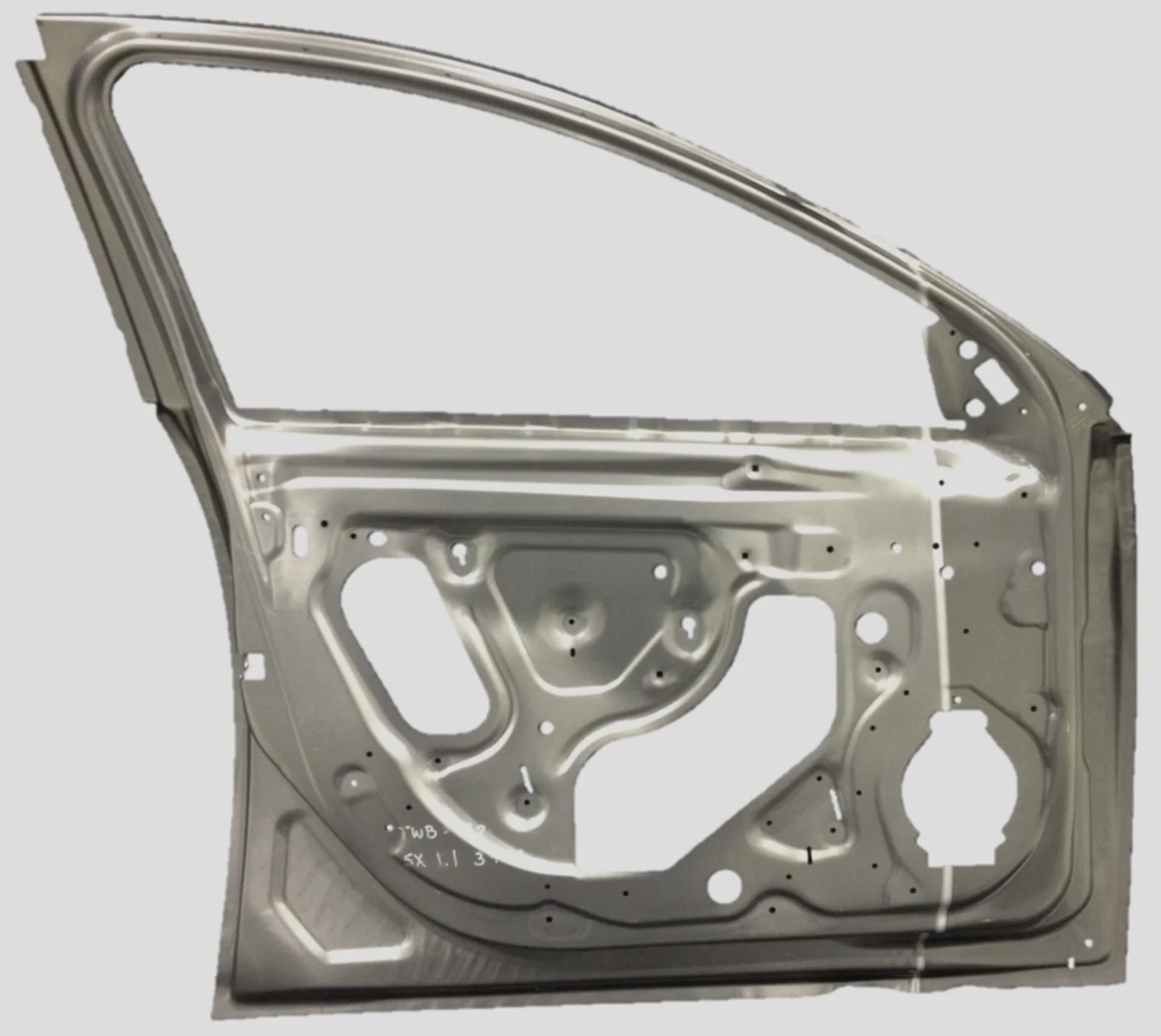
Case Study (Die Performance)

Precision Deep Drawing Automotive Body Panels Die Mold

D2 / DC53 / GM246Die Material
60–62 HRCHardness
Vacuum quenchingHeat Treatment
Flawless Class-A surface finish
Zero metal sheet tearing
Highly repeatable panel geometry
Extreme wear resistance achieved
Minimal tooling downtime maintenance
Significantly reduced scrap rates
Extended production cycle life

04 — Product Application

Where Precision Deep Drawing Automotive Body Panels Are Used

These high-precision, heavy-gauge components form the structural backbone and exterior shell of modern vehicles. They provide essential crash-safety protection, aerodynamic efficiency, and the seamless, high-quality aesthetic required for automotive exteriors.

Industry Applications

Passenger Vehicle Exterior Skins (Class-A)

Used to stamp high-visibility exterior components such as car doors, hoods, fenders, roof panels, and trunk lids. These panels require a flawless, ripple-free surface to ensure a perfect mirror-like finish after paint shop application.

Structural Body-in-White (BIW) Inners

Applied to structural, safety-critical inner panels including inner door structures, wheel arches, pillar reinforcements (A, B, and C pillars), and floor pans. These parts absorb and redirect impact energy during collisions to protect passenger cabin integrity.

Commercial Vehicle & Truck Cabins

Utilized in manufacturing heavy-duty truck cabin enclosures, roof caps, engine side shields, and structural door frames. The deep-drawn panels are engineered to endure high vibrations and severe weather exposure over millions of fleet miles.

Electric Vehicle (EV) Lightweight Closures

Designed for stamping specialized lightweight aluminum closures and protective structural enclosures for EV battery packs. These deep-drawn structures optimize weight reduction to extend battery range while maintaining rigid structural protection against road debris.

Finished Product Gallery

05 — Key Advantages

Why Choose the 1250-Ton Sinter Hydraulic Press

This heavy-duty press delivers the massive tonnage and structural stability required to form large-scale Class-A automotive body panels. It combines high-speed automation readiness with dynamic flow control to maximize production efficiency while eliminating cosmetic defect rates.

Technical & Commercial Benefits

01

Extreme Structural Rigidity and Platen Parallelism

The pre-stressed tie-rod four-pillar design minimizes structural deflection and stretching under full load. This strict alignment prevents off-center deviation, ensuring uniform drawing depth and protecting expensive automotive tooling from premature wear.

02

Multi-Point CNC Cushion and Dynamic Blank Holding

Equipped with a high-capacity, multi-point adjustable hydraulic cushion, the system controls localized blank holder pressure in real-time. This dynamic flow management prevents metal wrinkling in flat areas and tearing on deep, complex curves.

03

Class-A Surface Quality for Exterior Panels

The press features highly optimized, proportional deceleration curves that eliminate high-impact shock when the punch contacts the blank. This smooth, controlled forming speed prevents micro-cracks, surface scoring, and stretch marks on highly visible body parts.

04

Energy-Saving Servo-Hydraulic Technology

High-efficiency servo motors drive the variable displacement pump system, dynamically adjusting power consumption to match the specific cycle phase. This intelligent management cuts idle power draw, reducing total factory energy costs by up to 50%.

05

High-Speed Automation and Robotic Compatibility

Pre-configured with high-speed Profinet communication interfaces, this press integrates seamlessly into fully automated robotic transfer lines. The fast approach and return velocities yield high-volume production rates of up to 360 parts per hour.

06

Rapid Die Changeover for High-Mix Manufacturing

Features automated rolling bolsters, hydraulic die lifters, and quick-clamp systems that enable single-minute die changeovers (QDC). This minimizes machine downtime, allowing manufacturers to switch between different body panel runs with extreme efficiency.