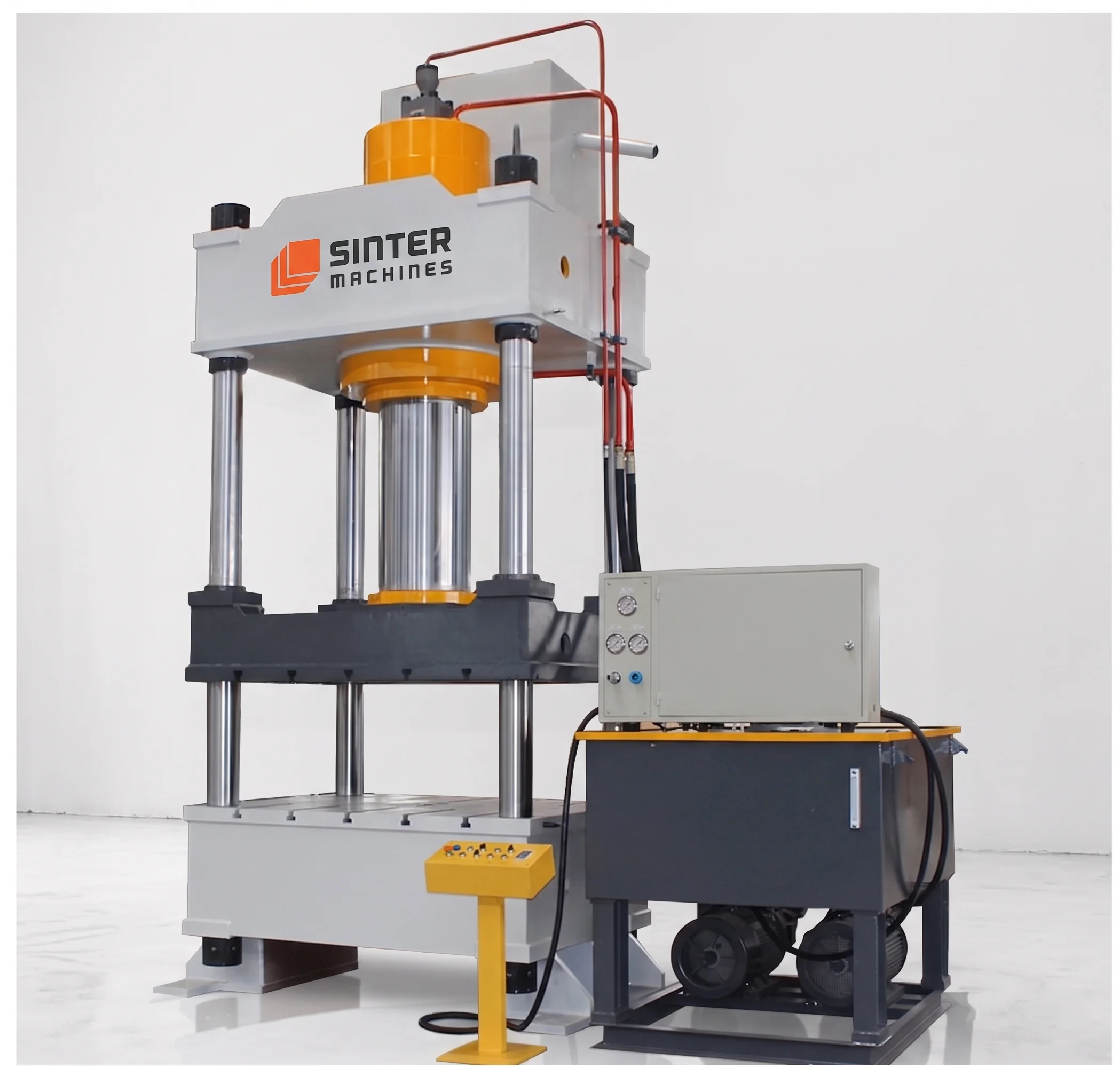
400T Four Pillar Hydraulic Press for Metal Chips Block
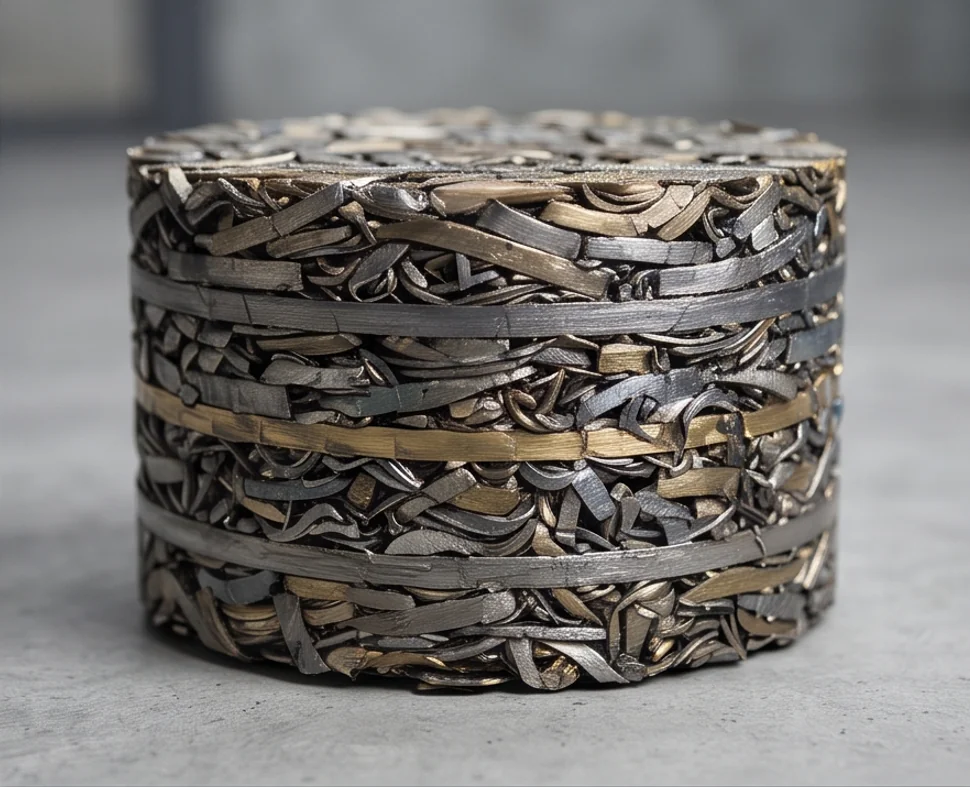
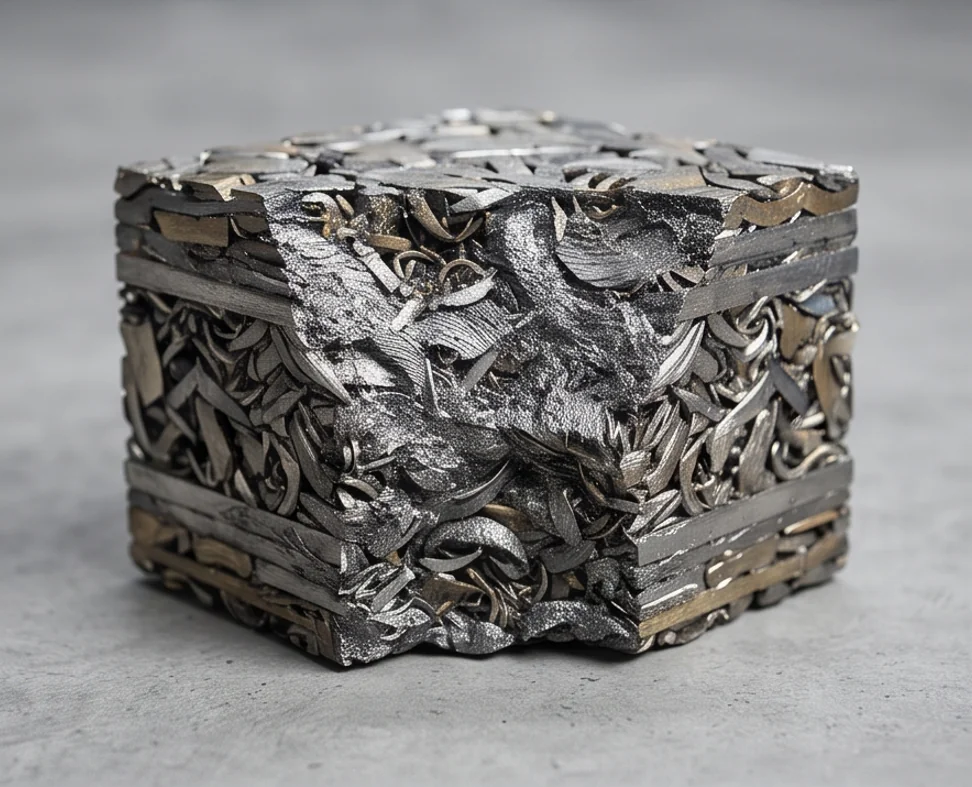
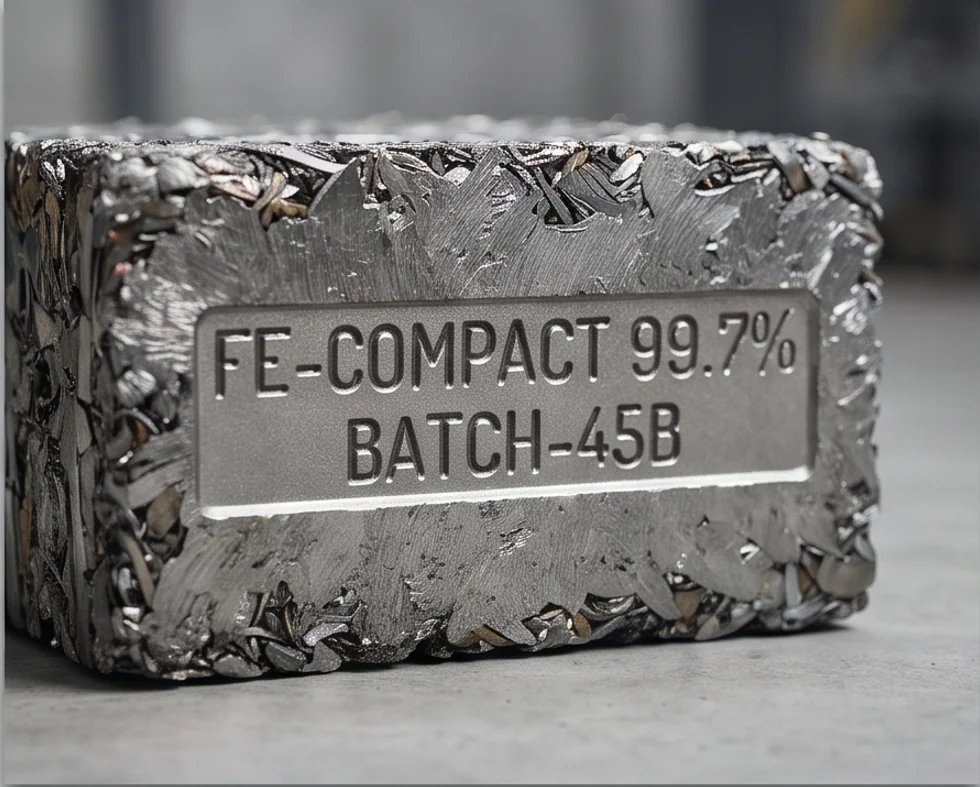
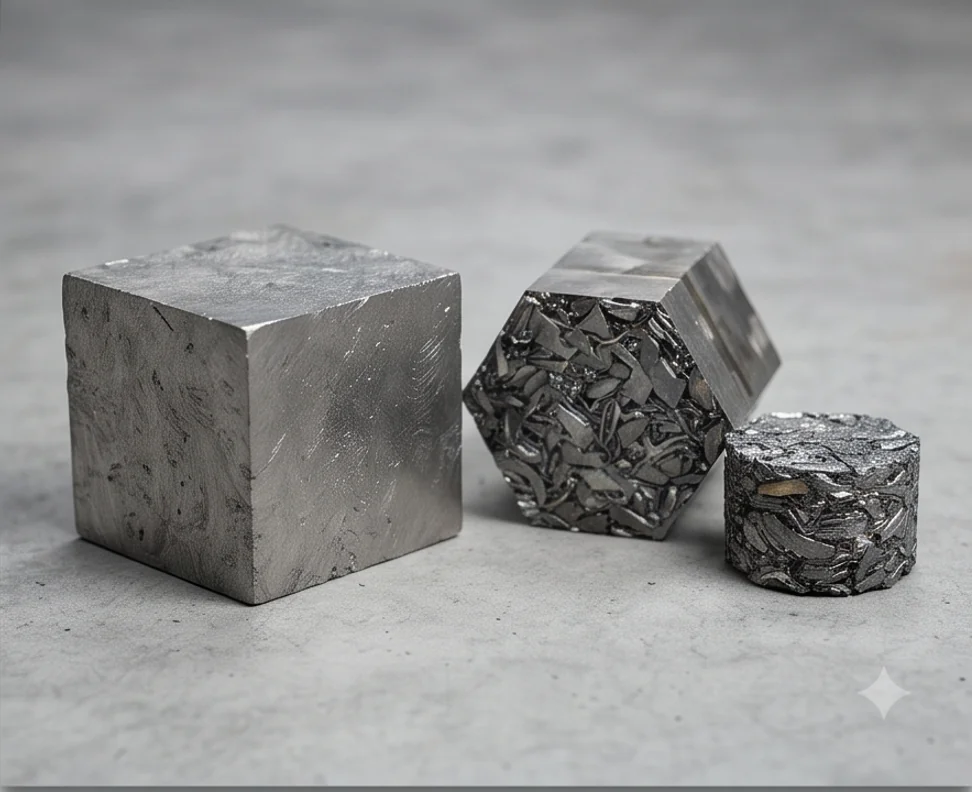
Metal Chips Block Forming 4-Column Hydraulic Press Machine is a heavy-duty industrial recycling system designed to compact loose metal turnings, swarf, filings, and chips into high-density solid blocks (briquettes) without chemical binders.
01 — Advantages
Structural Design & Advantages (4-Column Architecture)
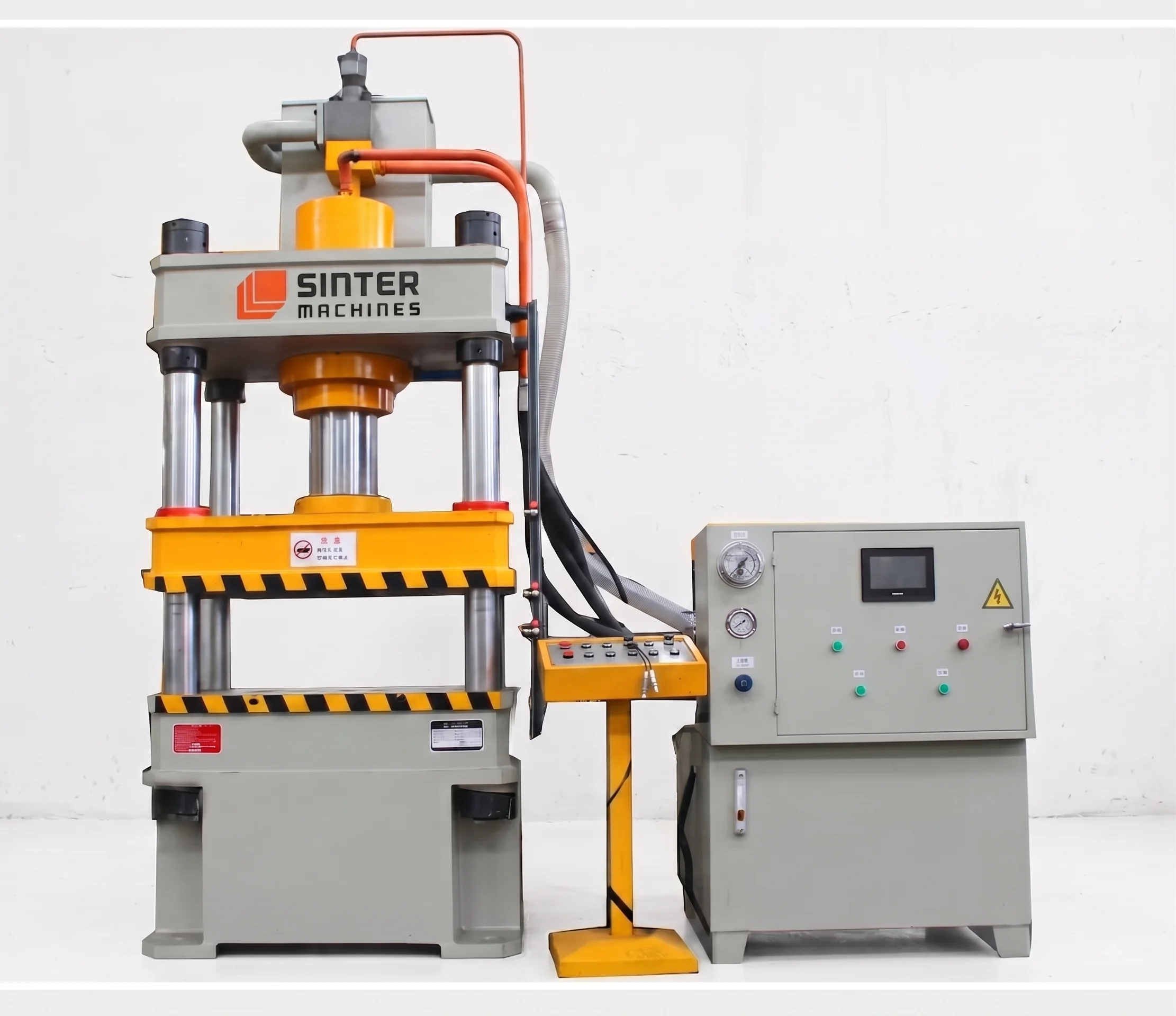
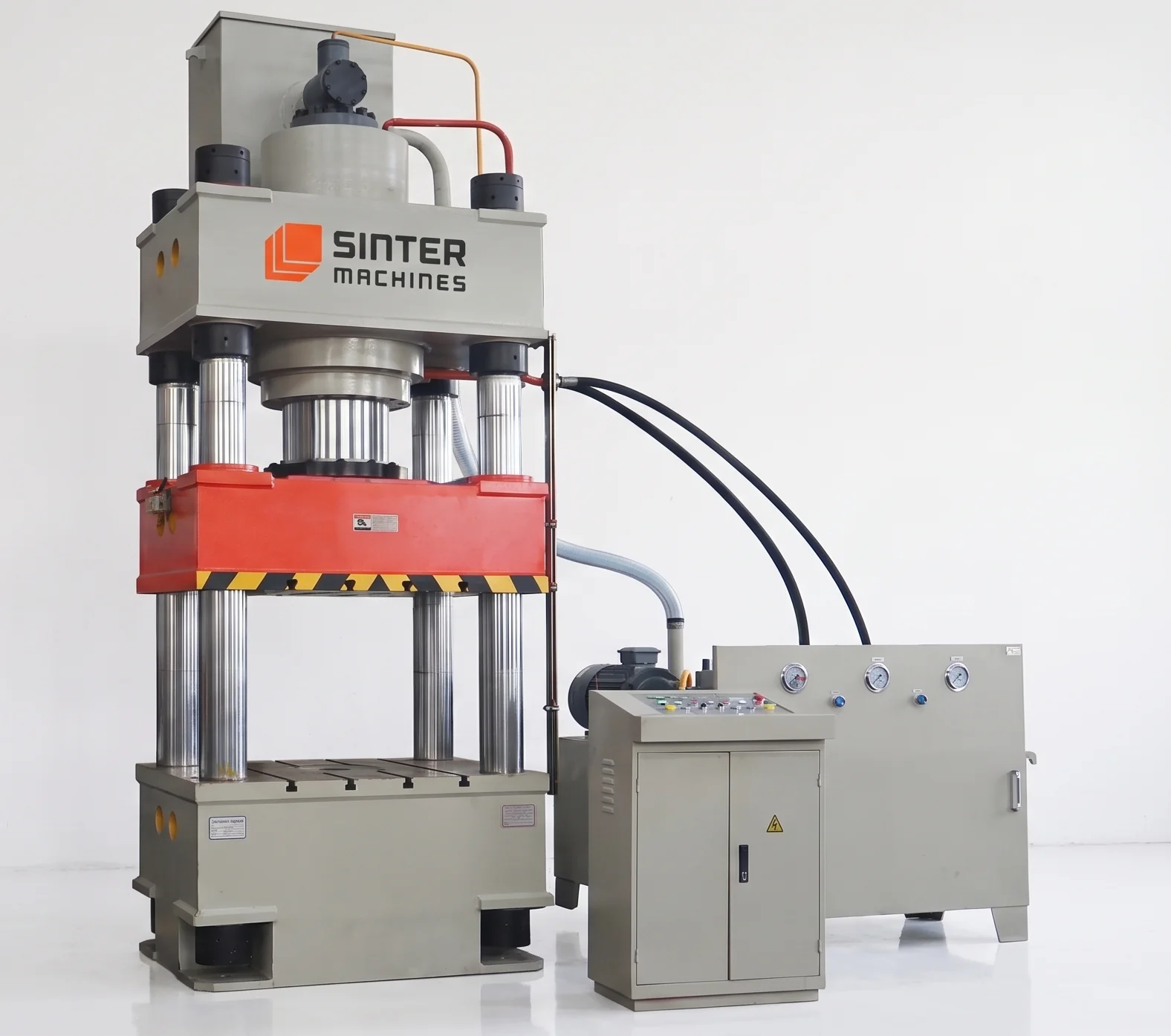
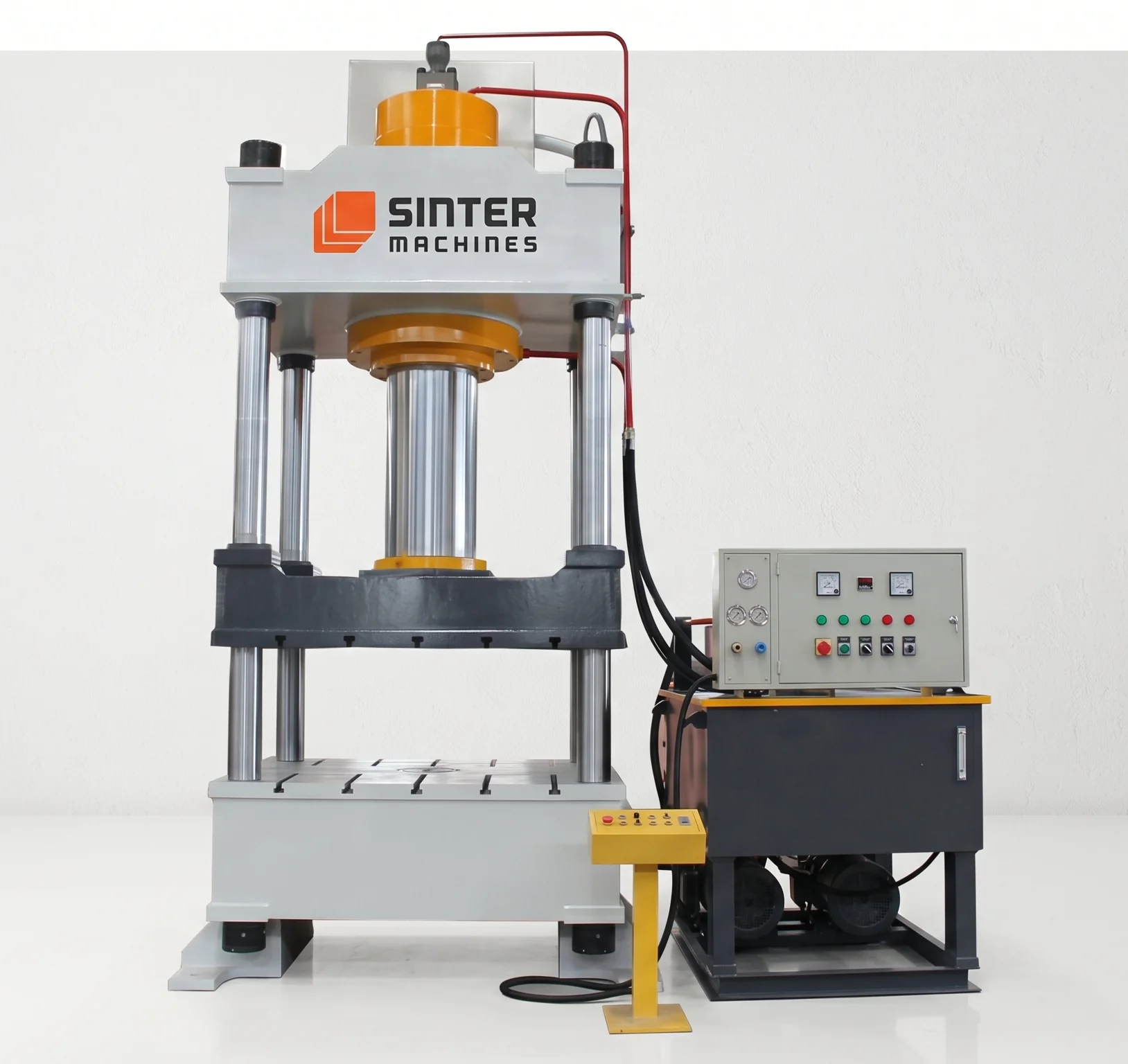
Platen Parallelism & Guidance: Loose metal chips create highly uneven resistance across the die cavity. The four-pillar precision-ground column architecture ensures absolute parallel movement of the main ram, preventing side-play or tilting under heavy eccentric loads.
Structural Integrity: Built from heavy-gauge stress-relieved steel plates and robust vertical pillars, the frame withstands continuous high-tonnage cycling without fatigue or deflection.
02 — Technical Specifications
Key Technical Specifications
Feature | Industrial Specification Range |
Nominal Compaction Force | 100 Tons to 600+ Tons (configured to achieve maximum green density for various metals) |
Guide Structure | 4 Hard-Chromed, Precision-Ground Pillars with low-friction, long-wear bushings |
Fluid Drainage System | Integrated collection trough and filtration channels to extract and recover valuable cutting oils or coolants |
Hydraulic Drive | High-efficiency variable displacement piston pump or servo-hydraulic power pack with proportional pressure control |
Control Unit | PLC integration with digital HMI touchscreen for programmable feeding, stroke depth, dwell time, and automatic ejection |
03 — Operational Workflow
Operational Workflow
- Material Feeding: Loose metal chips are loaded into an automated hopper, often fed via screw conveyors or tipping mechanisms.
- Pre-Compaction & Fluid Squeezing: The top main ram descends rapidly, shifting to high pressure to squeeze out residual cutting fluids and coolants from the swarf.
- High-Pressure Briquetting: The system ramps up to peak tonnage. Under intense cold-welding pressure, the jagged metal chips interlock tightly into a solid, uniform block.
- Ejection: The bottom or push-out hydraulic cylinder cleanly extracts the solid metal puck from the die cavity, ready for downstream furnace melting or transport.
Finished Product Gallery