01 — Press System
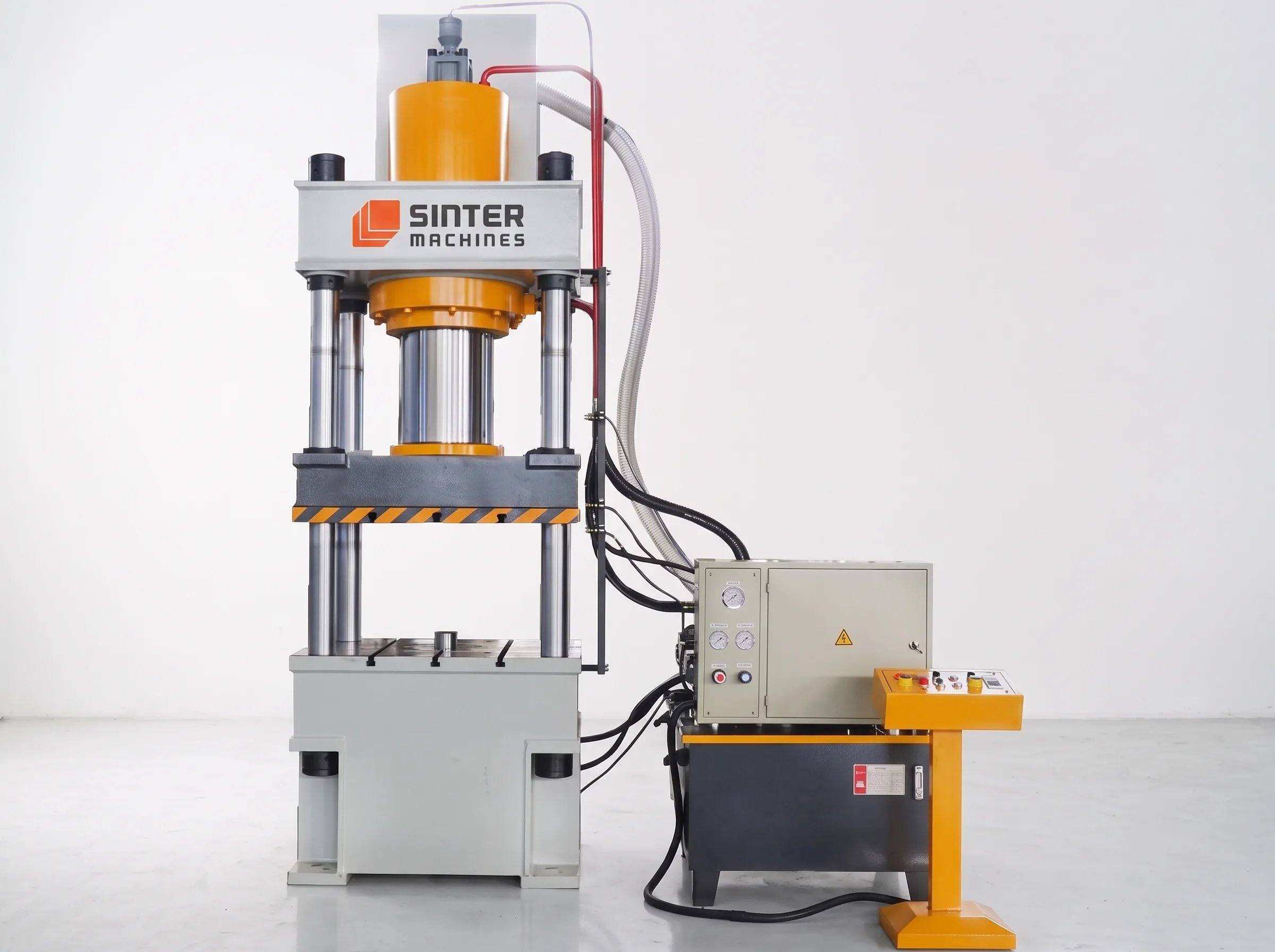
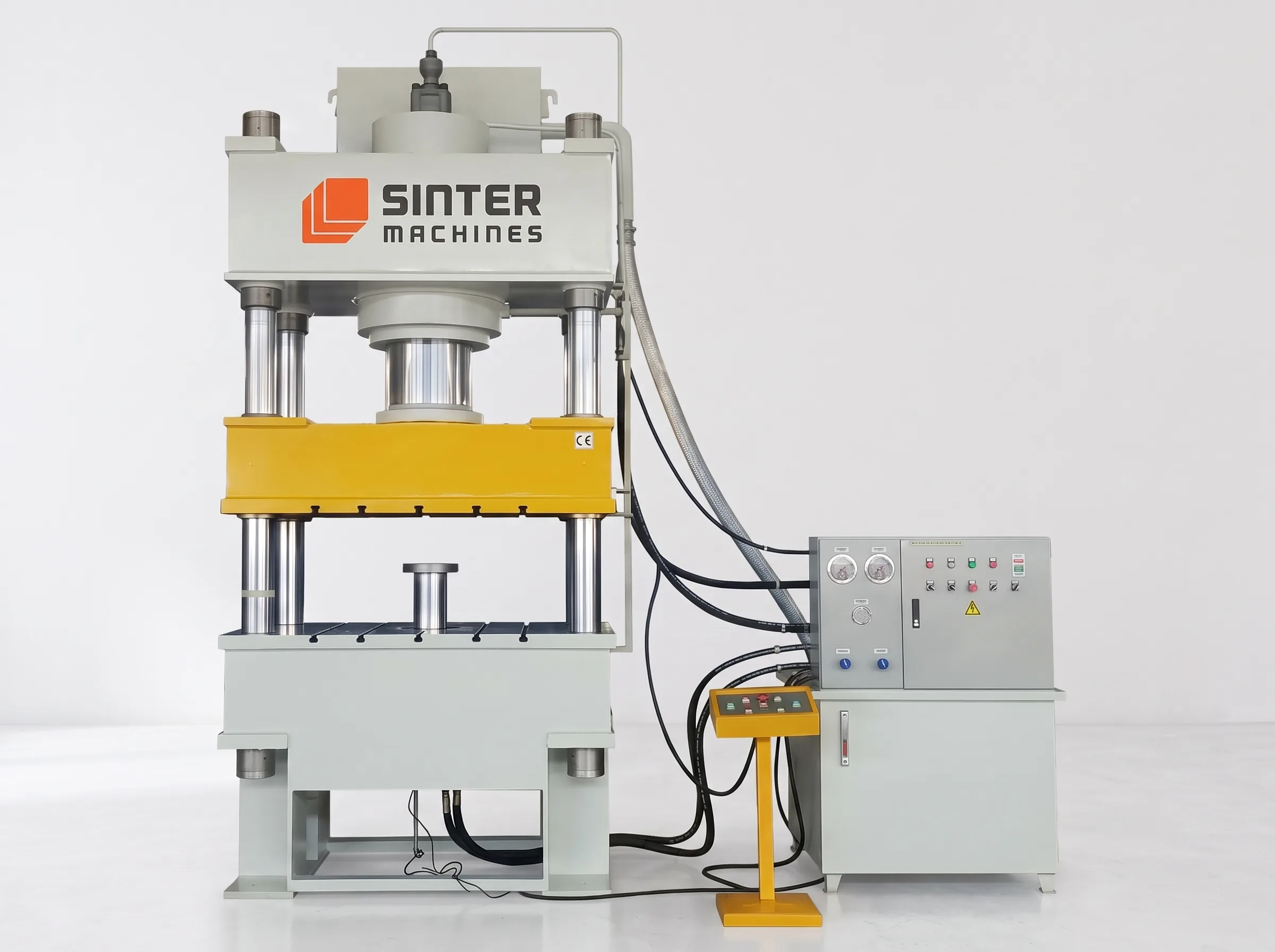
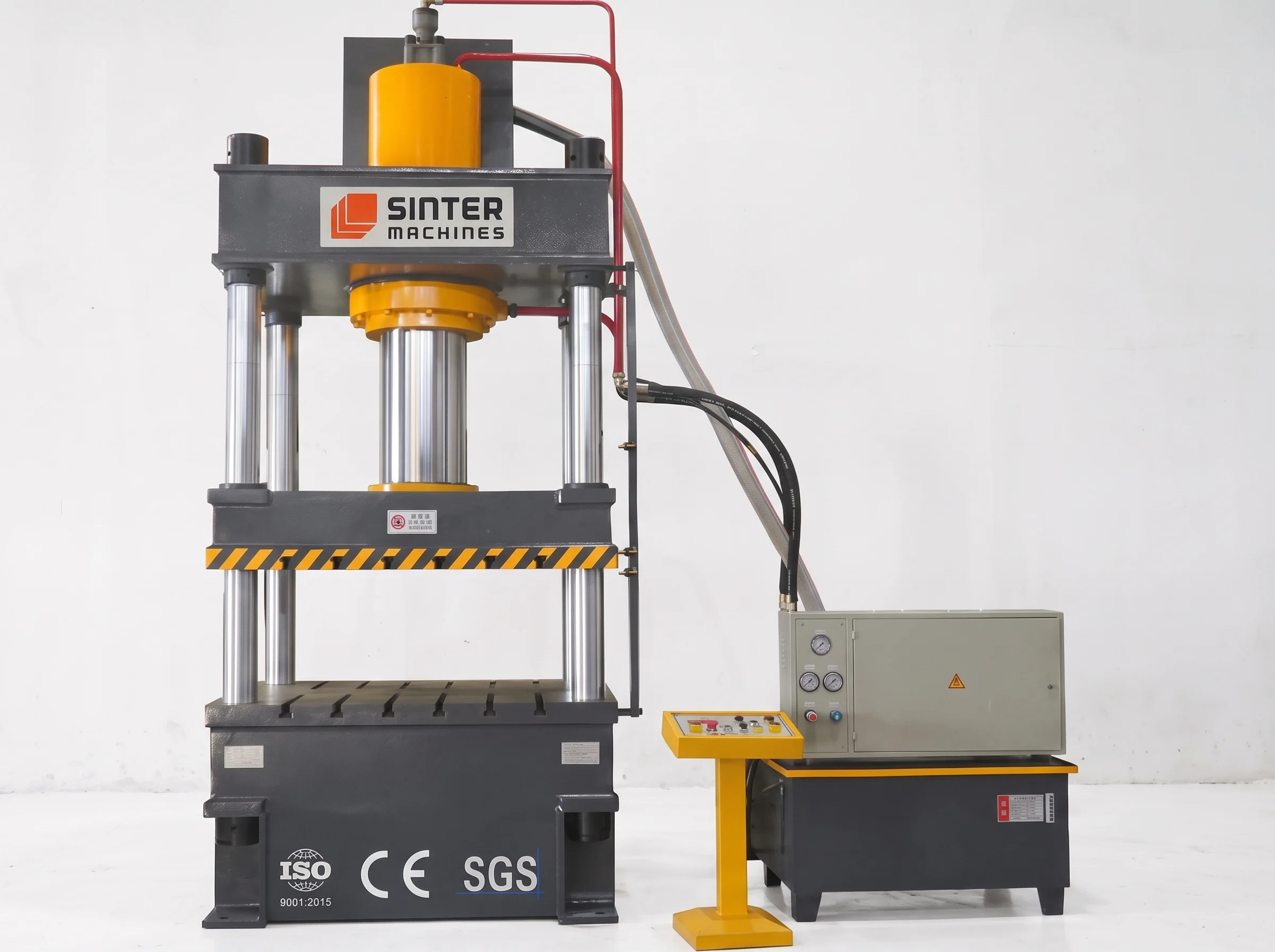
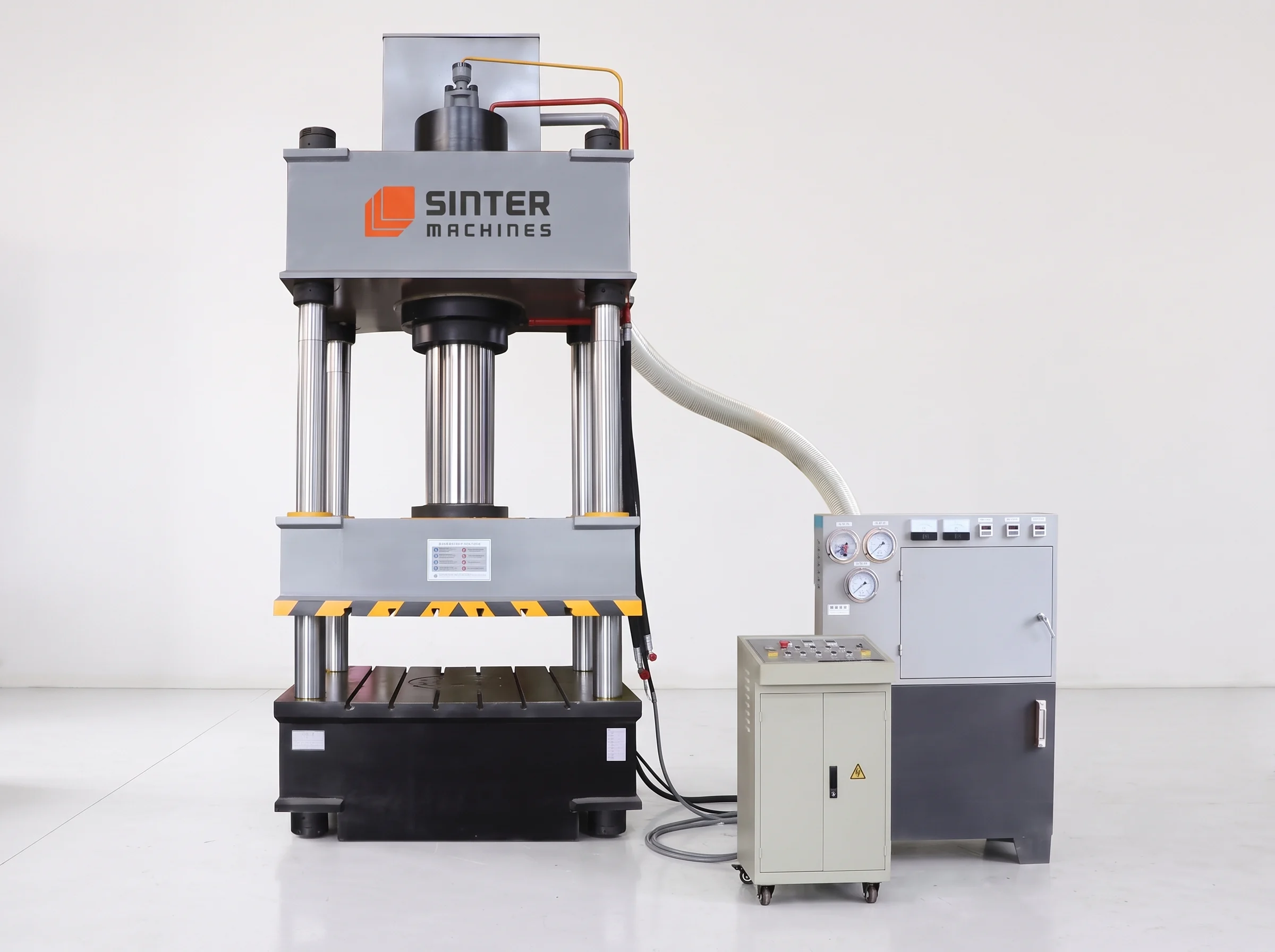
315 Ton Four Pillar Hydraulic Press Machine
The 315-ton four-pillar hydraulic press from Sinter Hydraulics India is a core production system for mineral fiber ceiling tiles, enabling high-quality acoustic panels, uniform density, structural stability, consistent dimensions, and scalable manufacturing. Built with a rigid pre-stressed frame and smooth hydraulic control, it compacts fiber mats precisely without damaging internal binder bonds.
Use Case
This 315-ton four-pillar hydraulic press is used for compression molding of mineral fiber ceiling tiles prepared from mineral wool, perlite, recycled cellulose, and starch binders. The press is used after slurry preparation and mat formation to compact wet or semi-dry fiber mats, achieve uniform density and thickness, improve mechanical strength and rigidity, and create flat, smooth, paint-ready surfaces.
Core Applications
- High-density compression molding and de-watering compaction of mineral fiber acoustic ceiling tiles and suspension panels
- Precision manufacturing of fire-rated, sound-absorbing, and thermal-insulating mineral wool modular ceiling systems
- Heavy-duty molding of wet-formed and semi-dry mineral wool composite sheets requiring uniform density and exact thickness control
Material
- Biosoluble mineral wool, stone wool fibers, expanded perlite grains, refined clay, and recycled cellulose fiber pulp
- Organic starch binders, synthetic latex emulsions, hydrophobic silicone waterproofing agents, and biocidal preservatives
- Light-density mineral fillers, flame-retardant inorganic compounds, and surface-whitening chalk additives
Typical Products Processed
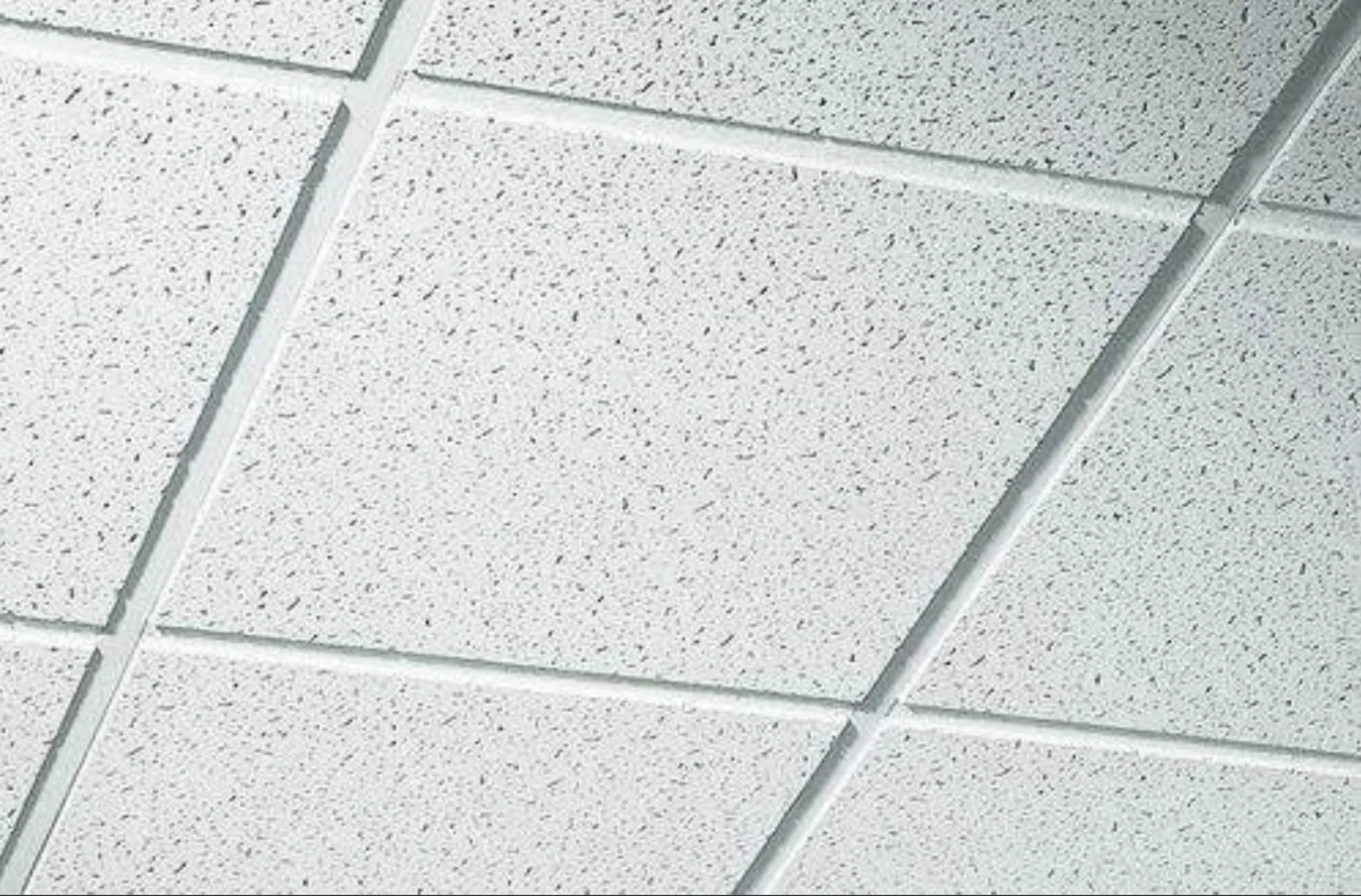
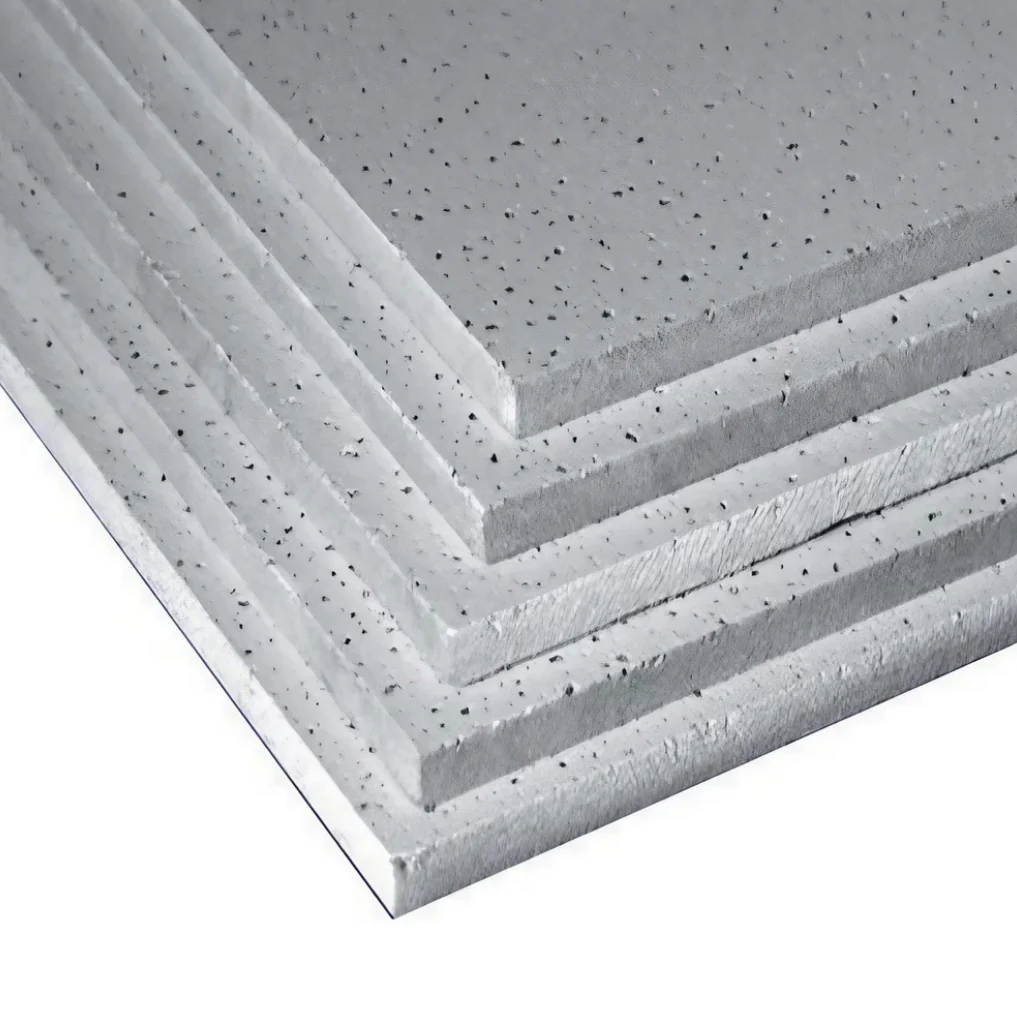
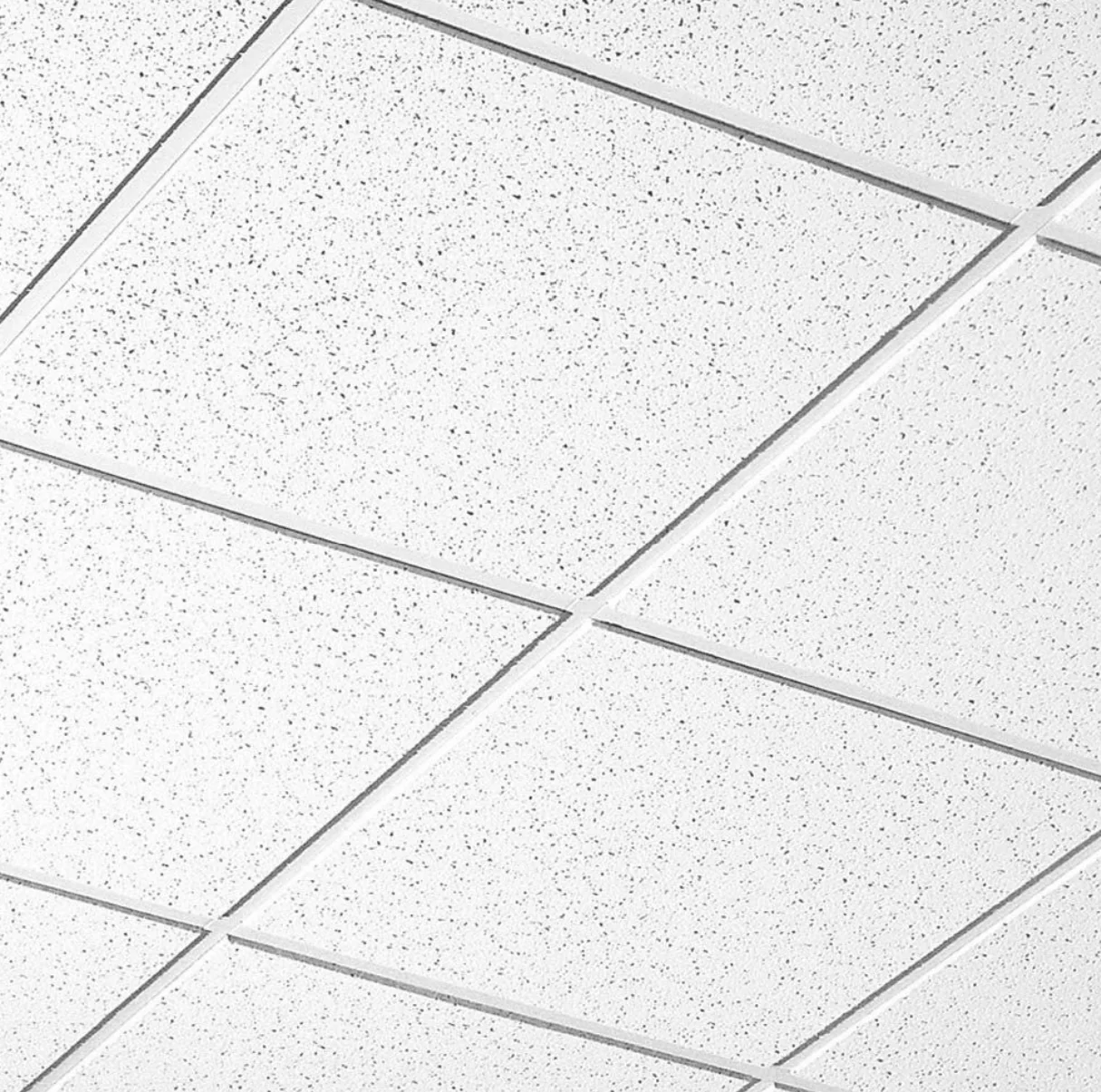
- Standard 600 x 600 mm and 1200 x 600 mm lay-in and tegular-edge mineral fiber ceiling tiles for suspended grid systems
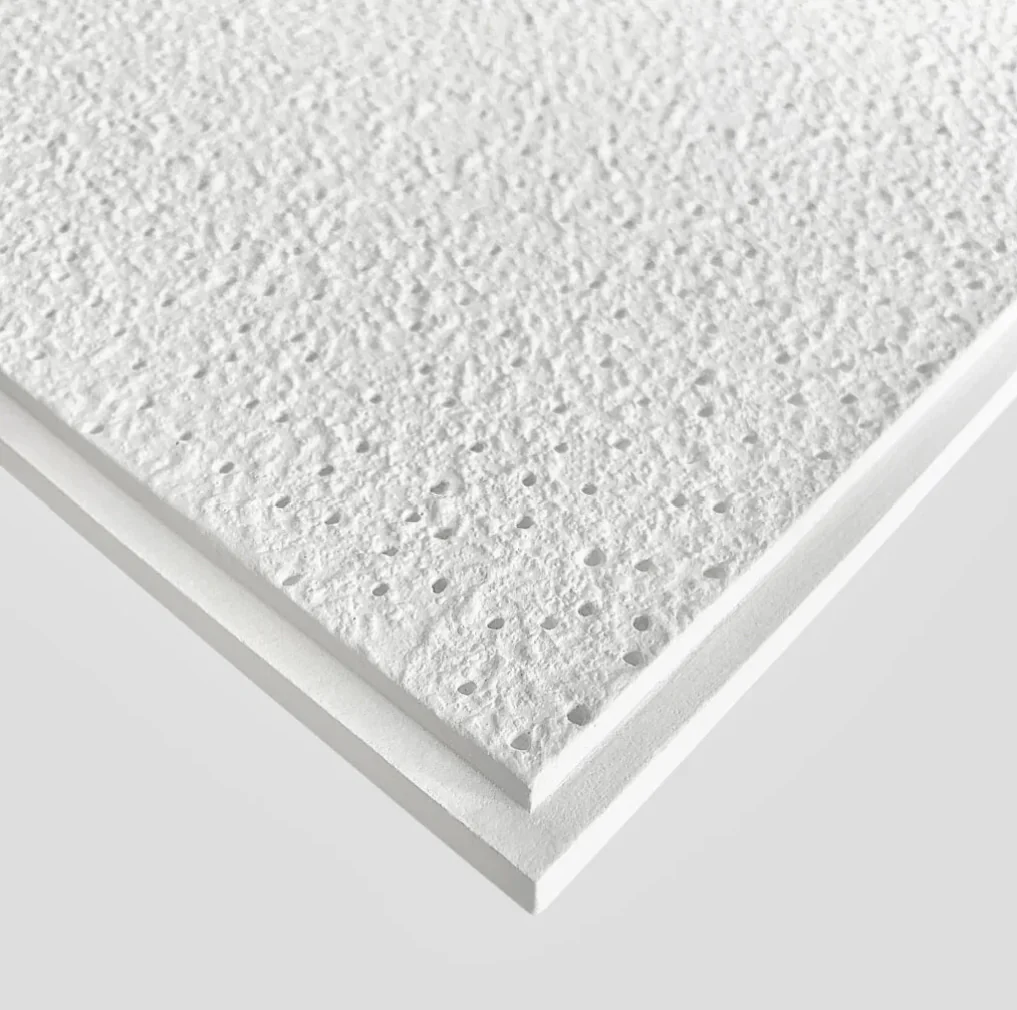
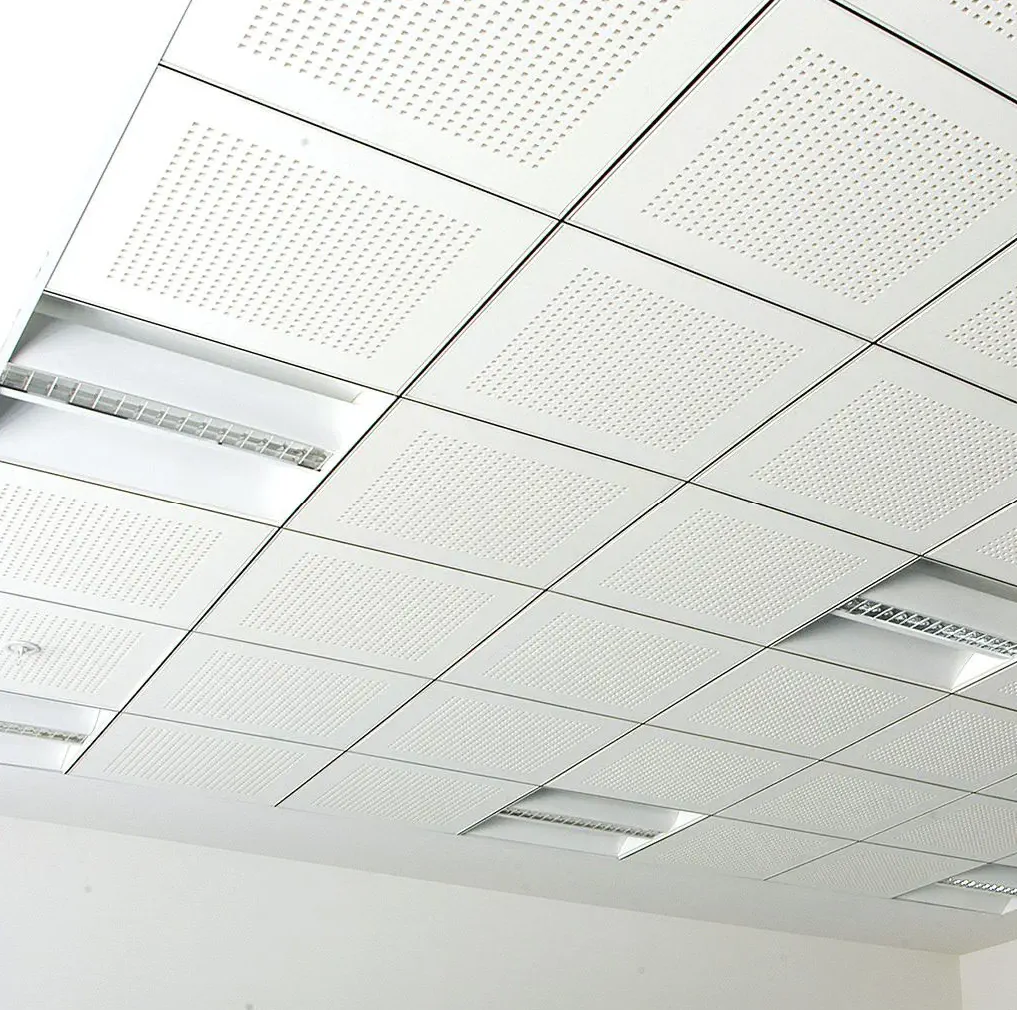
- High-NRC acoustic mineral fiber panels featuring micro-fissured, pin-perforated, or fine-textured surface patterns
- Moisture-resistant and high-density industrial acoustic ceiling tiles designed for cleanrooms, schools, and offices
Key Functions
- Application of uniform hydraulic compression across the wet fiber mat to expel excess moisture and consolidate the fiber matrix
- Multi-stage pressure ramping and dwell control to set target tile thickness and lock in structural core density
- Slow-closing platen motion to prevent fiber displacement, slurry distortion, or edge blowing during compaction
- Precision hydraulic ejector pin actuation ensuring gentle, non-destructive release of delicate green-state fiber tiles
Why 315 Ton Hydraulic Press?
- Delivers 315 tons of smooth, evenly distributed hydraulic force required to fully compact resilient mineral fiber mats without crushing internal perlite structure
- Four-pillar guide alignment maintains exact platen parallelism, ensuring zero tile thickness variation and perfectly flat grid installation
02 — Technical Specifications
SM 315 HP – HYDRAULIC PRESS MACHINE COMPLETE TECHNICAL DATA
The SM 315 HP heavy-duty hydraulic press delivers uniform compaction force and precise parallel platen guidance tailored for mineral fiber ceiling tile molding. Its rigid four-column guide structure and multi-stage pressure control purge excess moisture, consolidate the fiber-binder matrix, and ensure absolute panel flatness.
Capacity
- Maximum continuous compression molding force capacity of 3150 kN
- Dedicated hydraulic bottom ejector force capacity of 600 kN
Structural Design
- Heavy stress relieved four column guide structure engineered for precise parallel compression molding
- FEA stress relieved heavy steel plate welded bolster and upper moving platen assembly
Frame Type
- Precision aligned solid induction hardened pillar frame guide structure
- Stress relieved heavy welded steel plate bolster and upper moving slide assembly
Hydraulic System
- High output variable displacement axial piston pump fluid power assembly
- Multi stage high capacity offline oil filtration loop with integrated oil coolers
Main Ram Stroke
- Maximum vertical slide compression travel distance capability of 600 mm
- Electronic stroke length limitation positioning resolution accurate within 0.005 mm
Working Hydraulic Pressure
- Maximum continuous operating main hydraulic system fluid pressure of 210 bar
- Peak shock safety valve pressure relief calibration threshold limit of 240 bar
Daylight Gap
- Maximum open vertical daylight window working clearance of 1000 mm
- Minimum closed shut die height tool workspace space of 250 mm
Approach Speed
- Accelerated downward advance slide rapid travel speed of 220 mm/Sec
- Controlled fiber mat mold engagement deceleration velocity of 10 mm/Sec
Pressing / Drawing Speed
- Precision mineral fiber mat compaction molding speed of 3 to 12 mm/Sec
- Maximum resistance continuous molding compression velocity of 15 mm/Sec
Return Speed
- Smooth upward ram extraction retraction travel speed of 180 mm/Sec
- Fast automated hydraulic decompression pre return system cycle timing
Bed / Platen Size Platen
- Total clear bolster bed width left to right of 1400 mm
- Total clear bolster bed depth front to back of 1200 mm
Columns
- High tensile forged alloy steel pillar diameter of 180 mm
- Heavy duty wear resistant bronze guide bushings with automatic grease lubrication
Working Envelope
- Total horizontal internal clear workspace area of 1400 by 1200 mm
- Maximum permissible upper compression mold assembly mass weight of 4500 kg
Control System
- Industrial programmable logic controller linked with a graphical touchscreen station
- Dual redundant non-contact linear transducer position tracking systems accurate within 0.002 mm
Main Motor Power
- High efficiency primary hydraulic pump electric drive motor power of 37 kW
- Dedicated auxiliary cooling and continuous oil filtration motor power of 4 kW
Valves & Hydraulics
- High dynamic response proportional pressure and flow control cartridge valve manifold block
- Fast acting overhead gravity pre fill oil valve unit assembly
Automation
- Digital interface connection ports for synchronized automatic mold tray transfer systems
- Integrated multi point hydraulic pin ejectors and pneumatic mold release air blowers
Safety Features
- Dual channel infrared light curtain barriers guarding operator workspace zones
- Automated heavy duty dual fail-safe mechanical anti drop ram safety locking blocks
SM 315 HP — Model Specifications
- Nominal Force: 3150 KN
- Maximum Hydraulic Pressure: 25 MPa
- Max Opening Height of the Slider: 1000 mm
- Max Stroke of the Slider: 600 mm
- Effective Bed Size: 800 × 800 mm
- Slider Down Speed: 100 mm/s
- Slider Pressing Speed: 7–12 mm/s
- Slider Return Speed: 90 mm/s
- Ejector Cylinder Nominal Force: 300 KN
- Stroke of the Ejection Cylinder: 300 mm
03 — Die / Mold System
Precision Mineral Fiber Interior Ceiling Tiles Die Mold Engineering
This precision mineral fiber ceiling tile compression mold features CNC-machined aluminum pattern cavities, integrated water drainage channels, and pneumatic ejector systems. Engineered for 315-Ton hydraulic pressing, it ensures uniform fiber consolidation, purges moisture, and delivers sharp architectural edge details.
Technical Specifications (Tooling)
Die Type
- Multi cavity compression compaction mold assembly for mineral fiber interior ceiling tiles
- Matched upper compression platen and lower female textured pattern cavity mold set with pneumatic part ejection
Die Materials
- Aircraft grade 7075 T6 billet aluminum alloy mold plates offering superior thermal conductivity and moisture resistance
- Wear resistant chromium plated hardened SKD11 steel edge framing rails installed along high wear perimeter sealing margins
Tool Configuration & Construction
- Precision CNC machined modular pattern insert carrier frames for fast decorative surface texture design changes
- Rigid stress relieved cast aluminum base plates engineered to prevent mold flexing under full 315 ton compaction loads
Key Tooling Features
- Integrated micro porous de watering drainage channels and vacuum de airing passages for rapid moisture expulsion
- Multi point pneumatic ejector pin networks ensuring smooth release of fragile wet mineral fiber tiles without edge cracking
Alignment Accuracy
- Upper compression plate to lower pattern cavity guide pillar alignment deviation kept strictly under a limit of 0.010 mm
- Platen parallelism variance across the active mold workspace restricted within a tolerance of 0.010 mm
Process Materials
- Biosoluble mineral wool stone wool fibers expanded perlite grains refined clay and recycled cellulose fiber pulp
- Organic starch binders synthetic latex emulsions hydrophobic waterproofing agents and mineral filler compounds
Surface Finish
- Interior decorative mold cavity surfaces polished and Teflon PTFE coated down to a surface roughness of Ra 0.15 microns
- Hydrophobic non stick cavity surface treatment preventing binder fiber adhesion and reducing mold washdown intervals
Tool Life
- Expected operational span of 150000 compression molding cycles before requiring mandatory surface coating re application and inspection
- Total structural aluminum mold frame and base assembly lifespan capacity reaching 1000000 production cycles before major rebuilds
Precision Mineral Fiber Interior Ceiling Tiles Die Mold
04 — Product Application
Where Mineral Fiber Interior Ceiling Tiles Are Used
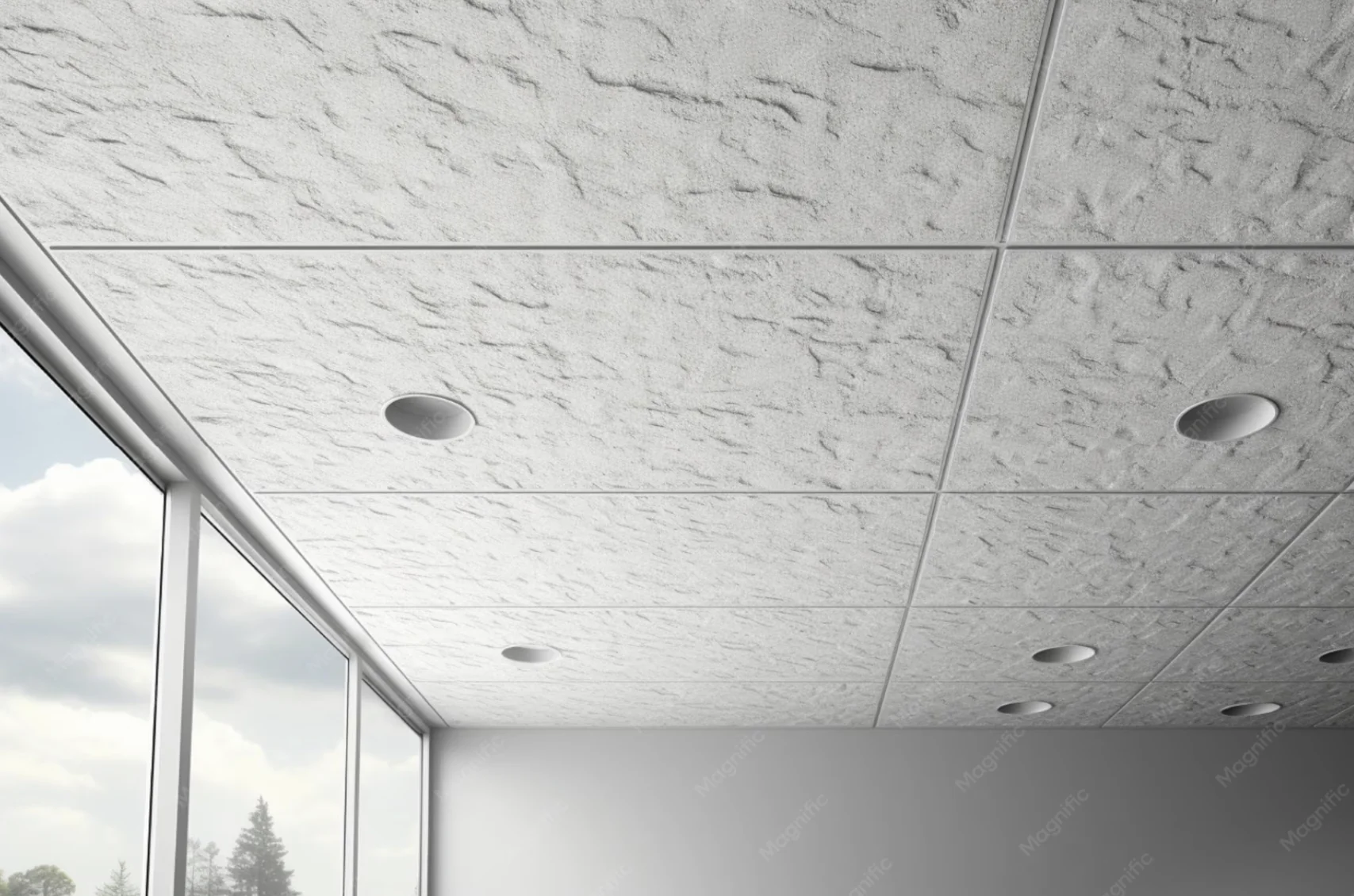
Precision-molded mineral fiber interior ceiling tiles provide outstanding sound absorption, high thermal insulation, and exceptional fire-retardant protection. Their lightweight structural core, dimensional stability, and clean grid-fitting profiles make them standard ceiling solutions across commercial, educational, and healthcare buildings.
Industry Applications
Mineral fiber interior ceiling tiles are specified across corporate real estate, educational campuses, healthcare centers, retail malls, and transportation hubs. High-pressure hydraulic de-watering and fiber compaction ensure stable panel density, flat grid edges, and uniform surface textures, enabling tiles to drop seamlessly into suspended grid systems to deliver reliable noise reduction coefficients (NRC) and thermal insulation across all interior building environments.
Commercial Office Buildings, Corporate Head-Offices, and Call Centers
Reduces ambient background noise and echo reverberation in large open-plan office layouts to enhance employee productivity and acoustic privacy. Maintains precise panel flatness and dimensional accuracy for easy installation and maintenance access within suspended T-grid ceiling systems.
Educational Facilities, School Classrooms, Lecture Halls, and Libraries
Improves speech intelligibility and acoustic clarity for students by absorbing excess low-frequency sound reflections and airborne noise. Delivers Class-A fire resistance and high thermal insulation, helping maintain interior temperature stability and building energy efficiency.
Healthcare Centers, Hospitals, Medical Clinics, and Laboratories
Deploys bio-soluble, anti-microbial mineral fiber tiles designed to inhibit mold growth, bacteria accumulation, and sagging from humidity. Provides high light reflectance properties that optimize natural and artificial indoor lighting distribution in sterile medical environments.
Retail Malls, Shopping Centers, Supermarkets, and Public Transportation Hubs
Withstands high traffic ambient humidity changes while delivering uniform sound-damping performance in expansive public concourses. Offers micro-fissured, pin-perforated, or smooth textured surface finishes that accept high-durability, washable ceiling paint coatings.
Finished Product Gallery
05 — Key Advantages
Why Choose the 315-Ton Sinter Hydraulic Press
The 315-Ton Sinter Hydraulic Press delivers uniform compaction force and precise parallel slide guidance for molding mineral fiber ceiling tiles. Its rigid four-column architecture, controlled de-watering capability, and programmable dwell cycle eliminate core density variation and guarantee flat, high-strength acoustic tiles.
Technical & Commercial Benefits
Controlled 315-Ton Hydraulic De-Watering and Fiber Mat Compaction
Applies smooth, evenly distributed hydraulic pressure across the wet mineral fiber mat to purge excess water and consolidate binder bonds. Controlled compression yields dense, high-strength ceiling tiles without crushing internal perlite structures.
Multi-Stage Pressure Ramping and Dwell Control Preserving Fiber Structure
Features programmable pressure ramping to gradually compress the mineral wool, clay, and binder slurry without fiber tearing or displacement. Controlled dwell cycles lock in target tile thickness and stabilize internal core density prior to drying.
Rigid Four-Column Architecture Guaranteeing Absolute Tile Flatness
Constructed with heavy pre-stressed forged steel pillars that maintain strict upper and lower platen parallelism under full compaction loads. Zero platen deflection prevents edge-to-center thickness variation, ensuring tiles lay perfectly flat in ceiling T-grids.
Smooth Variable-Speed Slide Motion Preventing Fragile Green-State Fracturing
Decelerates upper slide approach velocity right before mat contact, preventing hydraulic shock, fiber washout, or edge cracking. Vibration-free ram movement protects fragile wet fiber mats during critical compaction and initial handling stages.
Integrated Pneumatic and Hydraulic Ejection Streamlining Tile Release
Equipped with multi-point pneumatic ejectors and gentle hydraulic pin networks designed for non-destructive release of wet fiber tiles. Automated part ejection prevents tile corner breakage, minimizes handling damage, and accelerates production cycle times.
High Hourly Yields and Reduced Scrap Rates Maximizing Line Profitability
Combines fast rapid approach speeds with automated mold tray transfer systems to achieve high production outputs of 60 to 100 tiles per hour. Consistent compaction quality dramatically lowers material scrap rates and reduces manual board finishing labor.