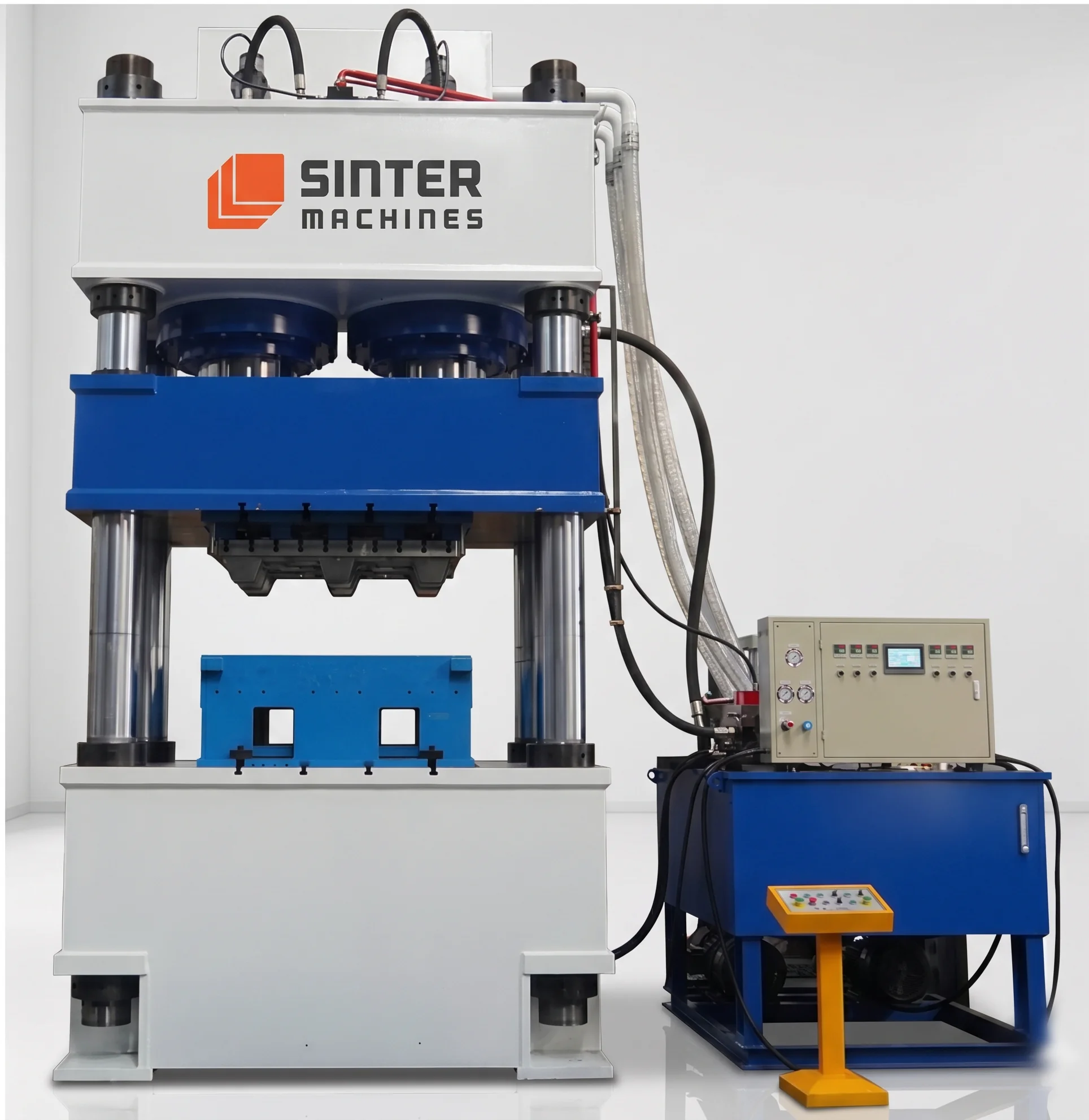
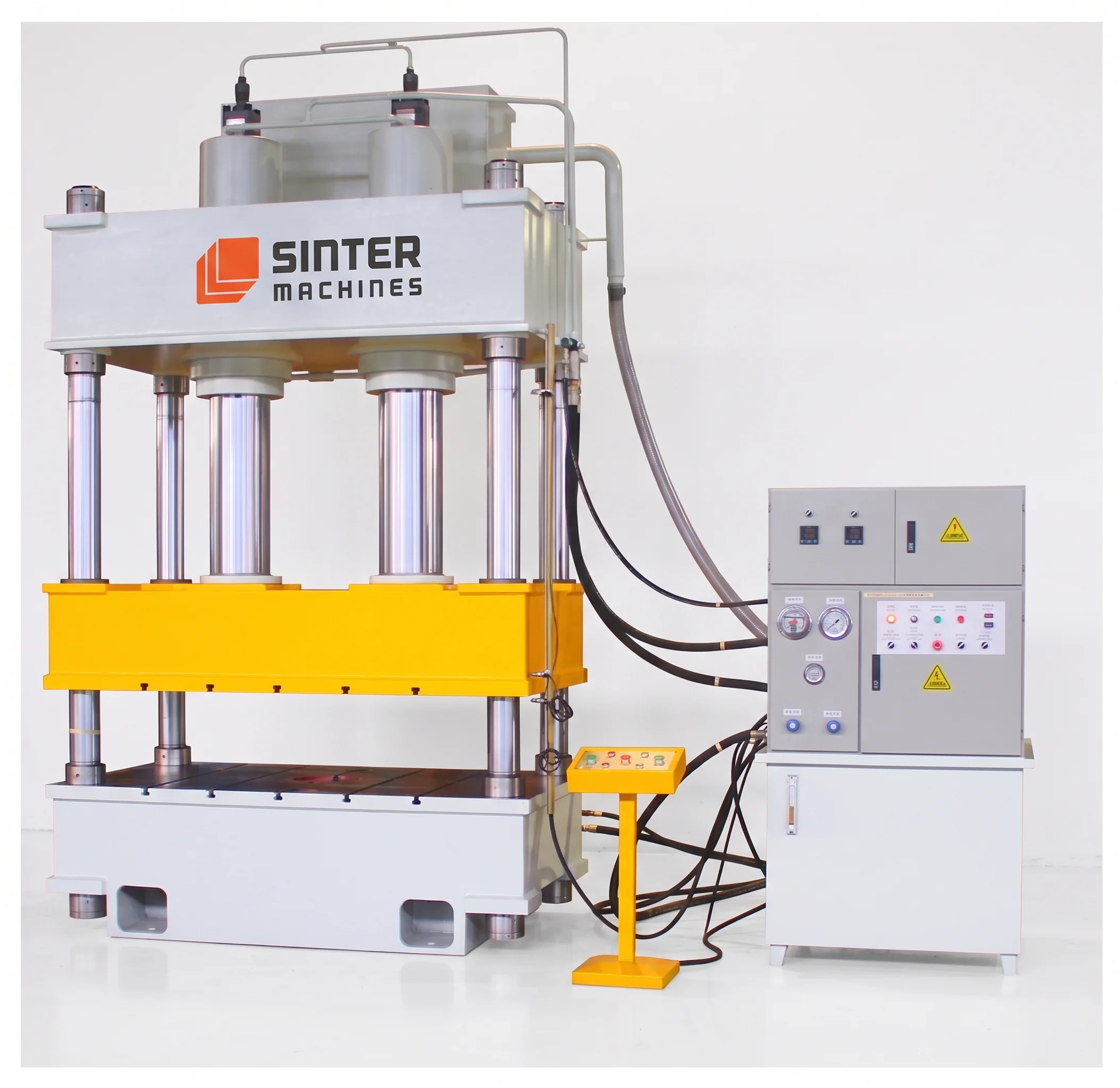
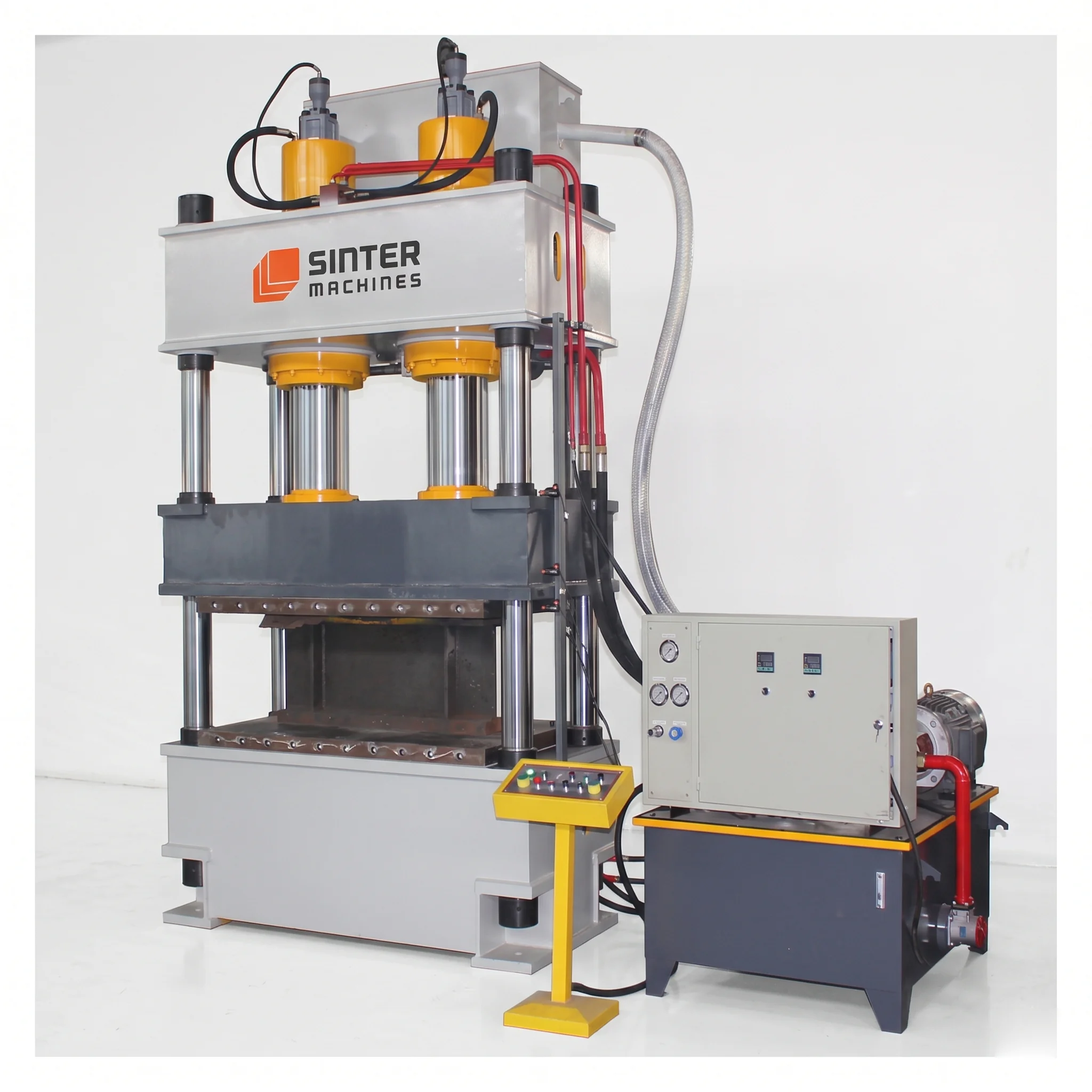
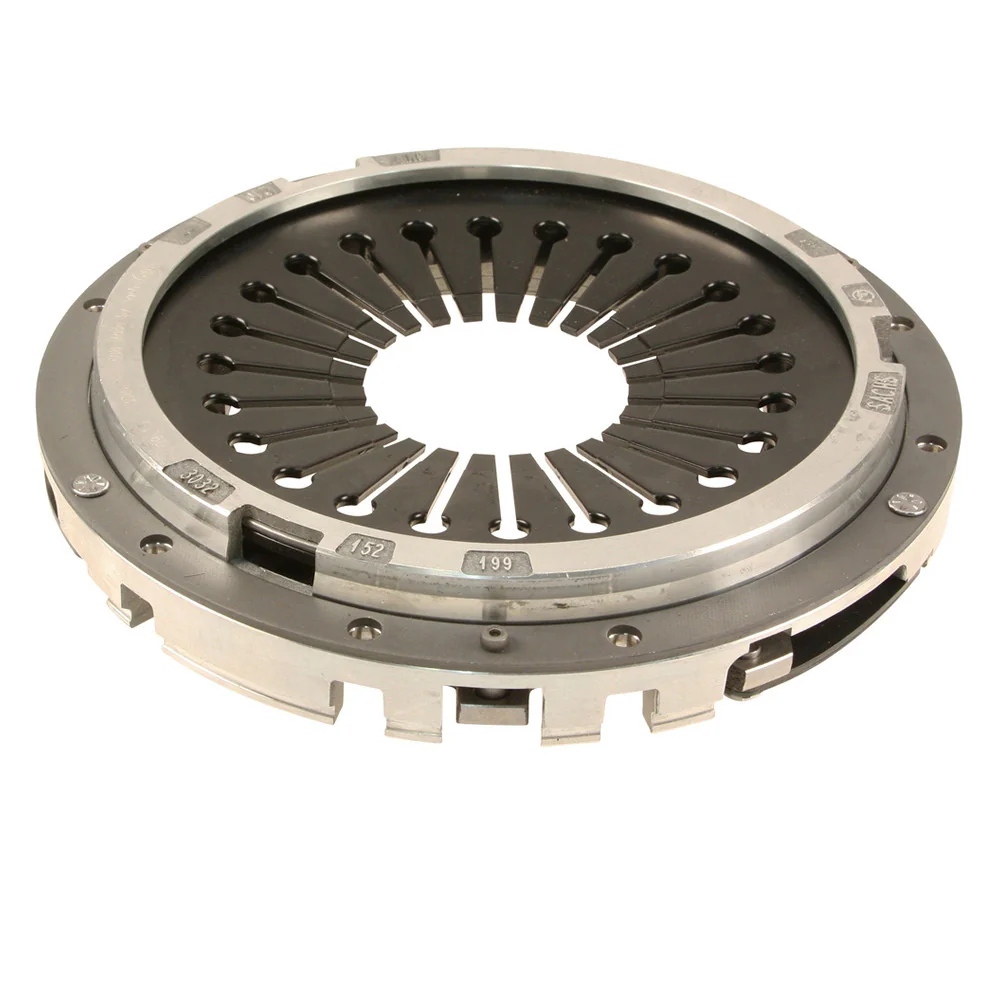
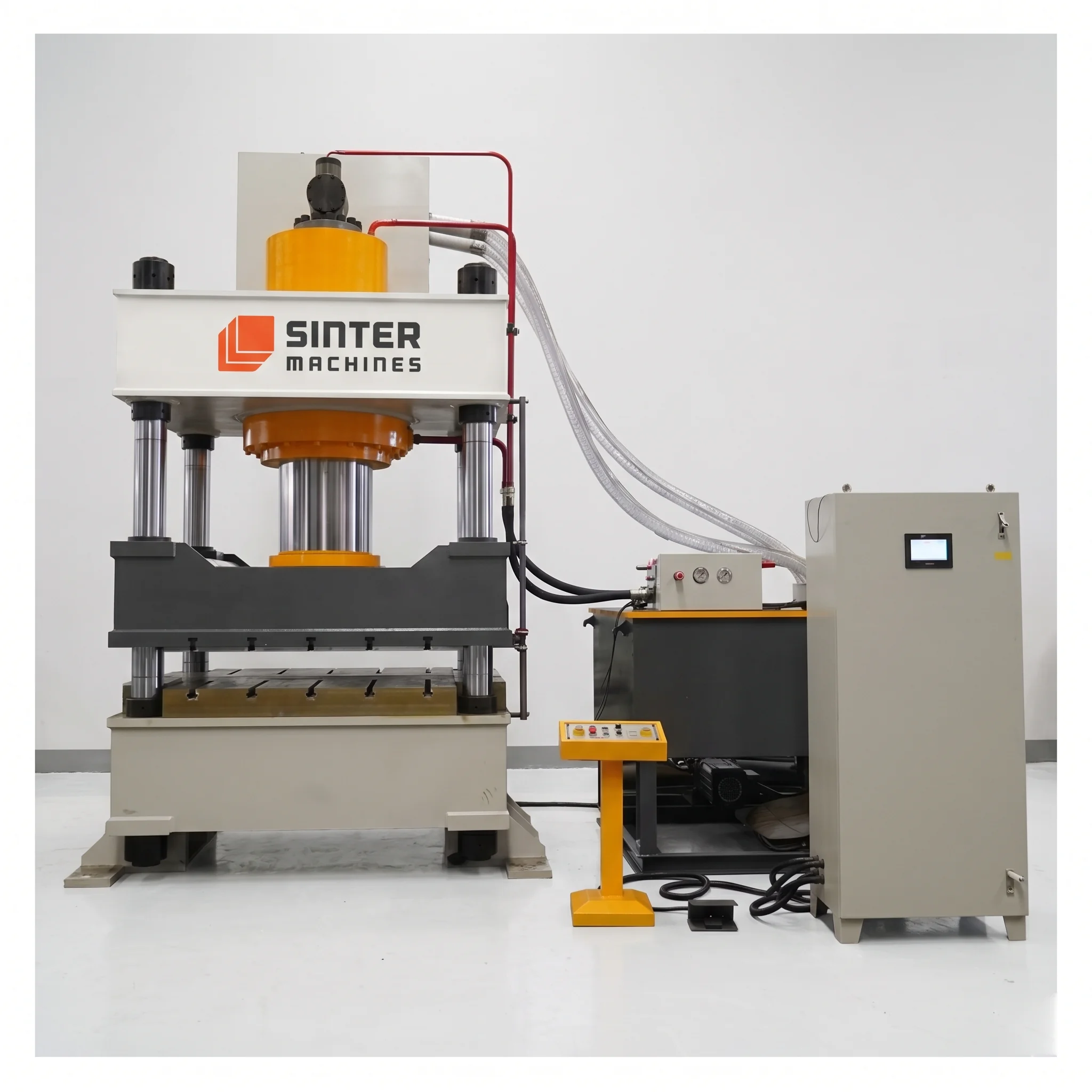
1250T Brake Pads & Clutch Plates Press press view 1
Automotive Brake Pads & Clutch Plates · Hydraulic Press Machine

1250 Ton Four Pillar Hydraulic Press for Heavy Duty Brake Pads & Clutch Plates

1250T Rated Capacity
180 mm/s Slider Down Speed
10–18 mm/s Slider Pressing Speed
220 mm/s Slider Return Speed

01 — Press System

1250 Ton Four Pillar Hydraulic Press Machine

A rigid 1250-ton four-pillar hydraulic press designed to provide precise parallelism and uniform pressure distribution. It ensures maximum stability and high-density compaction during heavy-duty automotive component manufacturing.

Use Case

Engineered for the high-tonnage powder compaction of friction materials like brake pads and clutch plates. It provides controlled force and precise ejection to deliver structural integrity and tight dimensional tolerances.

  • Core Applications: High-tonnage compaction of automotive brake pads, heavy clutch plates, and wear-resistant industrial friction components. Used in high-volume production lines requiring precision density control and reliable structural integrity.
  • Material: Uses iron-based, bronze, iron-copper, and stainless steel powders combined with graphite, lubricants, and oil impregnation agents. Formulated specifically to achieve high mechanical strength, heat dissipation, and superior friction performance.
  • Products Processed: Heavy-duty automotive brake linings, clutch plates, friction discs, and sintered metal bearings. Engineered friction products manufactured for passenger vehicles, commercial trucks, and industrial machinery.
  • Why 1250-Ton Hydraulic Press: Provides the immense continuous force needed to pack metal powders into high-density geometries evenly. Prevents core defects, delamination, and density variations across large-surface friction components.

02 — Technical Specifications

SM 1250 HP – HYDRAULIC PRESS MACHINE COMPLETE TECHNICAL DATA

The SM 1250 HP is a heavy-duty 1250-ton four-pillar hydraulic press designed for high-density powder compaction of friction materials used in commercial vehicles, mining equipment, construction machinery, agricultural equipment, and industrial drive systems. The machine delivers high compaction force, excellent pressure uniformity, and precision control for producing large brake pads and clutch plates with superior mechanical strength and dimensional accuracy.

Capacity & Structural Design

  • Rated Press Force: 1250 metric tons (≈ 12,250 kN)
  • Press Configuration: Fourpillar / fourcolumn guided hydraulic press
  • Frame Construction: Heavy welded steel frame, stressrelieved
  • Design Duty: Continuous heavyduty PM production
  • Structural Safety Factor: ≥ 1.30
  • Elastic Deflection at Rated Load: ≤ 0.10 mm
  • Load Distribution: Uniform across full platen (critical for flat pads & discs)

Hydraulic System

Main Hydraulic Cylinder

  • Type: Doubleacting, precisionguided
  • Bore Diameter: 600–700 mm
  • Stroke: 700–1,000 mm

Maximum Operating Pressure: 30–32 MPa (300–320 bar)

Hydraulic Power Pack

  • Variabledisplacement axialpiston pumps
  • Servo/proportional valves with closedloop control
  • Pressure and position feedback sensors

Pressing Modes

  • Constantpressure compaction
  • Positioncontrolled pressing
  • Multistage pressure + dwell (essential for friction material uniformity)

Platen & Working Envelope

Upper / Lower Platen Size

  • Standard: 1,200 × 1,200 mm
  • Optional: up to 1,500 × 1,500 mm

Guide Columns

  • Quantity: 4
  • Diameter: 200–240 mm
  • Finish: Hardened, hardchromed & precisionground
  • Daylight Opening: 1,400–1,800 mm
  • Platen Parallelism Accuracy: ±0.02 mm / 300 mm

Controls, Monitoring & Safety

  • Control System: PLC + industrial HMI (servohydraulic compatible)

Process Monitoring

  • Force vs displacement curves
  • Dwell pressure & time
  • Part thickness/flatness control
  • Cavitytocavity load balance

Safety Systems

  • Safety PLC
  • Light curtains / area scanners

SM 1000 HP — Model Specifications

  • Nominal Force: 12500 KN
  • Maximum Hydraulic Pressure: 25 MPa
  • Max Opening Height of the Slider: 1500 mm
  • Max Stroke of the Slider: 900 mm
  • Effective Bed Size: 1600 × 1600 mm
  • Slider Down Speed: 180 mm/s
  • Slider Pressing Speed: 10–18 mm/s
  • Slider Return Speed: 220 mm/s
  • Ejector Cylinder Nominal Force: 600 KN
  • Stroke of the Ejection Cylinder: 300 mm
Production Case Study

Heavy Duty Brake Pads & Clutch Plates Production Line

Semi-Metallic & Ceramic PowdersRaw Material
1500–3500 grmsProduct Weight
4.5–5.5 g/cm³Green Density
25–40 SecCycle Time
High thermal fade resistance
Stable friction coefficient maintained
Uniform density distribution achieved
Reduced operational braking noise
Extended friction material lifespan
Minimal brake rotor wear
Superior structural shear strength

03 — Die / Mold System

Precision Powder Metallurgy (PM) Heavy Duty Brake Pads & Clutch Plates Die Mold Engineering

Precision Powder Metallurgy (PM) die mold engineering for heavy-duty brake pads and clutch plates focuses on achieving high-density compaction, dimensional accuracy, and consistent material distribution. Advanced tooling designs with optimized punch and die configurations ensure uniform pressure application, reduced porosity, and superior mechanical properties.

Technical Specifications (Tooling)

Tool Type

  • Precision PM Brake Pad & Clutch Plate Compaction Die Set
  • Single-Level and Multi-Level Tooling
  • Floating Die or Fixed Die Configuration
  • Hydraulic and Mechanical Press Compatible

Tool Materials

  • Tungsten Carbide (WC-Co)
  • High-Speed Steel (HSS)
  • Powder Metallurgy Tool Steel (ASP Series)
  • AISI D2 and M2 Tool Steel
  • Wear-Resistant Carbide Inserts

Tool Construction

  • Modular die assembly with replaceable wear components
  • Precision-machined die cavities and punches
  • Heavy-duty guide pillar and bushing system
  • Reinforced die structures for high compaction loads
  • Optimized design for uniform friction material compaction

Multi-Level Tooling

  • Supports complex brake pad and clutch plate geometries
  • Independent upper and lower punch movement
  • Uniform density distribution across part profiles
  • Capable of producing grooves, recesses, and multi-thickness sections
  • Suitable for high-precision net-shape manufacturing

Alignment Accuracy

  • Die-to-punch concentricity: ≤ 0.005 mm
  • Tooling alignment tolerance: ± 0.01 mm
  • High-precision guide systems for repeatable production
  • Reduced punch wear and dimensional variation

Surface Finish

  • Die cavity finish: Ra 0.05–0.20 µm
  • Punch surface finish: Ra 0.05–0.15 µm
  • Mirror-polished tooling surfaces
  • Improved powder flow and component ejection

Lubrication

  • Integrated die-wall lubrication capability
  • Compatible with PM-grade lubricants and zinc stearate
  • Optional automatic lubrication systems
  • Reduced friction and enhanced tooling durability

Tool Life

  • Carbide Die Inserts: 500,000–2,000,000+ compaction cycles
  • Punches: 200,000–1,000,000+ cycles
  • Core Components: 150,000–800,000+ cycles
  • Extended service life through optimized lubrication, alignment, and preventive maintenance
Case Study (Die Performance)

Heavy Duty Brake Pads & Clutch Plates Die Mold Tooling

Tungsten Carbide / D2 SteelDie Steel
58–62 HRCHardness
Vacuum HardeningHeat Treatment
High wear resistance under friction
Superior compressive strength for compaction
Minimal dimensional distortion during pressing
Extended mold operational life span
Smooth surface ejection without galling
Consistent precision for complex geometries
Reduced tooling maintenance downtime

04 — Product Application

Where Powder Metallurgy (PM) Heavy Duty Automotive Brake Pads & Industrial Clutch Plates Are Used

Powder Metallurgy (PM) heavy-duty automotive brake pads and industrial clutch plates are widely used in commercial trucks, buses, construction equipment, mining machinery, agricultural vehicles, and industrial power transmission systems. Their high density, strength, wear resistance, and thermal stability ensure reliable braking and torque transmission under severe operating conditions.

Industry Applications

Passenger Cars

Etensively used in passenger cars, particularly in manual transmission clutch plates, dual-clutch transmission (DCT) components, and hybrid drivetrain clutch assemblies. Their precise density control, high wear resistance, and excellent friction characteristics ensure smooth power transfer, improved durability, and reliable performance.

Commercial trucks & buses

Widely used in commercial trucks and buses, where durability, high load-bearing capacity, and reliable braking performance are critical. These components provide excellent wear resistance, thermal stability, and consistent friction characteristics under continuous stop-and-go and long-haul operating conditions.

Construction equipment & mining machinery

Powder Metallurgy (PM) heavy-duty brake pads and clutch plates are extensively used in construction equipment and mining machinery operating under extreme loads and harsh environments. These components offer high strength, superior wear resistance, and excellent thermal stability, ensuring reliable braking and power transmission during continuous heavy-duty operations.

Industrial power transmission systems

Powder Metallurgy (PM) heavy-duty brake pads and clutch plates are widely used in industrial power transmission systems, including conveyors, crushers, presses, winches, and heavy-duty drives. These components provide dependable torque transmission, high wear resistance, and excellent thermal performance under continuous operating conditions.

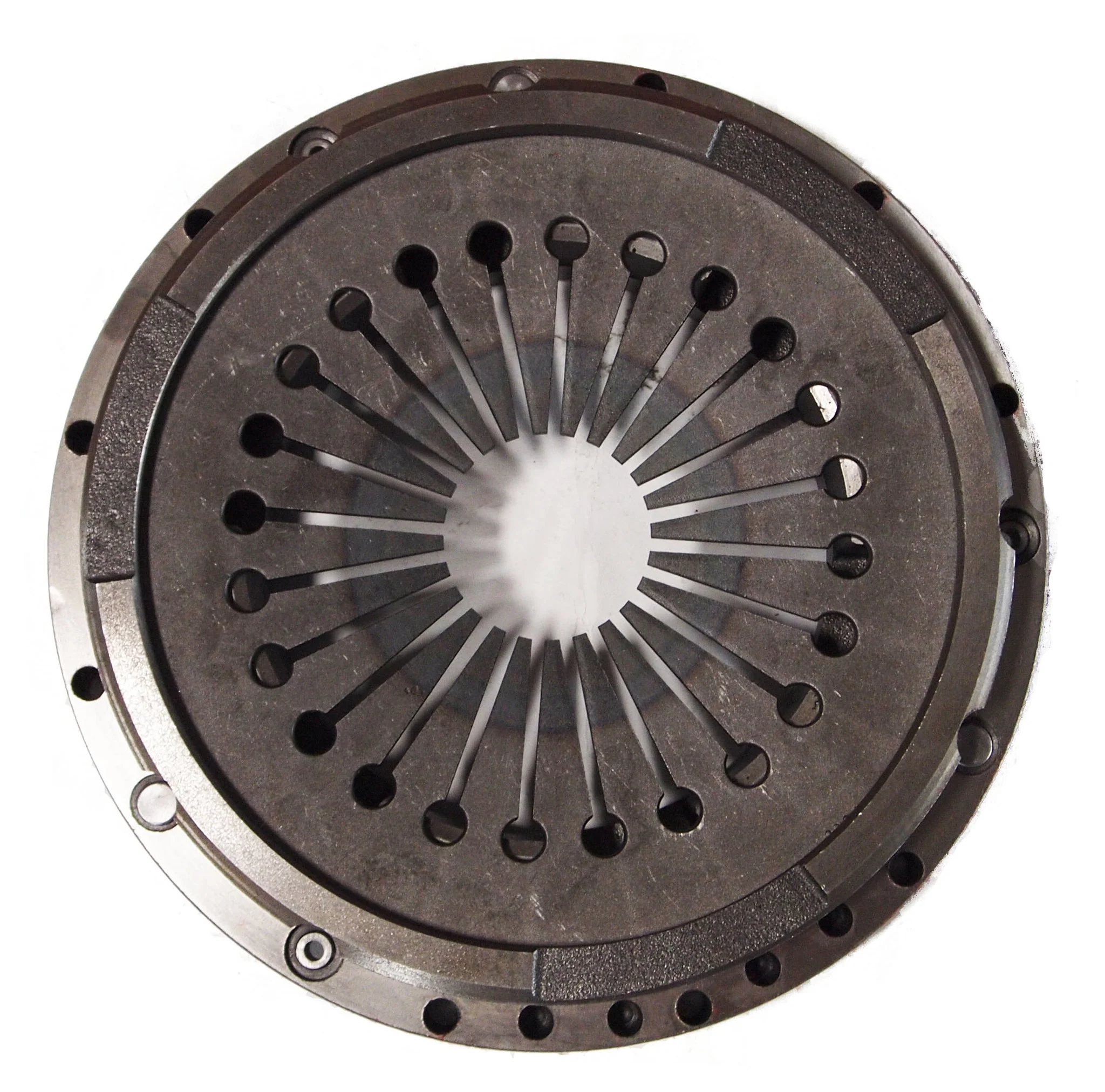
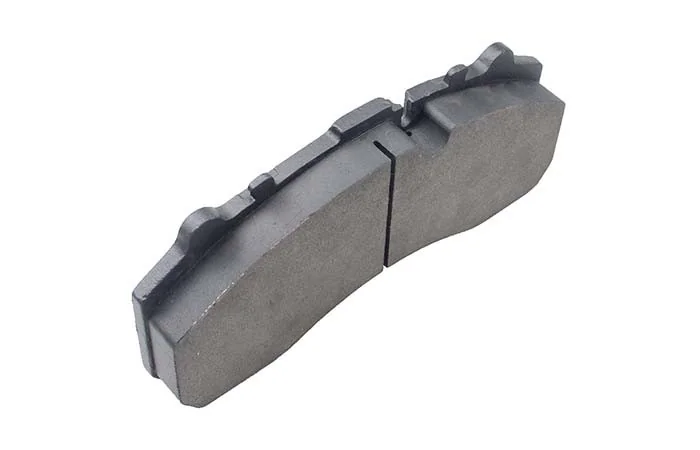
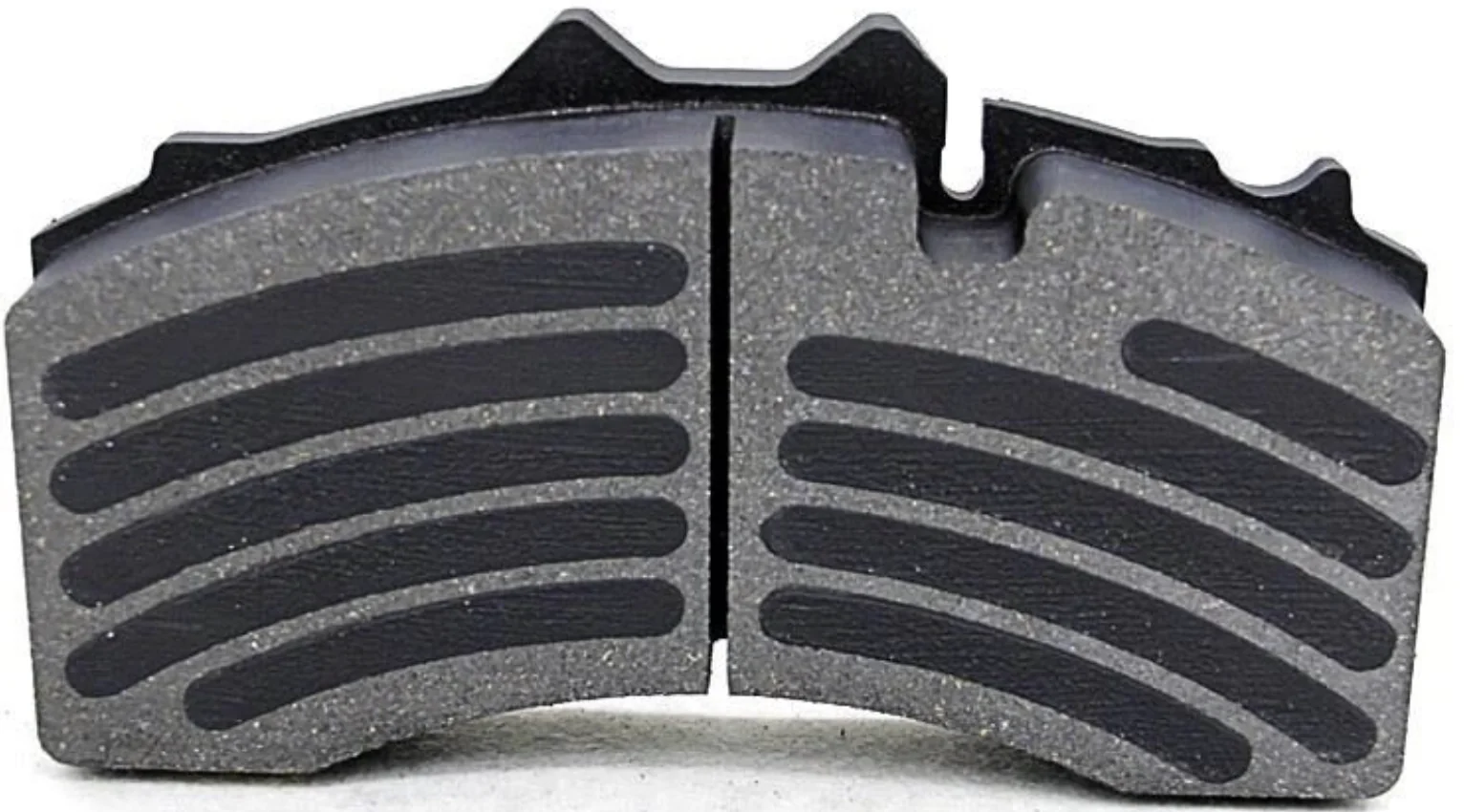
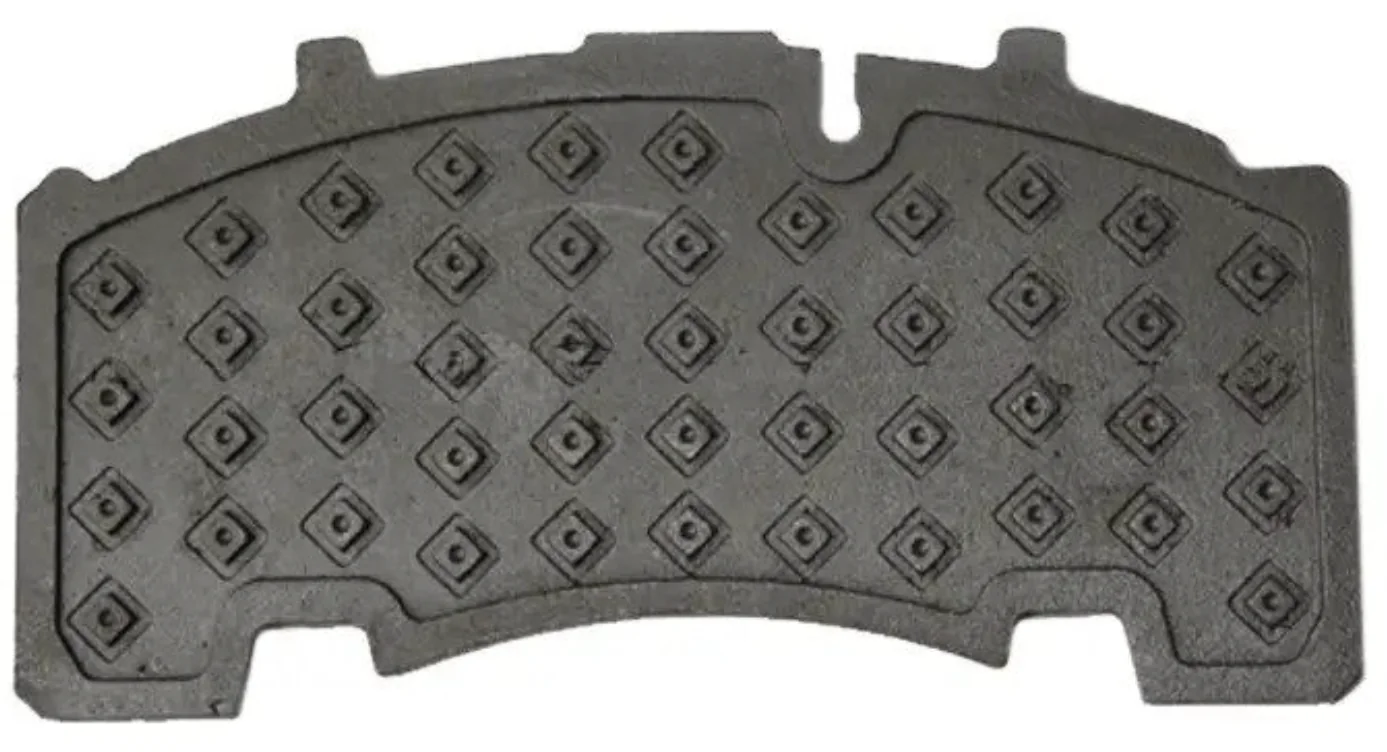
Finished Product Gallery

05 — Key Advantages

Why Choose the 1250-Ton Sinter Hydraulic Press

The 1250-ton Sinter Hydraulic Press is specifically designed to meet the demanding compaction requirements of heavy-duty PM brake pads and clutch plates. Its high pressing capacity ensures superior density uniformity, improved mechanical strength, and consistent friction characteristics across large and complex components.

01

High compaction force for superior density and strength

Delivers exceptionally high and uniform compaction force, enabling the production of high-density powder metallurgy brake pads and clutch plates with superior structural integrity. This ensures enhanced mechanical strength, reduced porosity, and consistent material properties throughout the component.

02

Excellent dimensional accuracy and repeatability

The 1250-ton Sinter Hydraulic Press provides precise control of pressure, position, and compaction parameters, ensuring exceptional dimensional accuracy and part-to-part consistency. Its rigid frame construction and advanced hydraulic system minimize variations during production, resulting in highly repeatable component dimensions and density levels.

03

Supports multi-cavity, high-volume production

The 1250-ton Sinter Hydraulic Press is designed to accommodate multi-cavity tooling, enabling the simultaneous production of multiple brake pads or clutch plates in a single press cycle. Its high tonnage capacity ensures uniform pressure distribution across all cavities, maintaining consistent density and quality.

04

Reduced rejection rates and material waste

The 1250-ton Sinter Hydraulic Press ensures precise control over compaction pressure and density distribution, resulting in consistently high-quality components with minimal defects. Its advanced hydraulic and monitoring systems reduce issues such as cracks, density variations, and dimensional inaccuracies, significantly lowering rejection rates.

05

Faster cycle times and improved productivity

The 1250-ton Sinter Hydraulic Press is engineered for efficient operation with optimized hydraulic controls, rapid press movements, and automated process sequencing. These features help reduce cycle times while maintaining precise compaction and product quality.

06

Lower production costs and enhanced product quality

The 1250-ton Sinter Hydraulic Press helps reduce production costs through efficient material utilization, minimized scrap generation, and high-volume manufacturing capabilities. Its precise compaction control ensures consistent density, dimensional accuracy, and superior mechanical properties, resulting in high-quality brake pads and clutch plates with fewer defects.