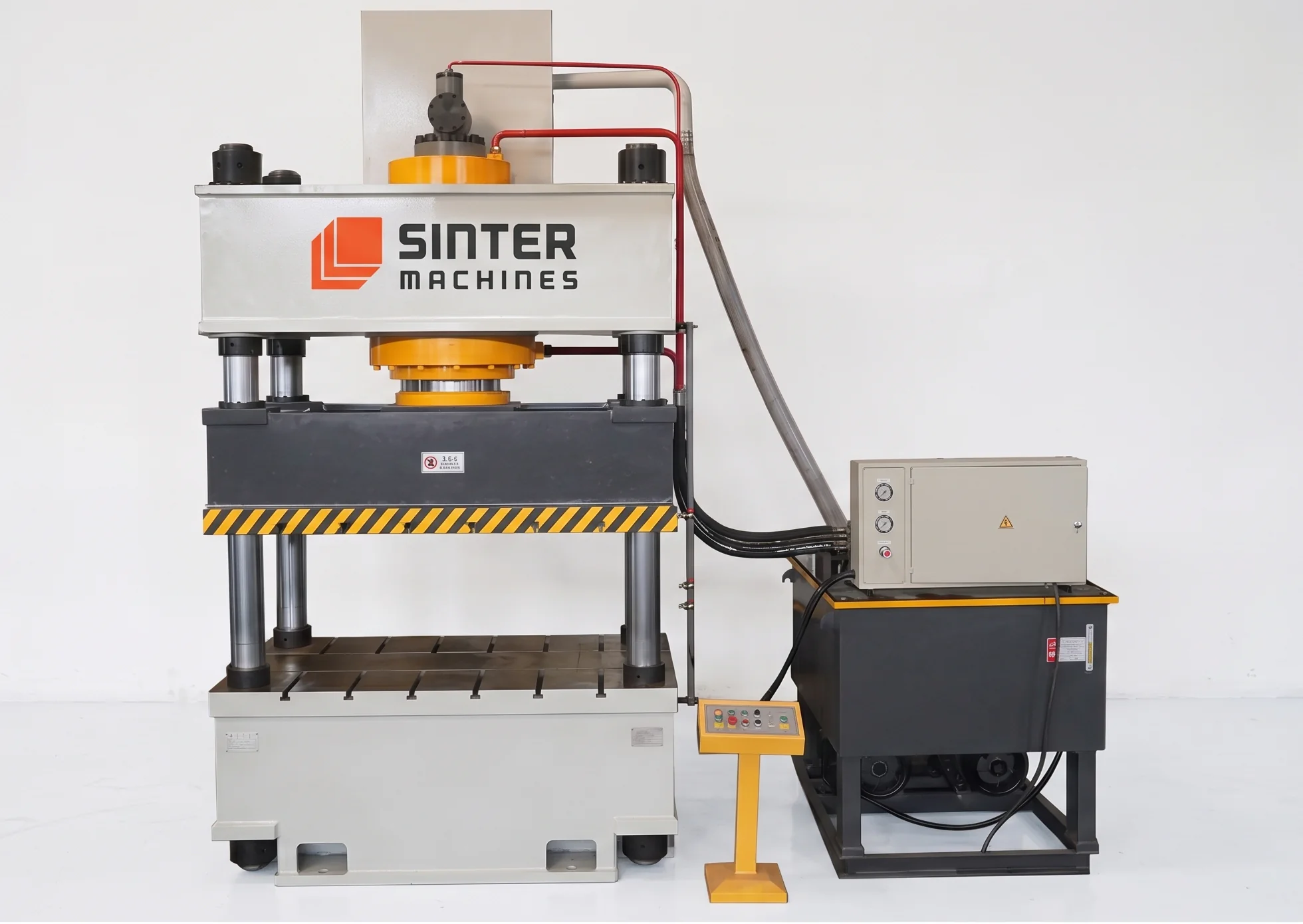
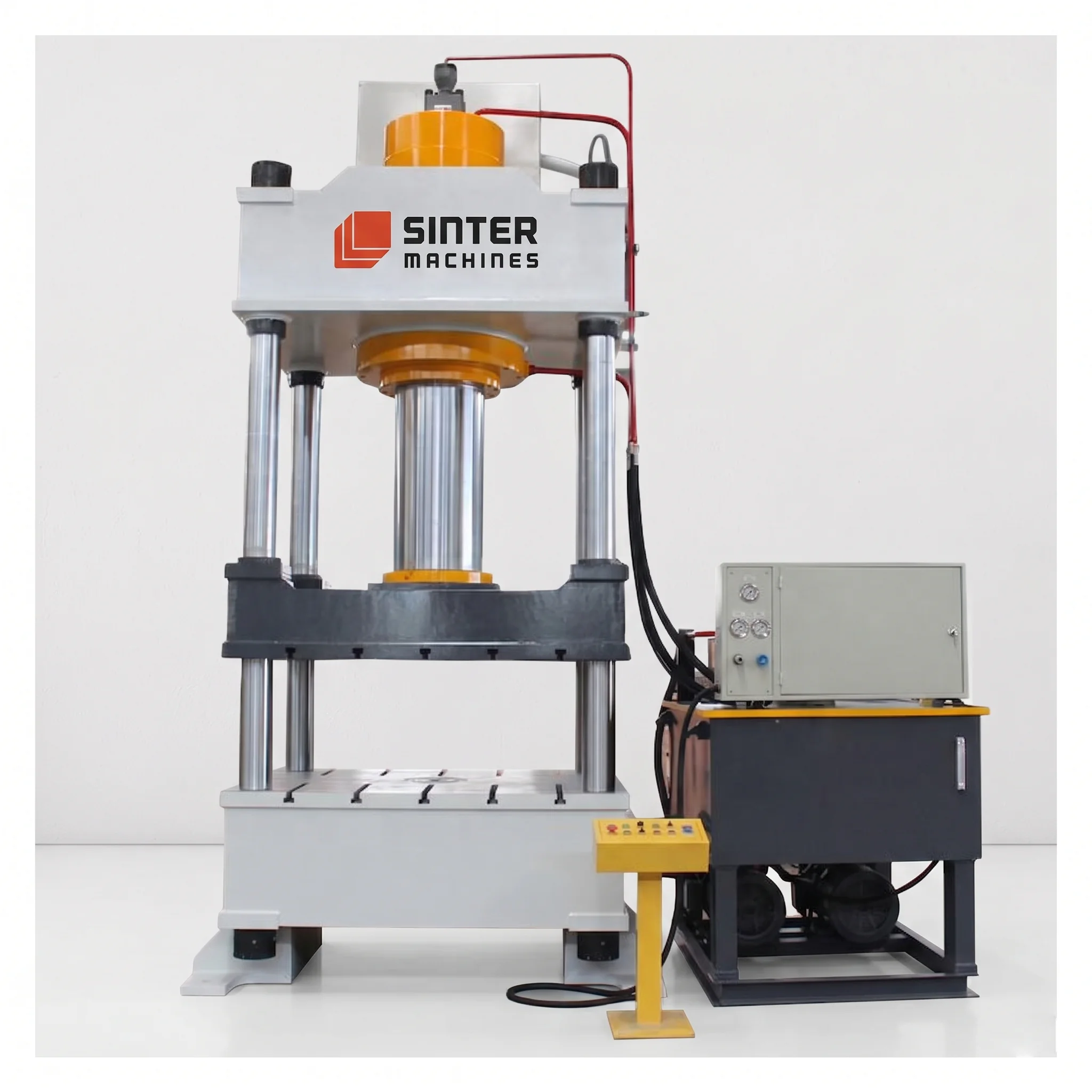
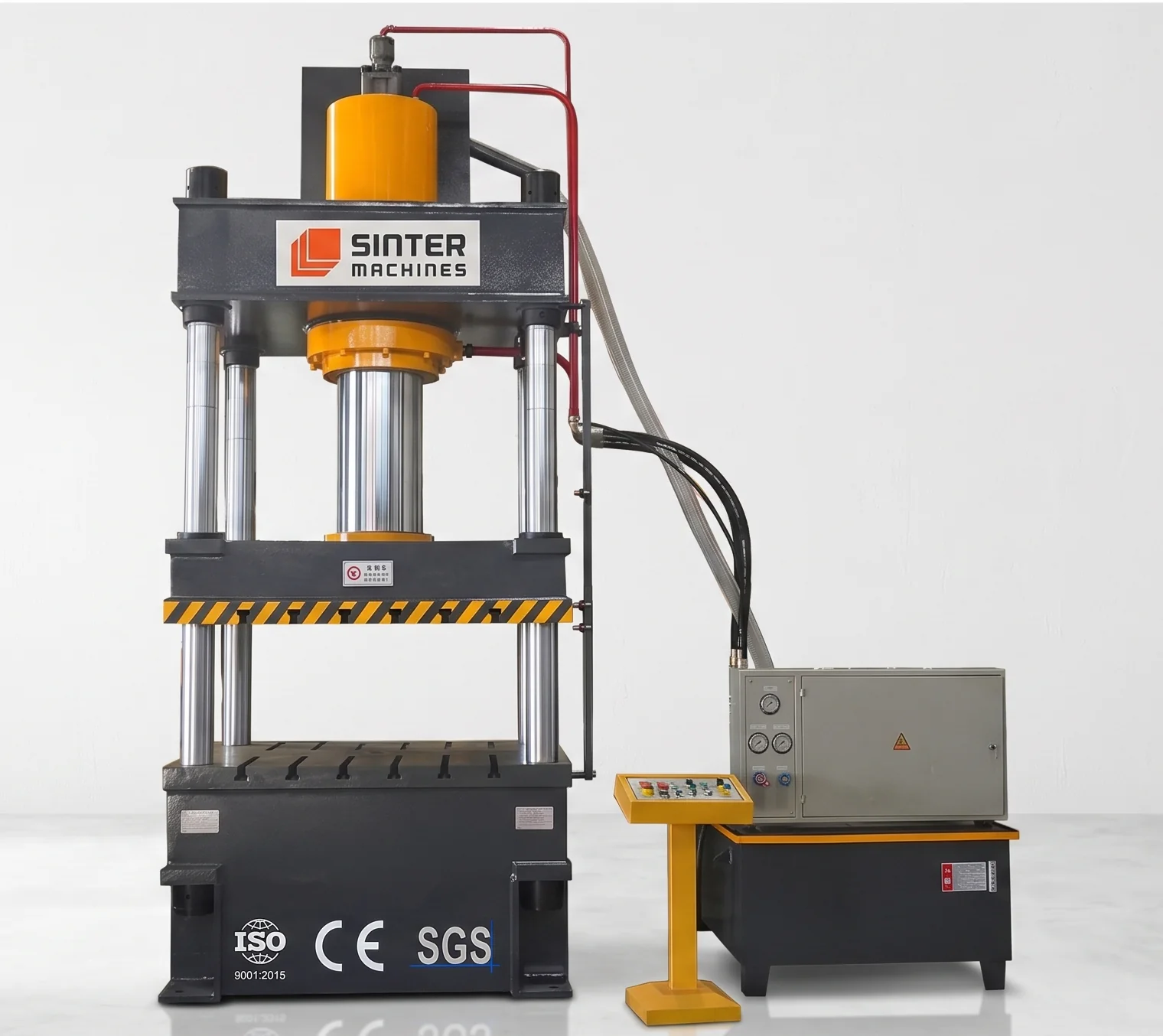
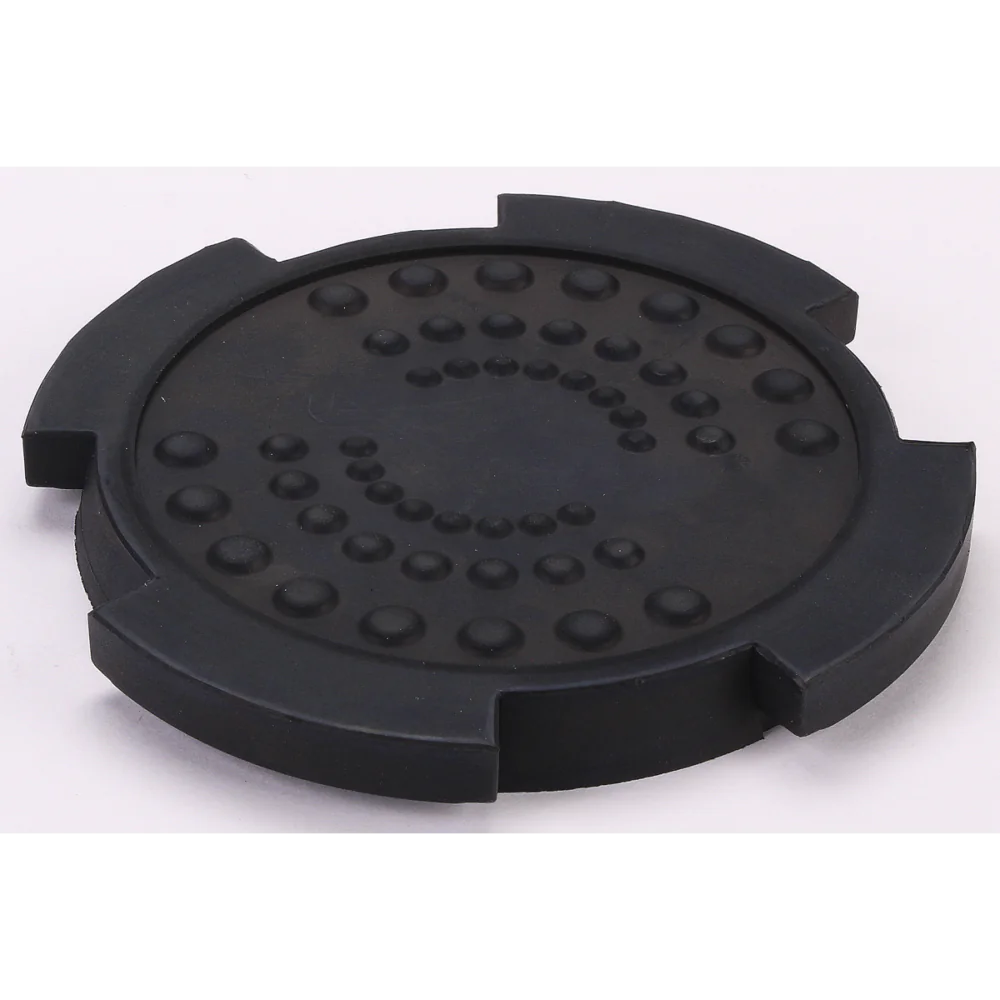
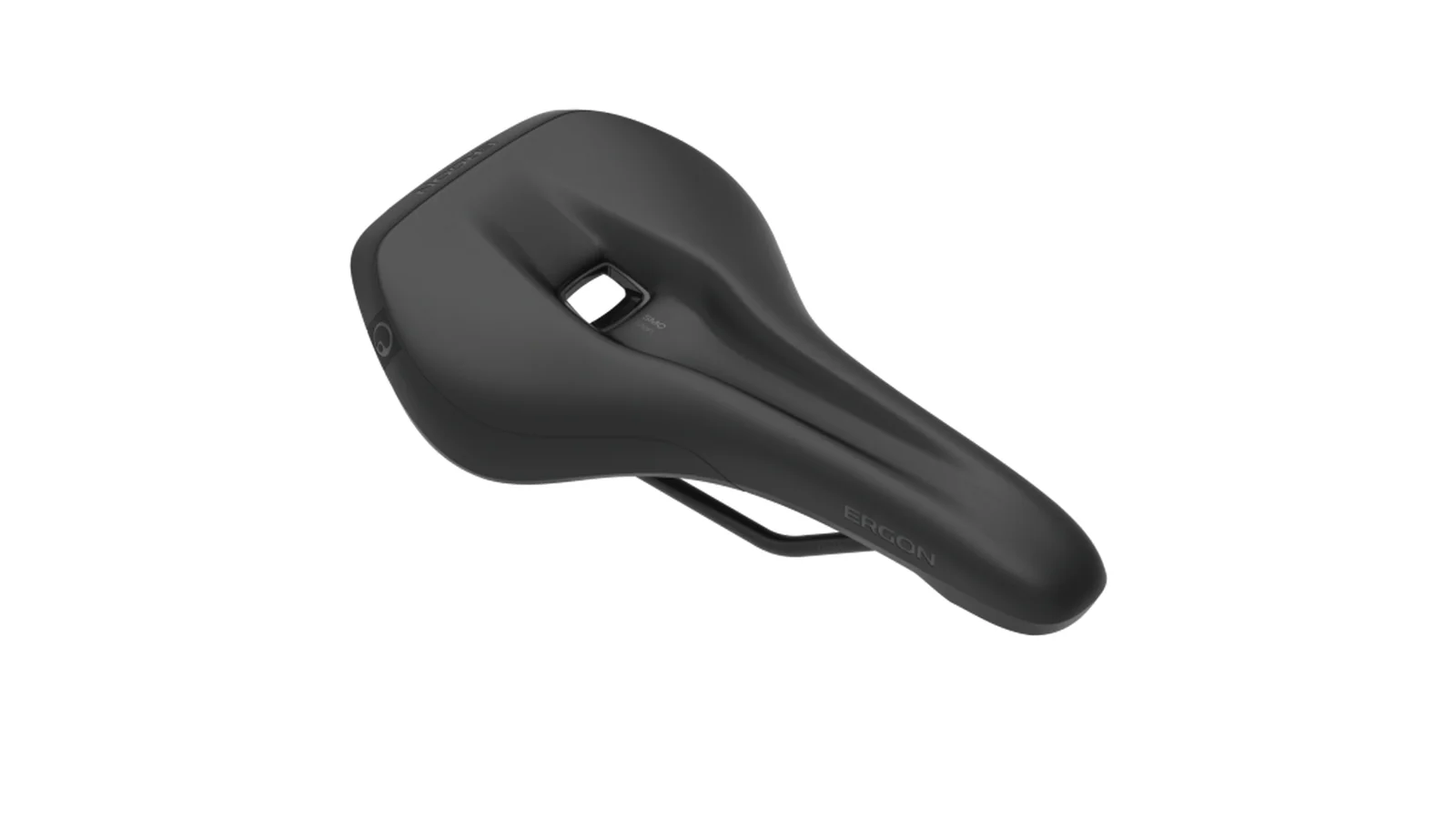
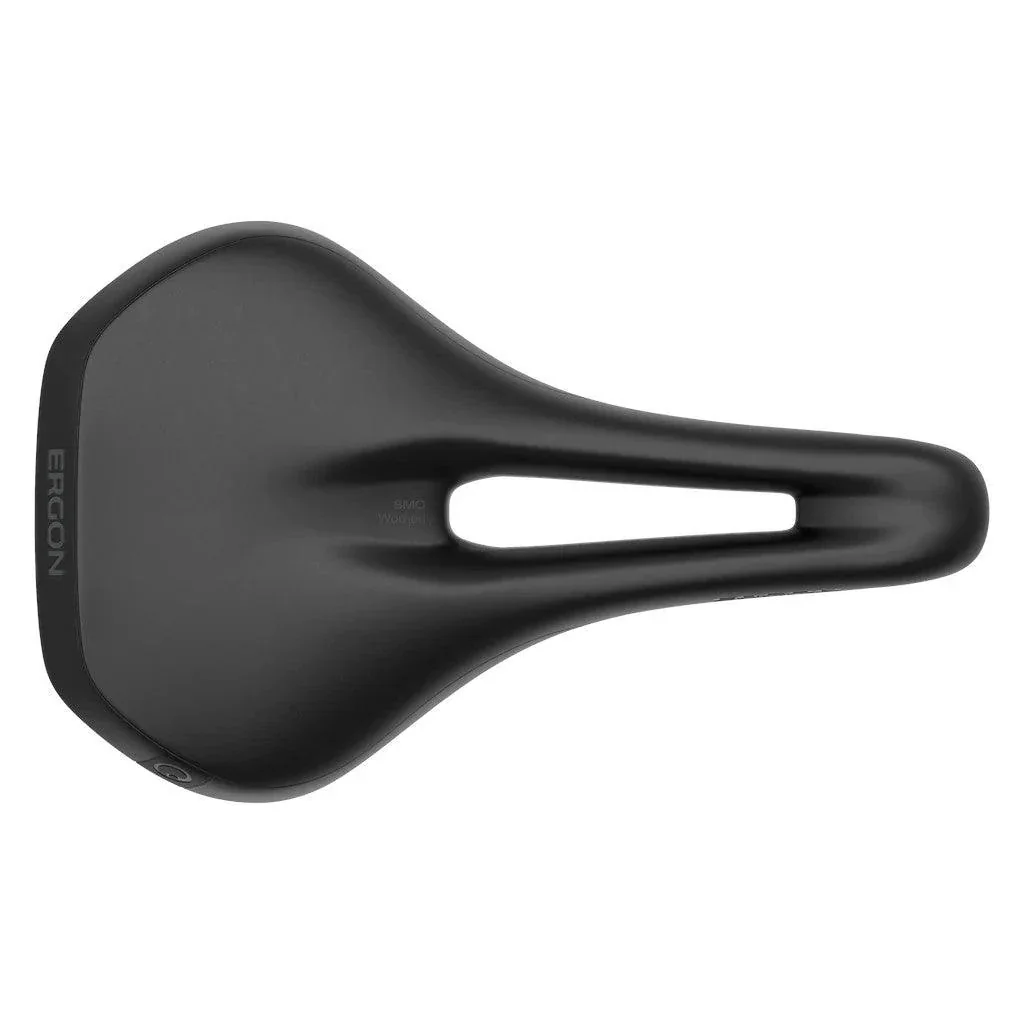
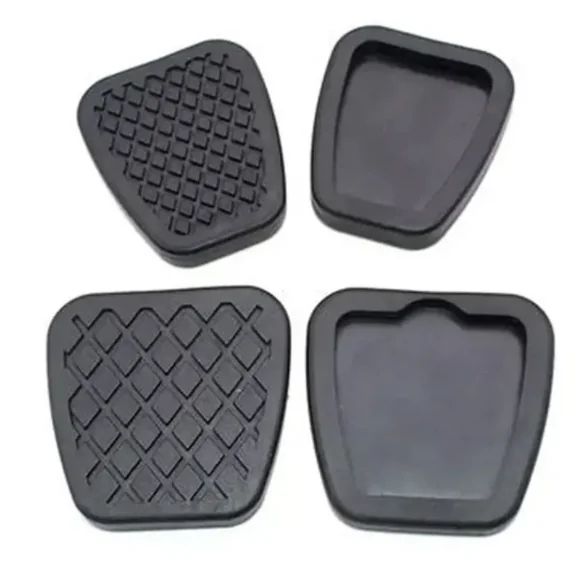
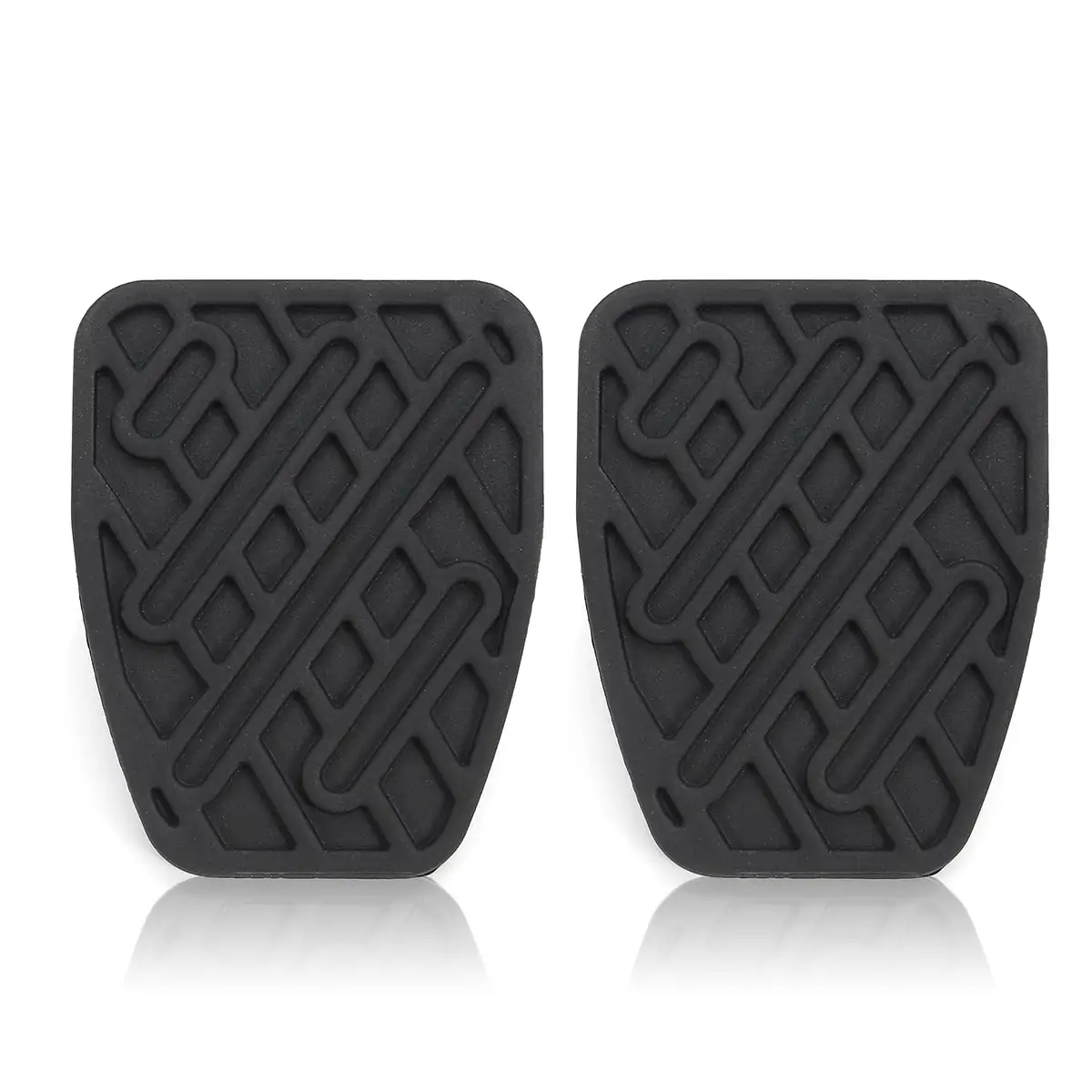
400T Rubber Saddle Pads Press press view 1
Rubber Saddle Pads · Hydraulic Press Machine

400T Four Pillar Hydraulic Press for Rubber Saddle Pads

400T Rated Capacity
100 mm/s Slider Down Speed
5–11 mm/s Slider Pressing Speed
100 mm/s Slider Return Speed

01 — Press System

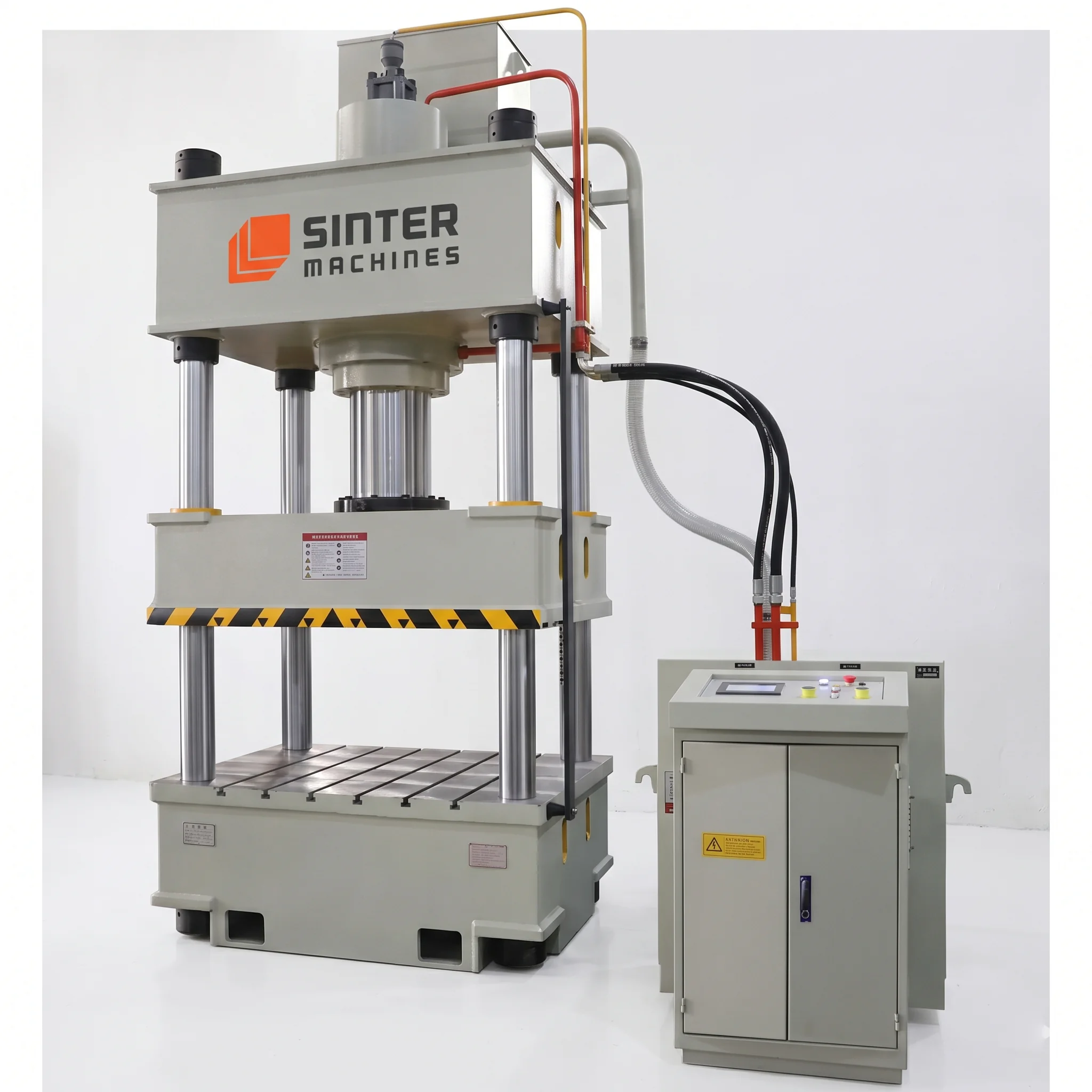
400T Four Pillar Hydraulic Press Machine

The 400-Ton Four-Pillar Hydraulic Hot Press from Sinter Machines India is a reliable compression molding solution for rubber saddle pads. It ensures consistent shaping, durability, and efficient production of high-performance rubber components.

Use Case

The 400-ton four-pillar hydraulic press is engineered for compression molding of rubber saddle pads and high-durability elastomer cushioning products. It integrates controlled temperature, pressure, and vulcanization to deliver high-strength, shock-absorbing components.

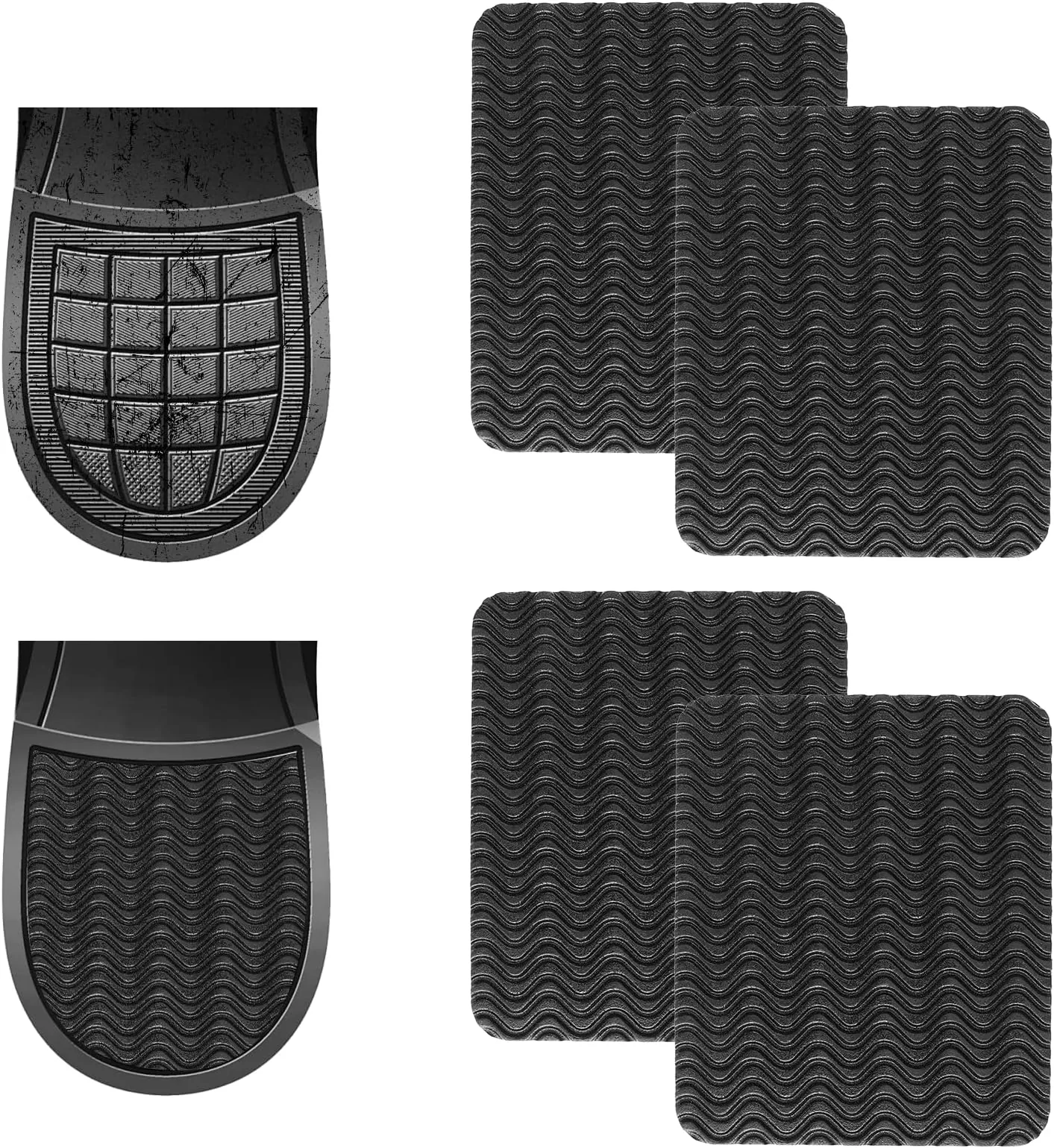
  • Core Applications: Designed for high-strength equestrian saddle pads, industrial anti-vibration mounts, and ergonomic cushioning. It provides reliable shock absorption, anti-slip capabilities, and structural durability for demanding applications.
  • Material: Utilizes natural rubber and synthetic compounds like EPDM, NBR, and SBR enriched with vulcanizing agents and fillers. These elastomer systems offer outstanding elasticity, wear resistance, and long-term UV stability.
  • Products Processed: Manufactures precision-molded rubber saddle pads, industrial dampening mats, and custom elastomer cushioning products. These finished parts feature uniform density, consistent flexibility, and high tear strength.
  • Why 400-Ton Hydraulic Press: Provides precise pressure, temperature, and cure control required for optimal rubber vulcanization across large surface areas. It ensures uniform compound flow inside the mold to deliver void-free, textured ergonomic profiles.

02 — Technical Specifications

SM 400 HP – HYDRAULIC PRESS MACHINE COMPLETE TECHNICAL DATA

SM 400 HP – Hydraulic Press Machine delivers reliable and high-performance compression molding for rubber saddle pads with complete technical precision. It ensures uniform pressure distribution, consistent material shaping, and durable, high-quality rubber products.

Capacity & Structural Design

  • Rated Capacity: 400 Tons (≈ 3920 kN)
  • Type: Fourpillar hydraulic compression molding press
  • Frame: Heavy-duty welded steel, stress-relieved
  • Safety factor: ≥ 1.30–1.35
  • Deflection: ≤ 0.06–0.08 mm

Hydraulic System

  • Cylinder: Doubleacting
  • Bore: 350–420 mm
  • Stroke: 500–800 mm
  • Working pressure: 28–30 MPa
  • Control: Proportional hydraulic system

Rubber Molding Cycle (Vulcanization)

  1. Mold closing (fast approach)
  2. Precompression (material spreading)
  3. Full compression
  4. Vulcanization stage (heat + pressure)
  5. Dwell time (curing reaction)
  6. Controlled decompression
  7. Mold opening
  8. Product removal

Heated Platen System

  • Heating type: Electric heaters or thermal oil system
  • Temperature range: 140–180°C (rubber vulcanization)
  • Temperature uniformity: ±2–3°C
  • Multi-zone heating

Working Envelope

  • Platen size:
    • Standard: 1000 × 1000 mm
    • Optional: 1200 × 1200 mm
  • Daylight: 800–1400 mm
  • Column diameter: 140–160 mm

Control System

  • PLC (Siemens / Mitsubishi / Delta)
  • HMI interface (recipe-based control)
  • Monitoring:
    • Pressure
    • Temperature
    • Cure time
  • Data logging (production traceability)
  • Safety PLC + interlocks

SM 400 HP — Model Specifications

  • Nominal Force: 4000 KN
  • Maximum Hydraulic Pressure: 25 MPa
  • Max Opening Height of the Slider: 1250 mm
  • Max Stroke of the Slider: 800 mm
  • Effective Bed Size: 1260 × 1160 mm
  • Slider Down Speed: 100 mm/s
  • Slider Pressing Speed: 5–11 mm/s
  • Slider Return Speed: 100 mm/s
  • Ejector Cylinder Nominal Force: 400 KN
  • Stroke of the Ejection Cylinder: 300 mm
Production Case Study

Rubber Saddle Pads Production Line

NR/EPDM/NBR/SBRRaw Material
600 x 400 to 800 x 600mmSaddle Size
180–450 SecCycle time
140–160°CTemperature

03 — Die / Mold System

Precision Rubber Saddle Pads Die Mold Engineering

Precision Rubber Saddle Pads Die Engineering ensures accurate shaping, uniform thickness, and optimal cushioning performance. It delivers consistent quality, durability, and reliable comfort for high-performance rubber saddle pad production.

Technical Specifications

Mold Type

  • Compression rubber mold
  • Heated matched die system

Mold Materials

  • Tool steel: P20 / H13 / alloy steel
  • Hardness: 40–50 HRC (optimized for rubber molding)
  • Surface coating: Chrome / PTFE (release-friendly surface)

Mold Construction

  • Upper mold: Surface contour and texture
  • Lower cavity: Base shape and thickness
  • Guide pillars: Alignment accuracy ±0.02 mm
  • Ejection system: Manual / air-assisted / hydraulic

Heating System

  • Integrated heating channels
  • Electric cartridge heaters or oil heating
  • Multi-zone temperature control

Venting System

  • Fine vent grooves
  • Gas escape channels

Prevents:

  • Air traps
  • Blisters
  • Uneven curing

Surface Finish

AreaRequirement
Top surfaceTextured / anti-slip
Bottom surfaceSmooth / patterned
EdgesClean and trimmed

Mold Life: 150,000 – 300,000 cycles

Case Study (Die Performance)

Precision Rubber Saddle Pads Die Mold

600 x 500 mmSize
10-25 mmThickness
100,000 – 200,000 cyclesStrokes Die Life
HighVulcanizationEfficiency
UniformDensityControl
SuperiorShockAbsorption
ExcellentTearResistance
AntiSlipSurfaceFinish
ConsistentPartThickness
SustainableCostEffectiveOutput

04 — Product Application

Where Rubber Saddle Pads Are Used

Rubber saddle pads are widely used in equestrian applications to provide cushioning and protection between the saddle and the horse. They ensure comfort, shock absorption, and durability during riding and training activities.

Industry Applications

Equestrian Industry

In the equestrian industry, rubber saddle pads are used for saddle padding, horse riding cushioning, and anti-slip support. They provide comfort, shock absorption, and stability for both horse and rider during riding activities.

Sports & Fitness

In sports & fitness applications, rubber saddle pads are used for impact absorption pads and protective gear components. They provide cushioning, shock resistance, and enhanced comfort during physical activities.

Industrial Applications

In industrial applications, rubber saddle pads are used as antivibration pads, cushioning blocks, and machinery support pads. They provide excellent shock absorption, durability, and stability for heavy-duty equipment operations.

Automotive & Transport

In automotive & transport applications, rubber saddle pads are used for rubber damping components and shock absorption pads. They provide effective vibration control, durability, and improved comfort in vehicle systems.

IndustryScenario
Equestrian Saddle comfort and stability
Sports Impact protection pads
Industrial Anti-vibration systems
Automotive Noise and vibration damping
Manufacturing Rubber cushioning solutions

Finished Product Gallery

05 — Key Advantages

Why Choose the 400-Ton Sinter Hydraulic Press

It delivers uniform compression and precise molding for high-quality rubber pads. Designed for durability and performance, it ensures consistent thickness, excellent cushioning, and reliable production.

01

Controlled vulcanization

Ensures precise control of temperature, pressure, and curing time during vulcanization. It delivers consistent rubber properties, improved strength, and long-lasting performance.

02

Suitable for thick rubber parts

Ideal for molding thick rubber components with uniform pressure distribution. It ensures proper curing, structural strength, and consistent quality in heavy-duty rubber applications.

03

High elasticity

Ensures optimal curing for rubber materials, resulting in excellent elasticity. It enhances flexibility, shock absorption, and long-lasting performance in demanding applications.

04

Excellent shock absorption

Produces rubber saddle pads with superior shock-absorbing properties. It ensures enhanced comfort, impact resistance, and protection in demanding applications.

05

Anti-slip surface

Ensures precise molding of textured rubber surfaces for enhanced grip. It delivers improved safety, stability, and performance in both industrial and equestrian applications.

06

Wear resistant

Produces rubber saddle pads with excellent resistance to wear and abrasion. It ensures long-lasting durability and reliable performance under continuous use.